8 Wall Street insights after the midterm elections 🇺🇸
Source: https://www.tker.co/p/midterm-election-results-wall-street-quotes
The midterm elections brought major changes to the U.S. political landscape, which could materially affect the business outlook for companies in the stock market.
중간선거로 인해 미국 정치 지형에 큰 변화가 생겼으며, 이는 주식 시장 내 기업들의 사업 전망에도 실질적인 영향을 미칠 수 있습니다.
Markets appear to be experiencing some indigestion as they process new realities.
시장은 새로운 현실을 소화하면서 다소 소화 불량을 겪는 모습입니다.
Stocks fell Tuesday night, surged Wednesday, plummeted Thursday, and then ticked up Friday. I’ll reiterate what I said Wednesday morning:
It’s a reminder to be careful about rushing to conclusions based on a couple of hours of market action. Frankly, we should be careful about drawing long-term conclusions based on even a few days or weeks of market moves.
증시는 화요일 밤 하락하고, 수요일에 급등했으며, 목요일에 폭락한 뒤 금요일에 소폭 반등했습니다. 수요일 아침에 말씀드렸던 내용을 다시 한번 강조하고자 합니다.
시장 움직임의 고작 몇 시간 만에 성급한 결론을 내리는 것을 경계해야 한다는 상기제입니다. 솔직히 말해, 시장의 며칠 혹은 몇 주간의 움직임만으로 장기적인 결론을 이끌어내는 것조차 조심해야 합니다.
Historically, the stock market trended higher once the election results became clearer. But the stock market usually rallies, so that market observation offers limited insight into what to expect in the coming months.
역사적으로 주식 시장은 선거 결과가 더욱 명확해지면 상승세를 타는 경향이 있었습니다. 하지만 주식 시장은 대개 랠리를 펼치기 때문에, 이러한 시장 관찰만으로는 향후 몇 달 동안 무엇을 기대해야 할지에 대해 제한적인 통찰밖에 얻지 못합니다.
Sure, the elections were an uncertainty-clearing event. But that doesn’t mean we have complete clarity on what’s next.
물론 이번 선거는 불확실성을 해소해 준 이벤트였습니다. 그렇다고 해서 앞으로의 상황에 대해 완전히 명확한 시각을 갖게 되었다는 뜻은 아닙니다.
As we await further developments on the policy outlook and everything else, here are some excerpts from the wave of research and commentary that hit TKer’s inbox last week.
정책 전망과 기타 모든 사안들에 대한 향후 전개 상황을 기다리는 동안, 지난주 TKer의 받은편지함에 쏟아졌던 수많은 리서치와 논평 중 일부 발췌 내용을 전해드립니다.
There have been no recessions during the third year
“Notably, since 1946, stocks have been higher one year after every midterm election, including all four instances when both the House and Senate flipped to the party opposing the president. Simply moving past the uncertainty of the midterms has also often led to a relief rally. Part of that consistency is likely attributable to no recessions having occurred during the third year of the presidential cycle. If the recession pattern were to break, the strong third-year market pattern could break as well.” - Keith Lerner, Truist
"주목할 점은 1946년 이후 모든 중간선거 1년 후 주가는 상승했다는 점이며, 상·하원이 모두 대통령 반대당으로 넘어간 네 차례의 경우를 모두 포함합니다. 단순히 중간선거의 불확실성을 지나쳐 온 것만으로도 안도 랠리로 이어지는 경우가 많았습니다. 이러한 일관성의 일부는 대통령 임기 3년 차 동안 경기 침체가 발생한 적이 없다는 사실에 기인할 가능성이 높습니다. 만약 경기 침체 패턴이 깨진다면, 강력한 3년 차 시장 패턴 역시 깨질 수 있습니다." — 키스 러너 (Keith Lerner), 트루이스트(Truist)
Delaying or reducing Medicaid and SNAP cuts could boost activity
“The One Big Beautiful Bill Act (OBBBA) includes approximately $900 billion in Medicaid spending reductions and $200 billion in cuts to the Supplemental Nutrition Assistance Program (SNAP) over the next decade. With Democrats controlling both chambers of Congress, some of these reductions could be delayed, softened or reversed as part of negotiations around upcoming fiscal deadlines… Delaying or reducing planned Medicaid and SNAP cuts could support household finances and consumer spending, providing a modest boost to economic activity.” - Ariana Salvatore, Morgan Stanley
"‘하나의 아름답고 거대한 법안(OBBBA)’에는 향후 10년 동안 약 900억 달러의 메디케이드 지출 삭감과 200억 달러의 보충영양지원프로그램(SNAP) 삭감이 포함되어 있습니다. 민주당이 의회 양원을 모두 장악함에 따라, 다가오는 재정 기한과 관련된 협상의 일환으로 이러한 삭감 중 일부가 지연되거나 완화 또는 철회될 수 있습니다… 계획된 메디케이드 및 SNAP 삭감을 지연시키거나 축소하는 것은 가계 재정과 소비 지출을 뒷받침하여 경제 활동에 완만한 활력을 불어넣을 수 있습니다." — 아리아나 살바토레 (Ariana Salvatore), 모건스탠리(Morgan Stanley)
Trump can continue issuing executive orders
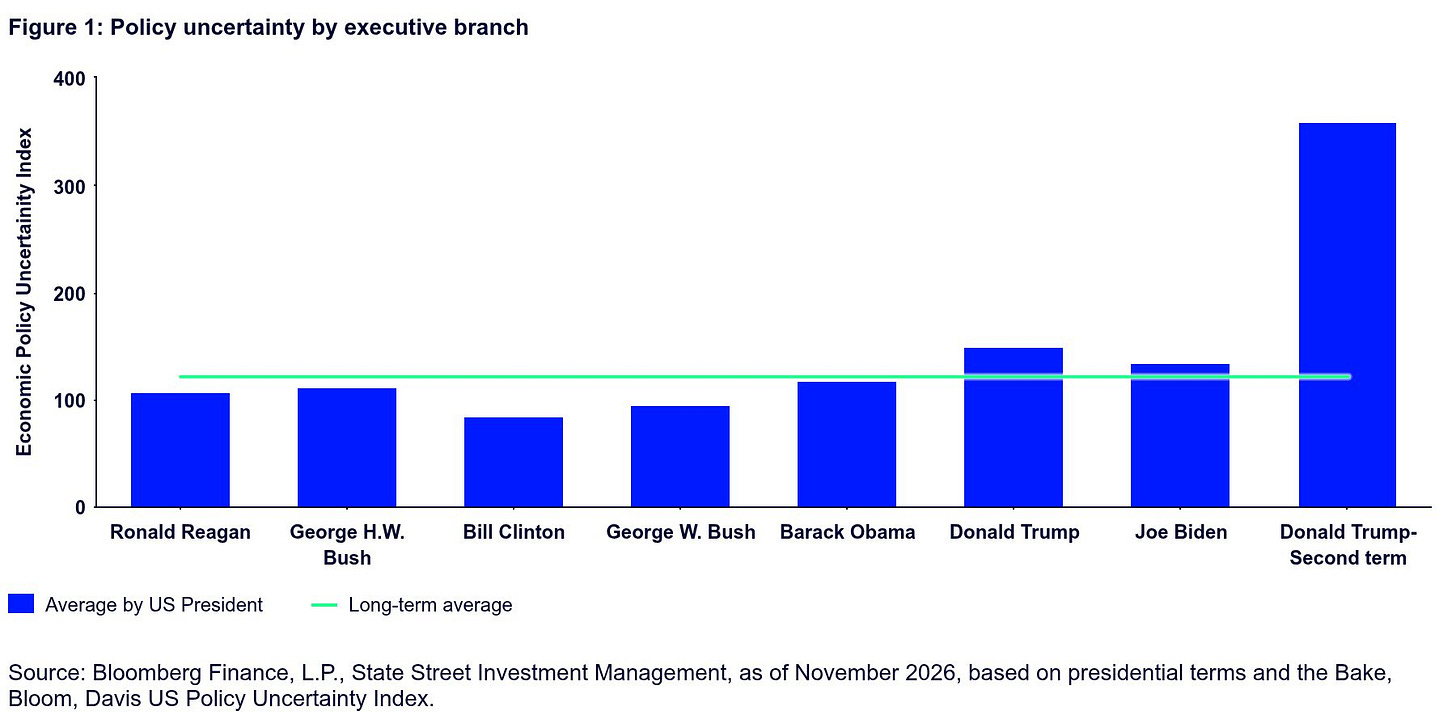
“Democratic control of Congress may shift the legislative agenda, but many of the policy levers driving market volatility remain with the executive branch (Figure 1). As a result, while legislative uncertainty may fade, broader policy-driven volatility may persist. Trade policy, in particular, remains an important executive branch tool and may increasingly be used to pursue targeted foreign policy objectives.” - Matthew Bartolini, State Street
"민주당의 의회 통제는 입법 의제를 변화시킬 수 있지만, 시장 변동성을 유발하는 많은 정책적 수단들은 여전히 행정부에 남아 있습니다(그림 1). 결과적으로 입법적 불확실성은 옅어질 수 있겠지만, 광범위한 정책 주도형 변동성은 지속될 수 있습니다. 특히 무역 정책은 여전히 행정부의 중요한 도구이며, 표적화된 외교 정책 목표를 추구하는 데 점점 더 많이 활용될 수 있습니다." — 매튜 바르톨리니 (Matthew Bartolini), 스테이트 스트리트(State Street)
Risks to Fed independence reduced
“The past two years have brought novel risks to the Fed’s independence, underscored by the first-ever attempted removal of a sitting Fed governor by the White House. The change in control in the Senate should mitigate those risks, as the Senate must approve any nominee the administration puts up for the Federal Reserve Board. There is only one governor whose term ends in the next two years—Jay Powell’s in January 2028. As a result of last night’s election, the administration will now need to replace him with someone amenable to Senate Democrats, or else leave the seat vacant. The election outcome may also lower the stakes in the administration’s ongoing effort to remove Governor Cook, as even a successful removal would not open a seat up to a friend of the administration.” - Michael Feroli, JPMorgan
"지난 2년 동안 백악관에 의한 사상 최초의 현직 연준 이사 해임 시도에서 두드러지듯이, 연준의 독립성에는 새로운 리스크들이 제기되었습니다. 상원의 통제권 변화는 그러한 리스크를 완화할 것입니다. 연준 이사회에 지명된 모든 인사는 상원의 승인을 받아야 하기 때문입니다. 향후 2년 내에 임기가 끝나는 이사는 단 한 명, 2028년 1월에 임기가 끝나는 제롬 파월(Jay Powell) 의장뿐입니다. 전날 밤의 선거 결과로 인해, 행정부는 이제 상원 민주당이 수용할 만한 인물로 그를 교체하거나 그렇지 않으면 공석으로 남겨두어야 합니다. 이번 선거 결과는 또한 쿠크(Cook) 이사를 해임하려는 행정부의 진행 중인 노력에서 위험 부담을 낮출 수 있습니다. 성공적인 해임이라 하더라도 행정부의 우군에게 자리가 넘어가지는 않기 때문입니다." — 마이클 페롤리 (Michael Feroli), JP모건(JPMorgan)
Debt ceiling standoff could spark volatility
“Fiscal policy may prove to be the bigger flashpoint. Divided government raises the risk of funding standoffs and government shutdowns. Debt ceiling negotiations could also become more contentious, though the outgoing Congress may seek to address the issue before its term ends in early January. Either way, gridlock is unlikely to alter the U.S. fiscal trajectory. Large deficits and heavy government borrowing are likely to persist, intensifying competition for capital and reinforcing our view of structurally higher interest rates. Historically, policy gridlock has not been bad for risk assets. Debt ceiling standoffs have been the bigger source of market volatility.” - BlackRock Investment Institute
"재정 정책이 더 큰 뇌관이 될 수 있습니다. 분점 정부는 예산 대치 및 연방정부 폐쇄(셧다운)의 위험을 높입니다. 비록 퇴임하는 의회가 내년 1월 임기가 끝나기 전에 이 문제를 해결하려 할 수 있겠지만, 부채한도 협상 역시 더욱 논쟁적이 될 수 있습니다. 어느 쪽이든, 정치적 교착 상태가 미국의 재정 궤도를 바꾸기는 어렵습니다. 대규모 적자와 막대한 정부 차입은 지속될 가능성이 높으며, 이는 자본 경쟁을 심화시키고 구조적으로 더 높은 금리가 유지될 것이라는 우리의 견해를 강화합니다. 역사적으로 정치적 교착 상태가 위험 자산에 나쁜 영향을 미친 적은 없습니다. 부채한도 대치 국면이 시장 변동성의 더 큰 원인이 되어 왔습니다." — 블랙록 투자연구소 (BlackRock Investment Institute)
Most proposed data center moratoriums in Texas will not impact currently permitted projects
“Democrat outperformance in state elections – in particular the governorship in Texas as well as the state legislature – has called into the question the outlook for data center capex in the US. It is important to remember that the vast majority of the proposed ‘moratoriums’ on data centers focus on new projects that have yet to be permitted and will not impact projects currently permitted.” - Matthew Luzzetti, Deutsche Bank
"주 정부 선거, 특히 텍사스 주지사 선거와 주 의회 선거에서 민주당이 우세한 성적을 거두면서 미국 내 데이터 센터 자본적 지출(capex) 전망에 의문이 제기되었습니다. 데이터 센터에 대해 제안된 ‘모라토륨’의 대다수는 아직 허가를 받지 않은 신규 프로젝트에 초점을 맞추고 있으며 현재 허가된 프로젝트에는 영향을 미치지 않는다는 점을 기억하는 것이 중요합니다." — 매튜 루제티 (Matthew Luzzetti), 도이치뱅크(Deutsche Bank)
Any data center moratoriums may not last long
“The states where Democrats are likely to further restrict data centers account for roughly 45% of planned US data center capacity, with Texas alone accounting for roughly 25%. However, since data centers are low on the list of priorities for voters this election, we expect that the issue will fade somewhat in importance in the ensuing months and that these moratoria will not be long-lived if they are enacted.” - Jan Hatzius, Goldman Sachs
"민주당이 데이터 센터를 추가로 제한할 가능성이 있는 주들은 미국 계획된 데이터 센터 용량의 약 45%를 차지하며, 텍사스 한 곳만 해도 약 25%를 차지합니다. 하지만 이번 선거에서 데이터 센터는 유권자들의 우선순위 순위에서 낮기 때문에, 향후 몇 달 동안 이 이슈의 중요성은 다소 옅어질 것이며 모라토륨이 제정되더라도 오래가지 않을 것으로 예상합니다." — 얀 하치우스 (Jan Hatzius), 골드만삭스(Goldman Sachs)
Blue trifecta in 2028? More spending in 2029?
“For now, a Democratic-controlled Congress would likely lead to greater legislative gridlock over the remainder of Trump’s term, limiting the scope for major fiscal policy changes before 2029. A strong Democratic showing has improved market perceptions of the party’s prospects for securing a blue trifecta in 2028 with a probable scenario of a supermajority in the Senate. Such an outcome could shift fiscal risks toward greater spending commitments from 2029.” - Aichi Amemiya, Nomura
"현재로서는 민주당이 통제하는 의회가 트럼프 임기 남은 기간 동안 더 큰 입법 교착 상태를 유발하여 2029년 이전의 주요 재정 정책 변경 여지를 제한할 가능성이 높습니다. 민주당의 선전은 2028년 상원 슈퍼마요리티(의원 정수의 3분의 2 이상) 확보 가능성이 높은 시나리오 속에서 블루 트리펙타를 달성할 당의 전망에 대한 시장의 인식을 개선했습니다. 그러한 결과는 재정 리스크를 2029년 이후의 더 큰 지출 공약 쪽으로 기울게 할 수 있습니다." — 아이치 아메미야 (Aichi Amemiya), 노무라(Nomura)
Zooming out 🔭
I’m no policy analyst. But in my experience, policy rhetoric swings positively for markets on some days and negatively on others as we eventually move toward some middle ground. In other words, market volatility is unlikely to settle soon.
저는 정책 분석가가 아닙니다. 하지만 제 경험상, 우리가 결국 어떤 합의점에 도달하기까지 정책 수사는 어떤 날에는 시장에 긍정적으로, 또 어떤 날에는 부정적으로 요동칩니다. 다시 말해, 시장의 변동성이 조만간 진정될 것 같지 않습니다.
Historically, broadly diversified stock market investors have not benefited from thinking too hard about how politics could affect their long-term returns.
역사적으로 볼 때, 광범위하게 분산 투자한 주식 시장 투자자들은 정치가 장기 수익률에 어떤 영향을 미칠지 지나치게 고민한다고 해서 이득을 본 적이 없습니다.
Still, it helps to know what market participants are watching and chattering about. Because any widely recognized concern is likely to be at least somewhat priced into the markets, which helps us better understand why prices will move in response to incrementally positive or negative developments.
그렇더라도 시장 참여자들이 무엇을 주시하고 수다를 떨고 있는지 아는 것은 도움이 됩니다. 널리 인식된 우려는 어느 정도 시장에 선반영되어 있을 가능성이 높기 때문에, 이는 점진적인 긍정적 또는 부정적 전개에 따라 가격이 왜 움직이는지 더 잘 이해할 수 있도록 도와주기 때문입니다.
-
Related from TKer:
- A lesson from November 2016 📉📈
- Caution about post-midterm election market patterns ⚠️
- Be careful about what your gut is telling you right now 🤢
- 10 truths about the stock market 📈
Review of the macro crosscurrents 🔀
📉The stock market fell last week, with the S&P 500 shedding 2.7% to end at 7,376.86. The index is now down 5.7% from its October 6 closing high of 7,818.93 and up 7.8% year to date. For market insights, check out the Stock Market tab at TKer. »
📉 지난주 주식 시장은 S&P 500 지수가 2.7% 하락하여 7,376.86으로 마감하며 하락세를 보였습니다. 이 지수는 이제 10월 6일 종가 고점인 7,818.93 대비 5.7% 하락했으며, 연초 대비로는 7.8% 상승한 상태입니다. 시장 인사이트를 원하시면 TKer의 'Stock Market' 탭을 확인해 보세요. »
There were several notable data points and macroeconomic developments since our last review:
지난 리뷰 이후 주목할 만한 몇 가지 데이터 포인트와 거시경제적 발전 사항은 다음과 같습니다.
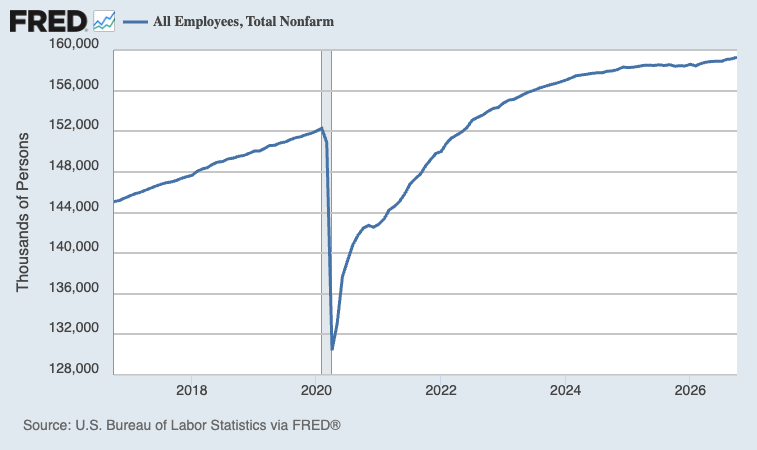
💼 Jobs were created. According to the BLS’s Employment Situation report, U.S. employers added 165,000 jobs in October.
💼 일자리가 창출되었습니다. 노동통계국(BLS)의 고용 동향 보고서에 따르면, 10월 미국 고용주들은 165,000개의 일자리를 추가했습니다.
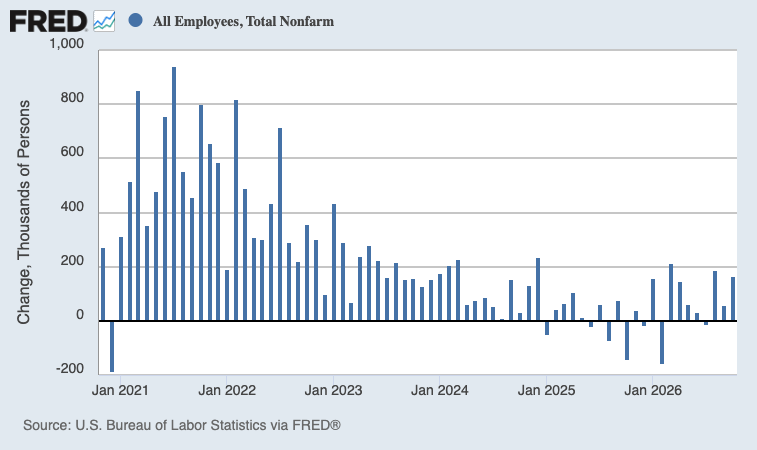
Total payroll employment rose to a record 159.29 million jobs in October.
총 급여 고용은 10월에 사상 최고치인 1억 5,929만 개의 일자리로 증가했습니다.
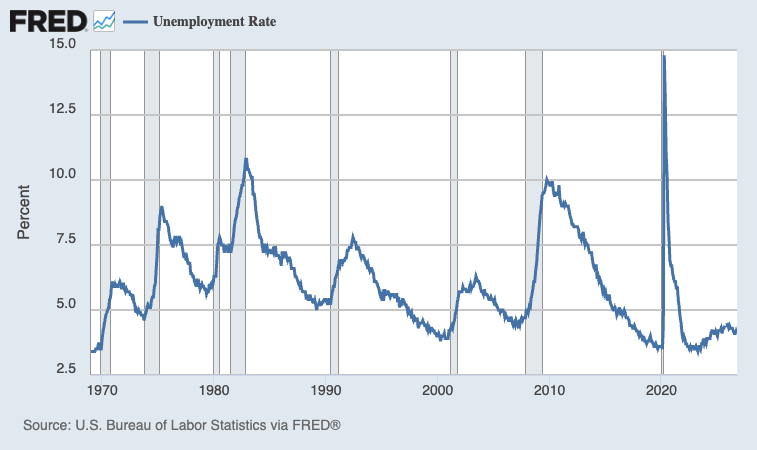
The unemployment rate — that is, the number of workers who identify as unemployed as a percentage of the civilian labor force — ticked down to 4.1% during the month.
실업률(즉, 민간 노동력 중 실업자로 파악된 근로자의 비율)은 해당 월 동안 4.1%로 소폭 하락했습니다.
The labor force participation rate — that is, the number of employed and unemployed job seekers as a percentage of the civilian population — ticked up to 61.9% as 421,000 people entered the labor force.
경제활동참가율(즉, 민간 인구 중 취업자와 구직 중인 실업자의 비율)은 421,000명이 노동 시장에 유입됨에 따라 61.9%로 소폭 상승했습니다.
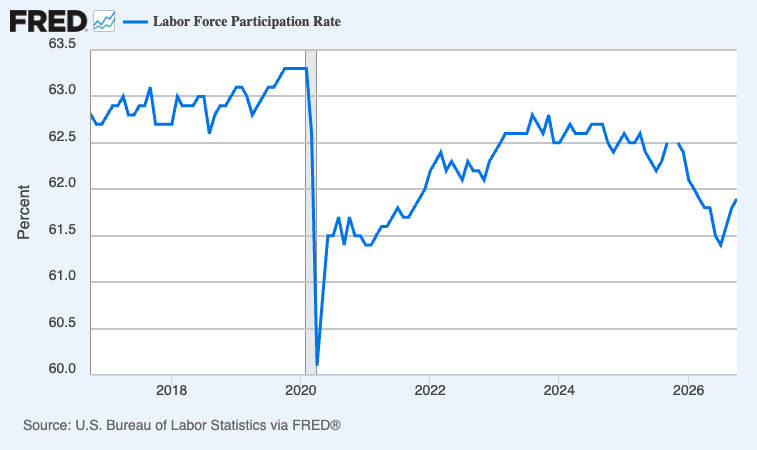
The labor market is in decent shape, but clearly isn’t as hot as it was just a few years ago.
노동 시장은 양호한 상태를 유지하고 있지만, 불과 몇 년 전만큼 과열되어 있지는 않습니다.
For more on the labor market, read: Things are looking up in the labor market 👍
노동 시장에 대한 자세한 내용은 다음을 읽어보세요: 노동 시장이 나아지고 있습니다 👍
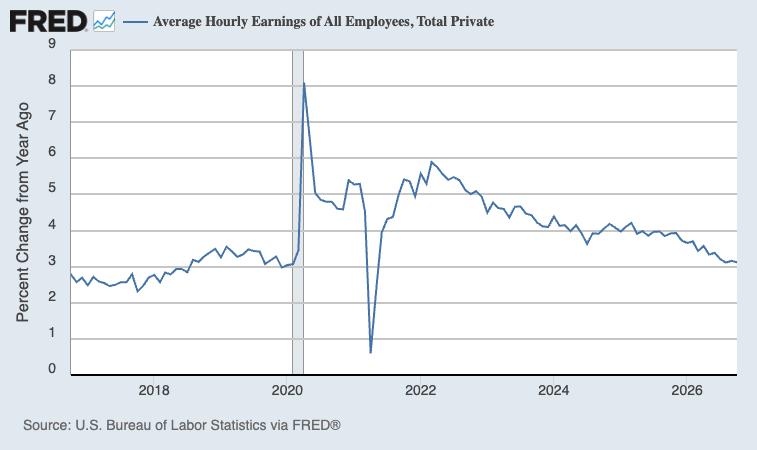
💸 Wage growth is cooling. Average hourly earnings rose 0.4% month over month in October. Year over year, October wages were up 3.1%.
💸 임금 상승세가 둔화하고 있습니다. 10월 시간당 평균 임금은 전월 대비 0.4% 상승했습니다. 전년 동월 대비로는 10월 임금이 3.1% 올랐습니다.
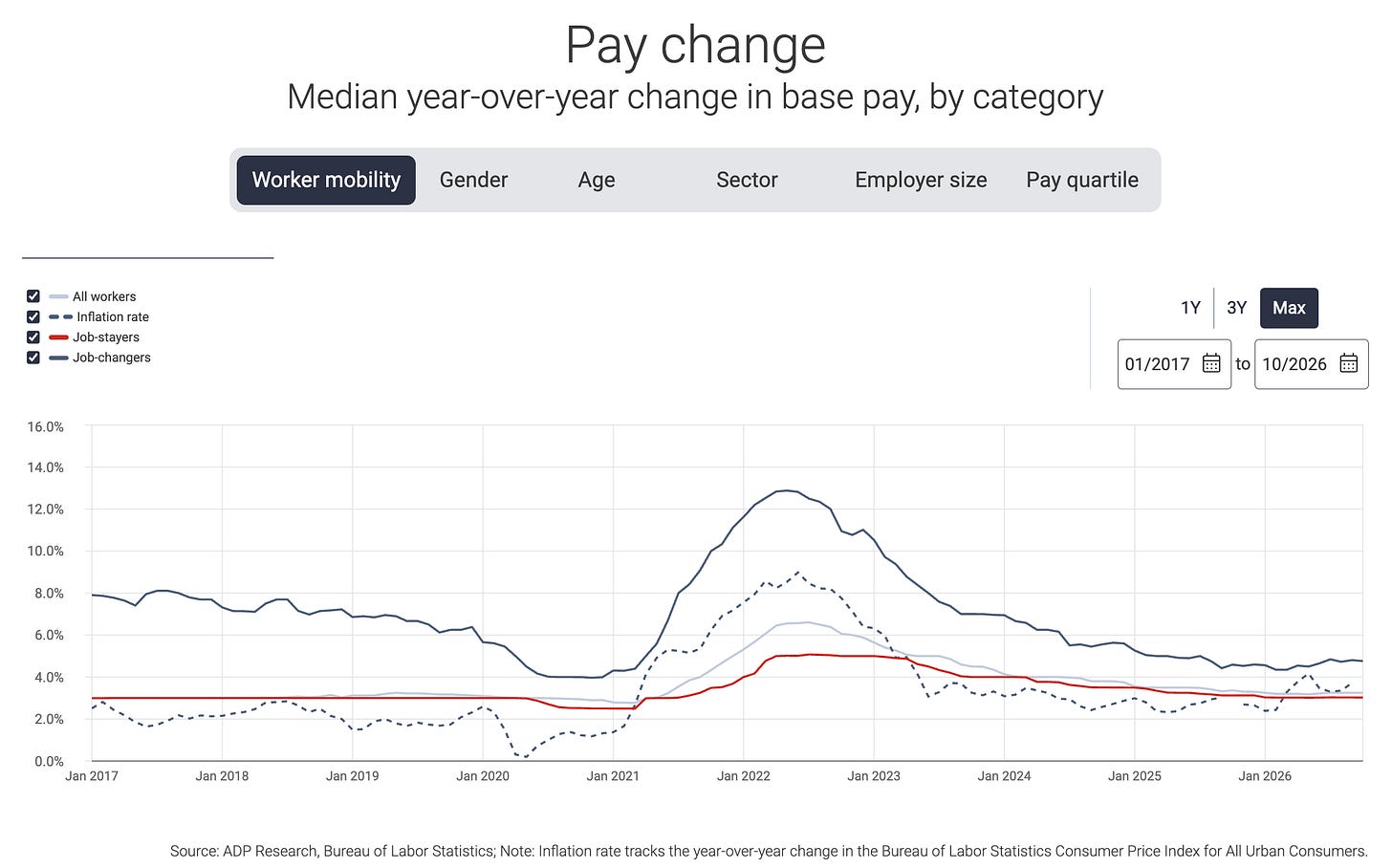
💰 Job switchers still get better pay. According to ADP, annual pay for people who changed jobs was up 4.8% in October from a year ago. That better-pay gap has been widening a bit in recent months. For those who stayed at their job, pay was up 3.0%, about what it’s been for the past year.
💰 이직자들은 여전히 더 나은 급여를 받습니다. ADP에 따르면, 10월 이직자들의 연간 급여는 1년 전보다 4.8% 상승했습니다. 이러한 더 나은 급여 격차는 최근 몇 달 동안 조금씩 벌어지고 있습니다. 직장에 잔류한 이들의 급여는 3.0% 상승하여 지난 1년 동안 유지된 수준을 보였습니다.
For more on why policymakers are watching wage growth, read: Revisiting the key chart to watch amid the Fed’s war on inflation 📈
정책 입안자들이 임금 상승률을 주시하는 이유에 대한 자세한 내용은 다음을 읽어보세요: 연준의 인플레이션과의 전쟁 속에서 주목해야 할 핵심 차트 다시 보기 📈
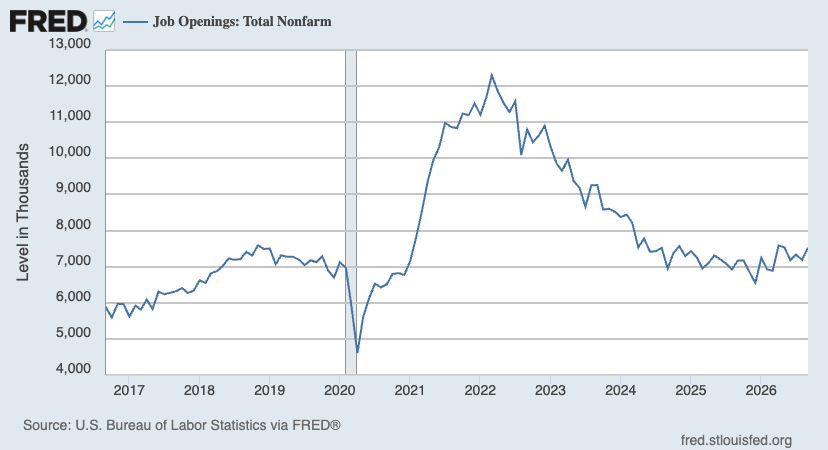
💼 Job openings rose. According to the BLS’s Job Openings and Labor Turnover Survey, employers had 7.52 million job openings in September, up from 7.19 million in August.
💼 구인 건수가 증가했습니다. 노동통계국의 구인·이직 보고서(JOLTS)에 따르면, 9월 고용주들의 구인 건수는 8월의 719만 건에서 752만 건으로 증가했습니다.
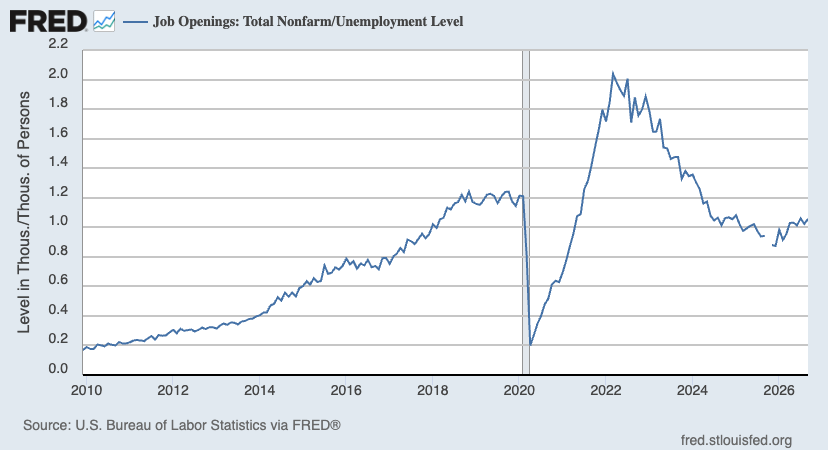
During the month, 7.11 million people were unemployed — meaning there were 1.1 job openings per unemployed person. This remains one of the most straightforward indicators of labor demand. However, this metric has returned to prepandemic levels.
해당 월 동안 실업자는 711만 명으로, 실업자 한 명당 1.1개의 구인 건수가 있었음을 의미합니다. 이는 여전히 노동 수요의 가장 직관적인 지표 중 하나입니다. 다만 이 지표는 팬데믹 이전 수준으로 돌아왔습니다.
For more on job openings, read: Were there really twice as many job openings as unemployed people? 🤨
구인 건수에 대한 자세한 내용은 다음을 읽어보세요: 정말로 실업자보다 구인 건수가 두 배나 많았을까요? 🤨
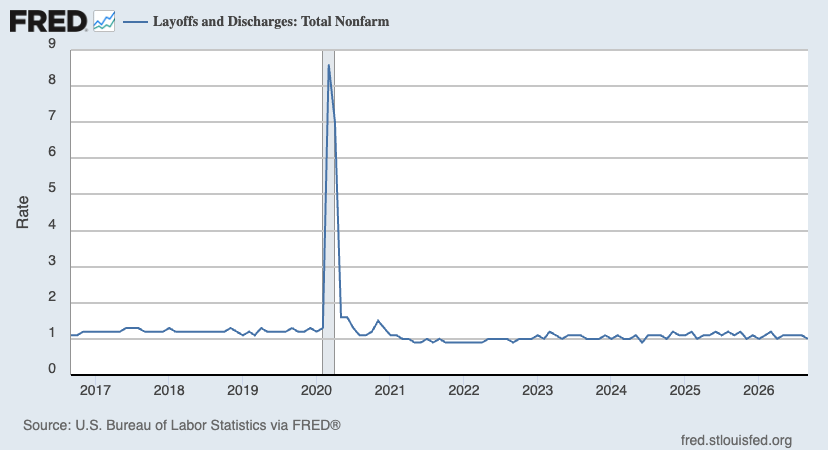
👍 Layoffs remain depressed, hiring remains firm. Employers laid off 1.64 million people in September. While challenging for the people affected, this figure represents just 1.0% of total employment. This metric remains slightly below prepandemic levels.
👍 대규모 해고는 여전히 침체되어 있고 고용은 견조합니다. 9월 고용주들은 164만 명을 해고했습니다. 영향을 받은 사람들에게는 힘든 일이겠지만, 이 수치는 전체 고용의 불과 1.0%에 불과합니다. 이 지표는 팬데믹 이전 수준을 약간 밑돌고 있습니다.
For more on layoffs, read: Mathematical context can totally change the story 🧮
해고에 대한 자세한 내용은 다음을 읽어보세요: 수학적 맥락이 이야기를 완전히 바꿀 수 있습니다 🧮
Hiring activity remains well above layoff activity. During the month, employers hired 5.40 million people.
고용 활동은 여전히 해고 활동을 크게 웃돌고 있습니다. 해당 월 동안 고용주들은 540만 명을 고용했습니다.
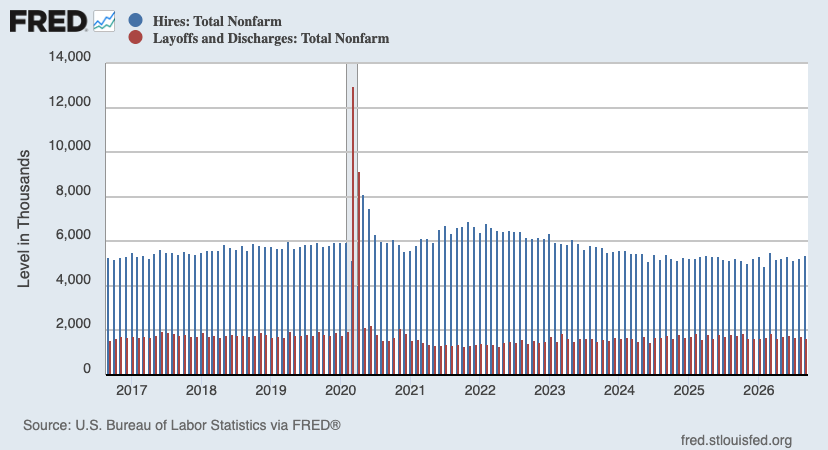
That said, the hiring rate — the number of hires as a percentage of the employed workforce — is relatively low, which could signal trouble ahead in the labor market.
그럼에도 불구하고 고용률(고용 노동력 대비 신규 고용의 비율)은 상대적으로 낮아, 향후 노동 시장에 문제가 생길 수 있음을 암시할 수 있습니다.
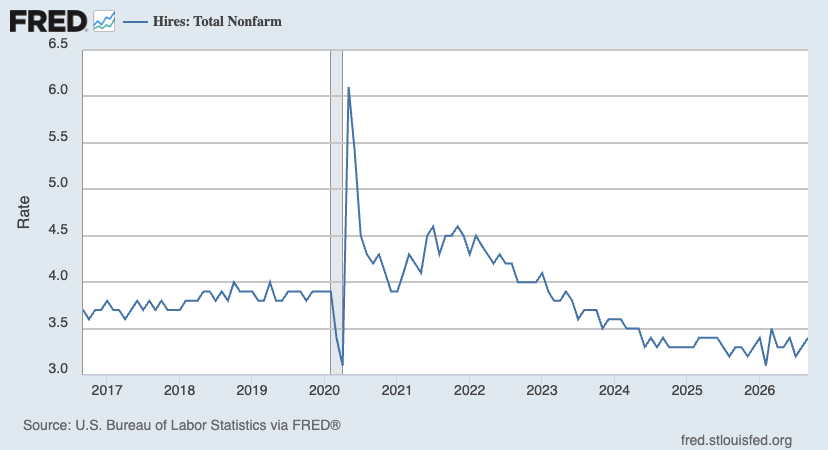
For more on why this metric matters, read: The hiring situation 🧩
이 지표가 중요한 이유에 대한 자세한 내용은 다음을 읽어보세요: 고용 상황 🧩
🤔 People are quitting more. In September, 3.37 million workers quit their jobs. This represents 2.1% of the workforce. The rate continues to trend below prepandemic levels, but the recent uptick suggests improvement in labor market confidence.
🤔 사람들이 이직을 더 많이 하고 있습니다. 9월에는 337만 명의 근로자가 일터를 떠났습니다. 이는 전체 노동력의 2.1%에 해당합니다. 퇴사율은 여전히 팬데믹 이전 수준을 밑돌고 있지만, 최근의 소폭 상승은 노동 시장에 대한 자신감이 개선되고 있음을 시사합니다.
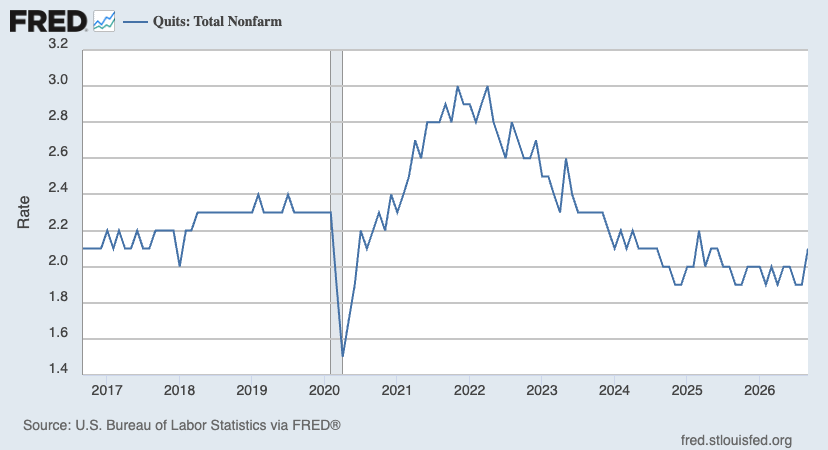
A low quits rate could mean a number of things: more people are satisfied with their jobs, workers have fewer outside job opportunities, wage growth is cooling, or productivity will improve as fewer people enter new, unfamiliar roles.
낮은 퇴사율은 여러 가지를 의미할 수 있습니다. 더 많은 사람들이 자신의 직장에 만족하고 있거나, 근로자들이 외부에서 얻을 수 있는 일자리 기회가 줄었거나, 임금 상승세가 둔화하고 있거나, 새롭고 낯선 역할을 맡는 사람이 줄어들면서 생산성이 향상되는 것 등이 있습니다.
For more on this dynamic, read: The crummy labor market is yielding a ‘tenure dividend’ for corporations 💰
이러한 역학 관계에 대한 자세한 내용은 다음을 읽어보세요: 부실한 노동 시장이 기업들에게 ‘근속 배당’을 안겨주고 있습니다 💰
💪 Labor productivity increases. From the BLS: “Nonfarm business sector labor productivity increased 3.6% in the third quarter of 2026… as output increased 3.7% and hours worked increased 0.1%… From the same quarter a year ago, nonfarm business sector labor productivity increased 2.1% in the third quarter of 2026.”
💪 노동 생산성이 증가합니다. 노동통계국(BLS)에 따르면: “2026년 3분기 비농업 부문 노동 생산성은 3.6% 증가했습니다… 산출량이 3.7% 증가하고 근로 시간이 0.1% 증가함에 따라… 2026년 3분기 비농업 부문 노동 생산성은 전년 동기 대비 2.1% 증가했습니다.”
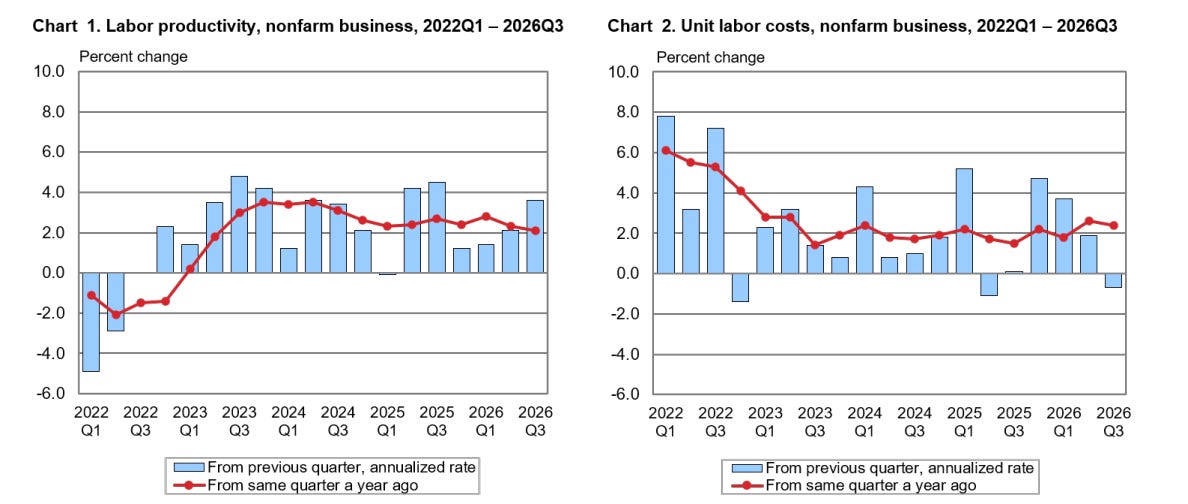
For more, read: Promising signs for productivity ⚙️
자세한 내용은 다음을 읽어보세요: 생산성에 대한 유망한 신호들 ⚙️
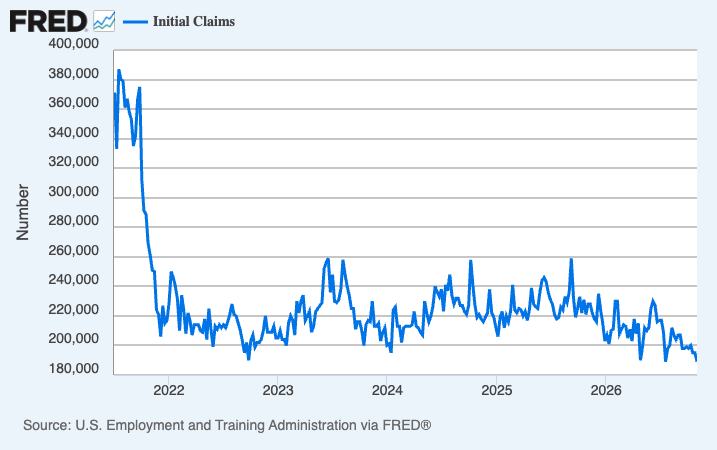
💼 New unemployment insurance claims, total ongoing claims remain low. Initial claims for unemployment benefits ticked down to 189,000 during the week ending Oct. 31, down from 195,000 the week prior. This metric remains at levels historically associated with economic growth.
💼 신규 실업보험 청구 건수 및 총 지속 청구 건수가 낮은 수준을 유지하고 있습니다. 10월 31일로 끝난 주의 실업급여 초기 청구 건수는 직전 주의 19.5만 건에서 18.9만 건으로 소폭 감소했습니다. 이 지표는 역사적으로 경제 성장과 연관된 수준을 유지하고 있습니다.
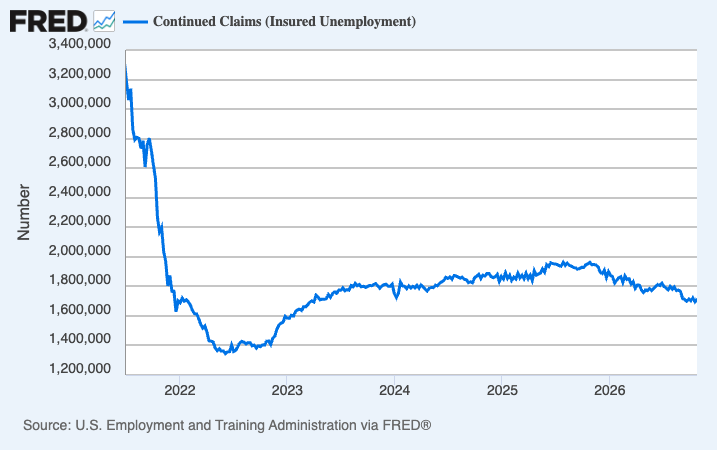
Insured unemployment, which captures those who continue to claim unemployment benefits, rose to 1.72 million during the week ending Oct. 24.
실업급여를 계속 청구하는 이들을 포착하는 피보험 실업자 수는 10월 24일로 끝난 주 동안 172만 명으로 증가했습니다.
For more on the labor market, read: Why mass tech layoffs have little effect on total employment 💾
노동 시장에 대한 자세한 내용은 다음을 읽어보세요: 대규모 기술직 해고가 전체 고용에 거의 영향을 미치지 않는 이유 💾
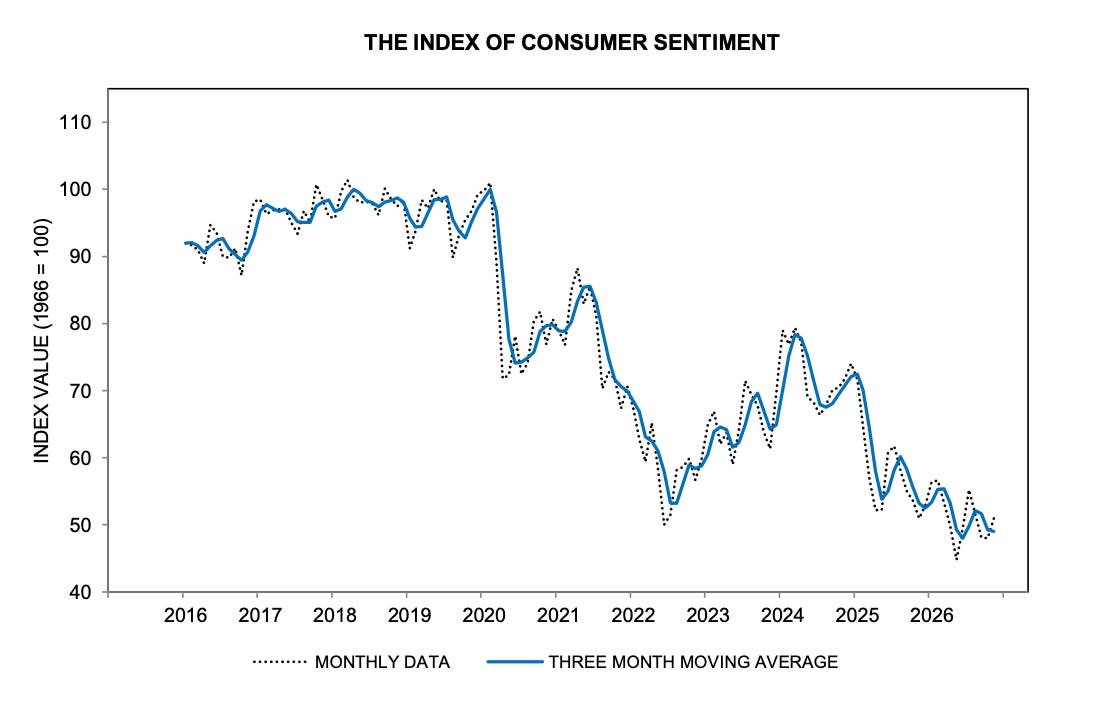
👎 Consumer vibes improve, but remain in the dumps. From the University of Michigan’s November Surveys of Consumers: “Consumer sentiment ticked up about 6% in the preliminary read. Modest improvements in multiple domains, including expected personal finances and business conditions, were concentrated primarily among independents. While sentiment lifted for lower- and middle-wealth consumers, it fell 5% for those with the largest stock portfolios in the wake of a relatively turbulent period in stock markets. Moreover, consumers’ comments revealed growing anxiety over a possible AI bubble. AI worries, however, were dwarfed by cost of living concerns, which continue to be at the forefront of consumers’ minds across the population. About 57% spontaneously mentioned that their living standards have been eroded by high prices, the highest seen since May and up from 46% in February, just prior to the Iran conflict. Despite this month’s improvement, sentiment is down 10% from February.”
👎 소비자 분위기가 개선되었으나 여전히 바닥을 치고 있습니다. 미시간대학교의 11월 소비자 태도 조사에 따르면: “소비자 심리는 예비 조사에서 약 6% 소폭 상승했습니다. 예상 개인 재정 및 사업 여건을 포함한 여러 분야에서의 완만한 개선은 주로 무당파층에 집중되었습니다. 하위 및 중위 자산 계층 소비자의 심리는 상승한 반면, 주식 시장의 비교적 혼란스러운 시기 여파로 대규모 주식 포트폴리오를 보유한 이들의 심리는 5% 하락했습니다. 게다가 소비자들의 코멘트에서는 가능한 AI 거품에 대한 불안감이 커지고 있는 것으로 나타났습니다. 그러나 AI 우려 압박은 인구 전반의 소비자 마음속에서 최전선에 자리 잡고 있는 생활비 우려에 비하면 미미한 수준이었습니다. 응답자의 약 57%가 높은 물가로 인해 생활 수준이 침식되었다고 자발적으로 언급했으며, 이는 5월 이후 최고치이자 이란 분쟁 직전인 2월의 46%에서 상승한 수치입니다. 이번 달의 개선에도 불구하고 심리는 2월 대비 10% 하락한 상태입니다.”
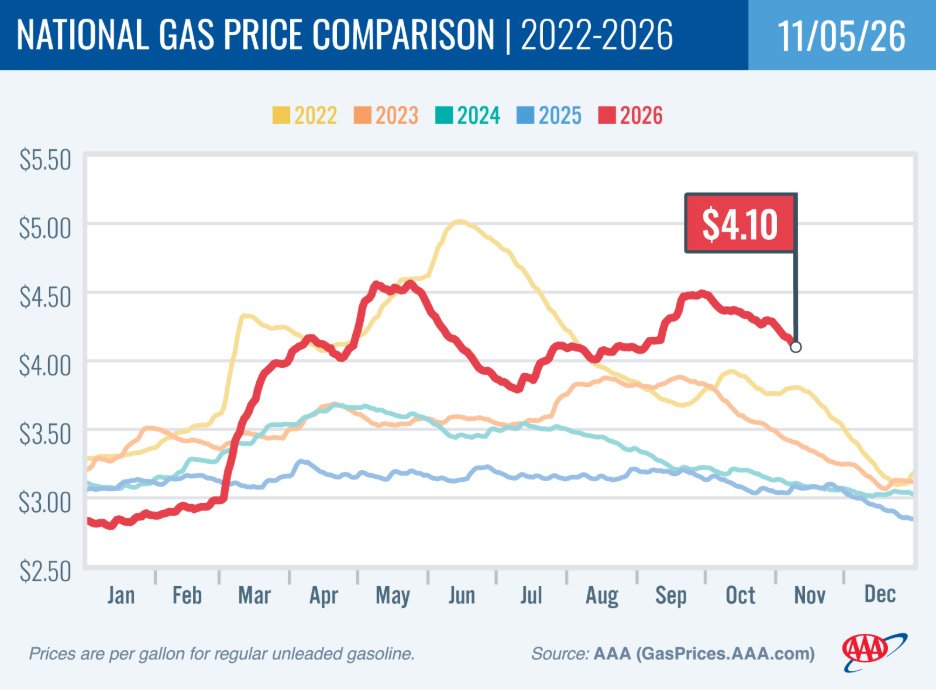
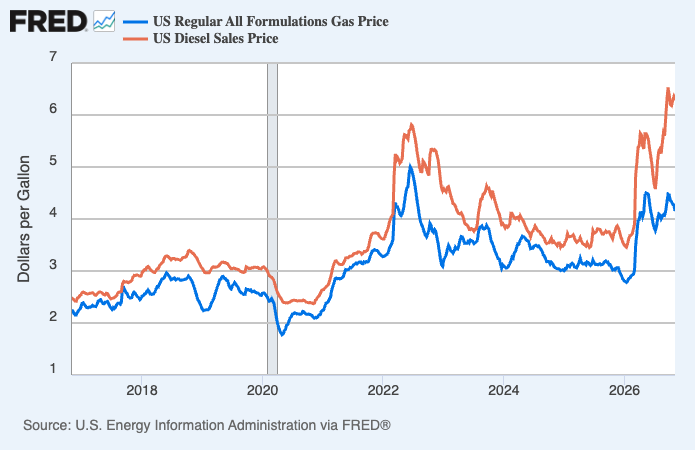
⛽️ Gas prices decline. From AAA: “The national average for a gallon of regular gasoline is down 12 cents from last week to $4.10. Gas prices have been going down for nearly two weeks, as crude oil has dipped back into the high $80 – low $90 per barrel range. But pump prices remain the highest they’ve ever been during this time of year. Before 2026, the national average had never gone above $4 per gallon during the month of November.”
⛽️ 가스 가격이 하락합니다. AAA에 따르면: “일반 휘발유 1갤런의 전국 평균 가격은 지난주보다 12센트 하락한 4.10달러를 기록했습니다. 원유가 배럴당 80달러 후반~90달러 초반 범위로 다시 떨어짐에 따라 가스 가격은 거의 2주 동안 하락세를 보이고 있습니다. 그러나 주유소 가격은 이맘때 기준으로는 역대 최고 수준을 유지하고 있습니다. 2026년 이전에는 11월 한 달 동안 전국 평균 가격이 갤런당 4달러를 넘어선 적이 없었습니다.”
Here’s a longer-term look at gas and diesel price trends, as tracked by the EIA.
미에너지정보청(EIA)이 추적한 가스 및 디젤 가격 추이에 대한 장기적인 시각입니다.
For more on energy prices, read: Our love-hate relationship with rising oil prices in charts 💔🛢️📊
에너지 가격에 대한 자세한 내용은 다음을 읽어보세요: 차트로 보는 유가 상승과의 애증 관계 💔🛢️📊
🏠 Mortgage rates decline. According to Freddie Mac, the average 30-year fixed-rate mortgage ticked down to 7.18%, down from 7.24% last week. It remains near the highest average rate since Nov. 2023.
🏠 모기지 금리가 하락합니다. 프레디맥에 따르면 평균 30년 고정 모기지 금리는 지난주 7.24%에서 소폭 하락한 7.18%를 기록했습니다. 이는 2023년 11월 이후 가장 높은 평균 금리 부근에 머물러 있습니다.
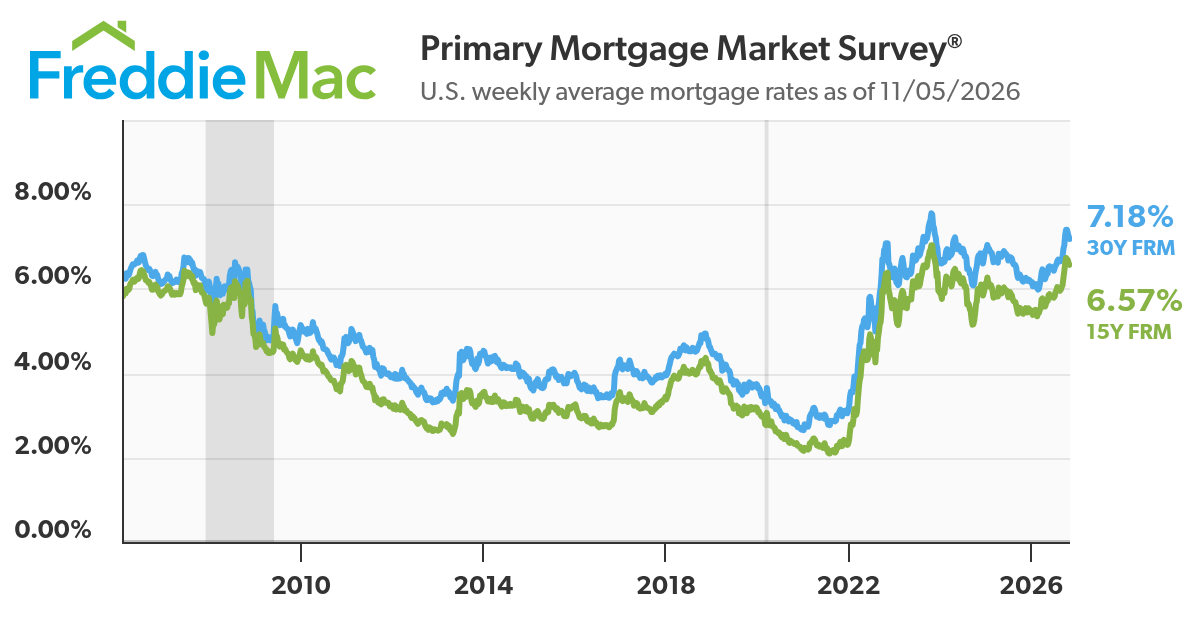
As of Q3, there were 149.8 million housing units in the U.S., of which 87 million were owner-occupied and about 40% were mortgage-free. Of those carrying mortgage debt, almost all have fixed-rate mortgages, and most of those mortgages have rates that were locked in before rates surged from 2021 lows. All of this is to say: Most homeowners are not particularly sensitive to the weekly movements in home prices or mortgage rates.
3분기 기준으로 미국에는 1억 4,980만 채의 주택이 있으며, 그중 8,700만 채가 자가 소유이고 약 40%는 모기지 부채가 없습니다. 모기지 부채를 안고 있는 주택 소유자 중 거의 전원이 고정금리 모기지를 이용하고 있으며, 그 대다수는 금리가 2021년 최저치에서 급등하기 전에 고정된 금리를 적용받고 있습니다. 이 모든 것은 대다수의 주택 소유자가 주택 가격이나 모기지 금리의 주간 변동에 크게 민감하지 않음을 의미합니다.
For more on mortgages and home prices, read: Why home prices and rents are creating all sorts of confusion about inflation 😖
모기지 및 주택 가격에 대한 자세한 내용은 다음을 읽어보세요: 주택 가격과 임대료가 인플레이션에 대해 온갖 혼란을 야기하는 이유 😖
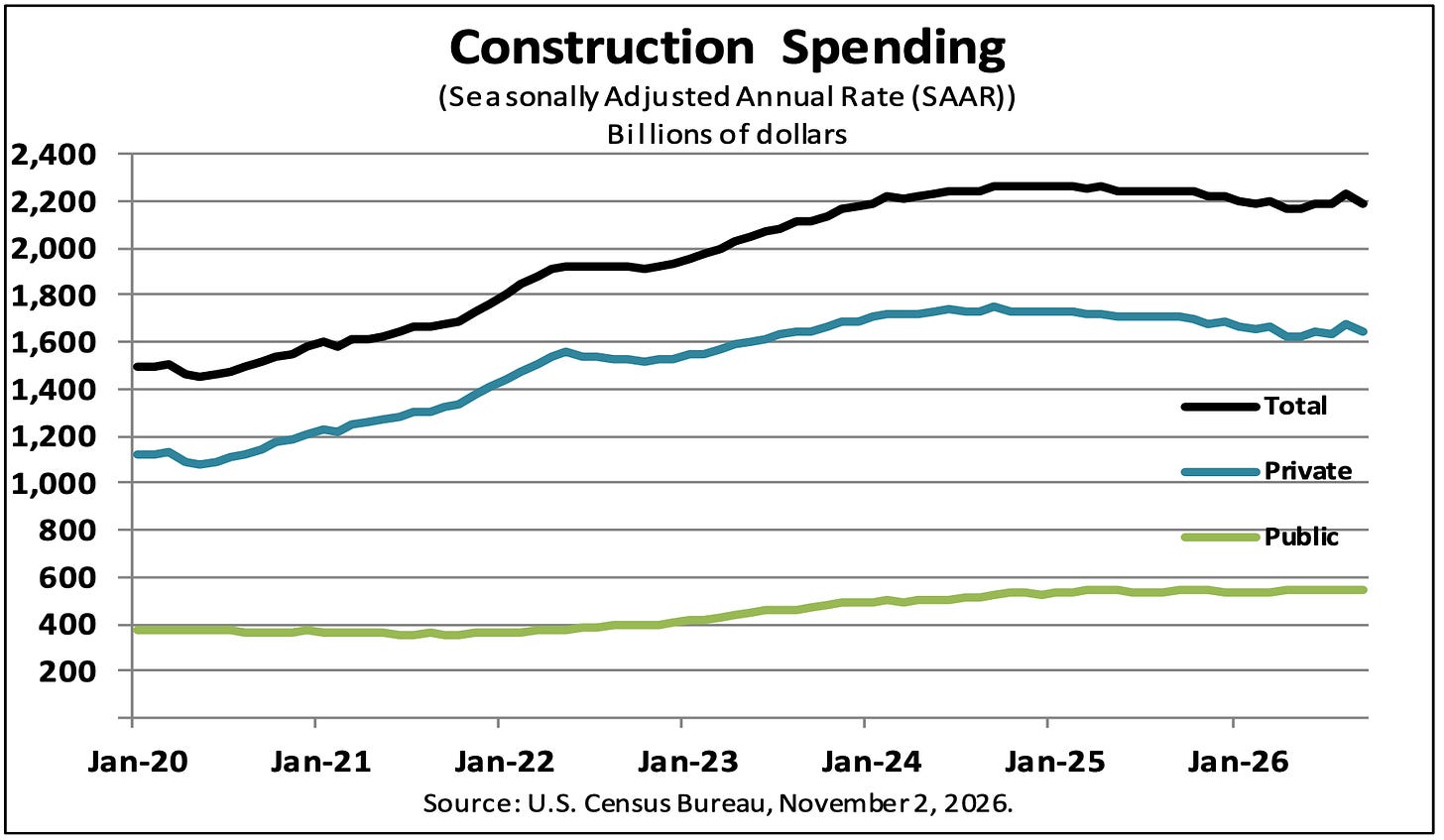
🔨 Construction spending ticked lower. Construction spending fell 1.9% to an annual rate of $2.19 trillion in September.
🔨 건설 지출이 소폭 감소했습니다. 9월 건설 지출은 1.9% 감소한 연율 2조 1,900억 달러를 기록했습니다.
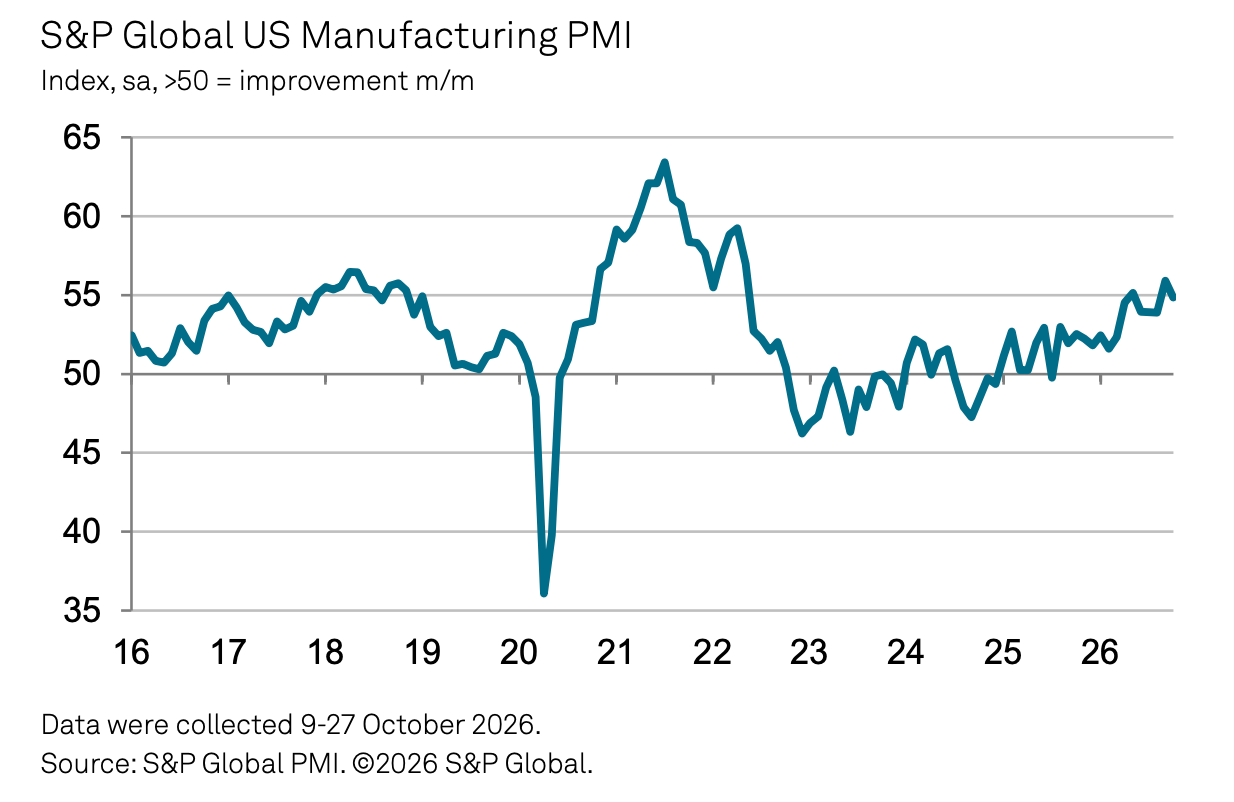
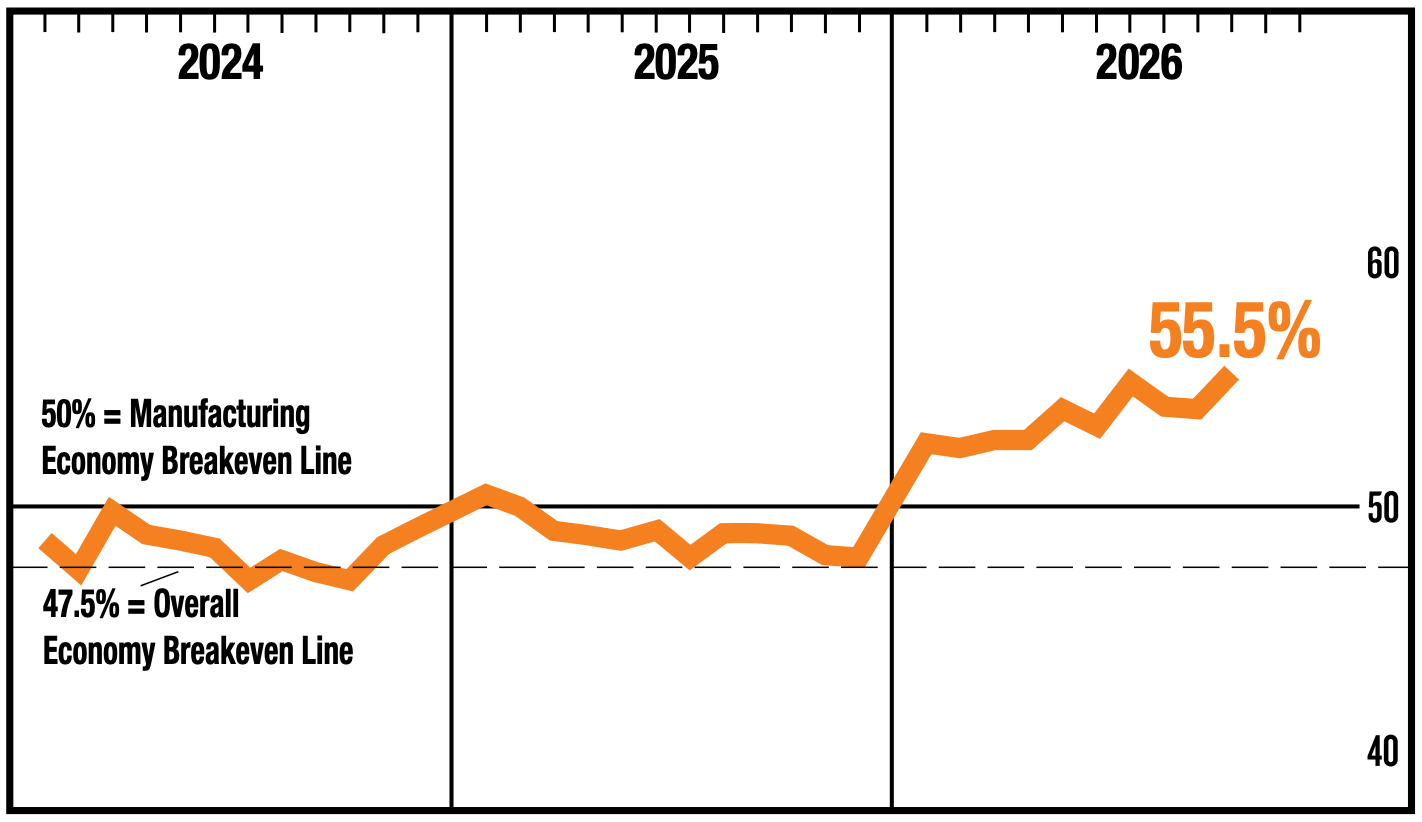
📋 Manufacturing activity surveys signal growth, but also challenges. From S&P Global’s October U.S. Manufacturing PMI: “US factories continued to report strong expansion in October, sustaining the sector’s best growth spell since early 2022. The upturn is also generating jobs at a pace not seen for five-and-a- half years, during the surge in demand seen during the pandemic. However, growing pains are clearly evident, with factories struggling to meet strong demand, especially for AI-related goods and equipment, amid supply chain disruptions. Delivery delays, often linked to shipping and logistics issues, are more widespread than at any time since 2022. With demand often exceeding supply, producers have been increasingly able to pass higher costs on to customers, notably for energy-related inputs.”
📋 제조업 활동 지수는 성장을 시사하지만 과제도 보여줍니다. S&P글로벌의 10월 미국 제조업 PMI에 따르면: “미국 공장들은 10월에 강력한 확장을 지속하며 2022년 초 이후 섹터의 최장기 성장세를 이어갔습니다. 이번 상승세는 또한 팬데믹 당시의 수요 급증기였던 5년 반 동안 보지 못한 속도로 일자리를 창출하고 있습니다. 그러나 공급망 차질 속에서 공장들이 특히 AI 관련 상품과 장비에 대한 강한 수요를 충족하기 위해 고군분투함에 따라 성장통이 명백히 드러나고 있습니다. 배송 지연은 종종 배송 및 물류 문제와 연계되어 있으며 2022년 이후 어느 때보다 광범위하게 나타나고 있습니다. 수요가 공급을 종종 초과함에 따라 생산자들은 특히 에너지 관련 투입재에 대한 더 높은 비용을 고객에게 점점 더 전가할 수 있게 되었습니다.”
Similarly, the ISM October Manufacturing PMI signaled growth.
마찬가지로 ISM 10월 제조업 PMI도 성장을 시사했습니다.
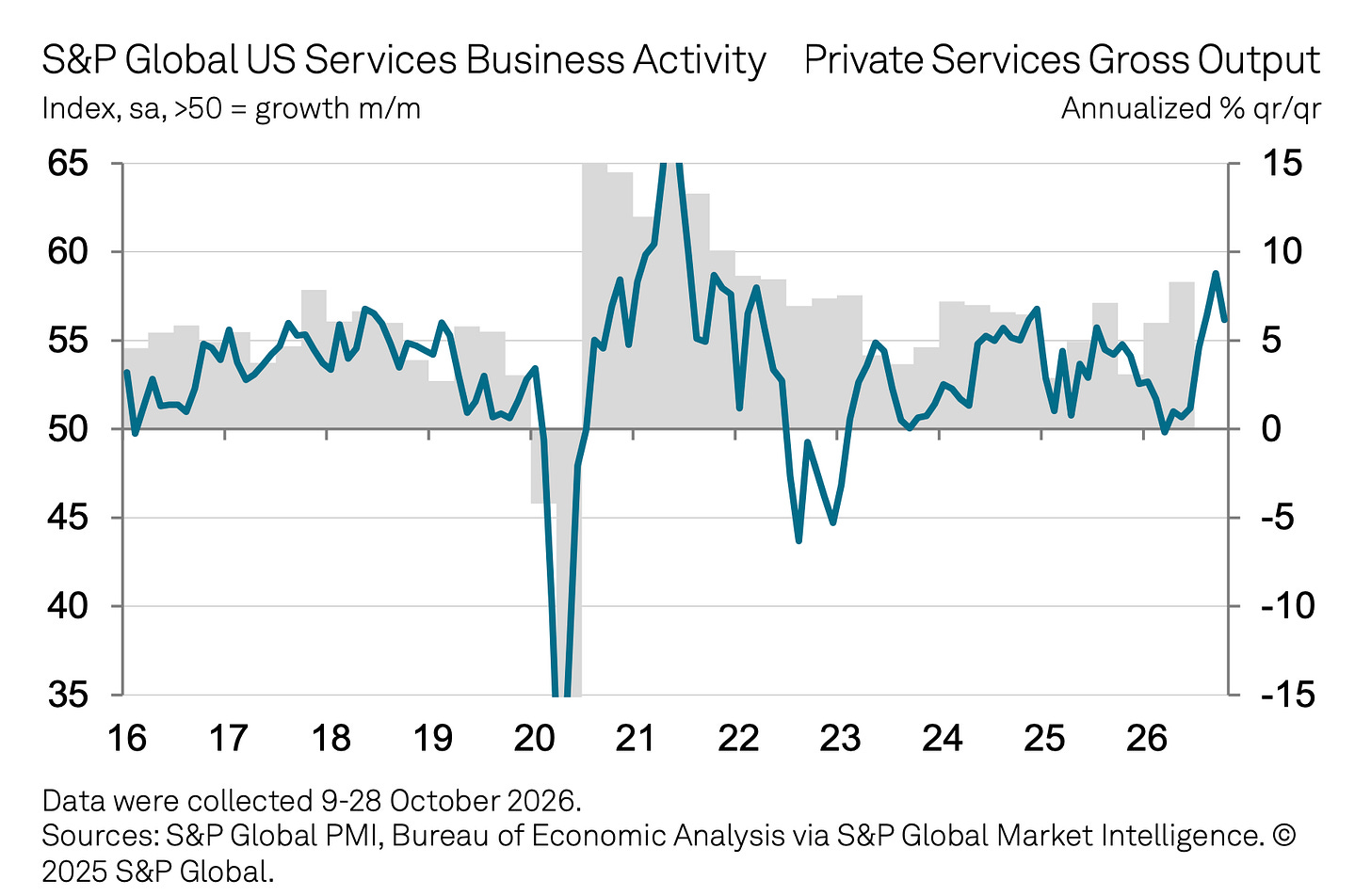
⌨️ Services activity surveys signal growth. From S&P Global’s October U.S. Services PMI: “The October PMI surveys mark a strong start to the fourth quarter for the US economy, indicative of GDP rising at an annualised rate of over 4%. The star of the upturn remains the tech sector, but encouragingly solid supporting performances are also being seen in consumer-facing sectors and financial services. However, the good news on growth is tainted by yet another worrying intensification of inflationary pressures and some disappointing forward-looking indicators from the survey.”
⌨️ 서비스업 활동 지수는 성장을 시사합니다. S&P글로벌의 10월 미국 서비스업 PMI에 따르면: “10월 PMI 조사는 미국 경제에 4분기의 강력한 출발을 알리며, 연환산 기준 4%가 넘는 GDP 상승률을 나타냅니다. 이번 상승세의 주역은 여전히 기술 부문이지만, 소비자 대면 부문과 금융 서비스에서도 고무적이고 탄탄한 지원 성과가 나타나고 있습니다. 그러나 성장에 대한 좋은 소식은 또다시 우려스러운 수준으로 심화되는 인플레이션 압력과 설문조사의 몇 가지 실망스러운 선행 지표들로 인해 빛이 바래고 있습니다.”
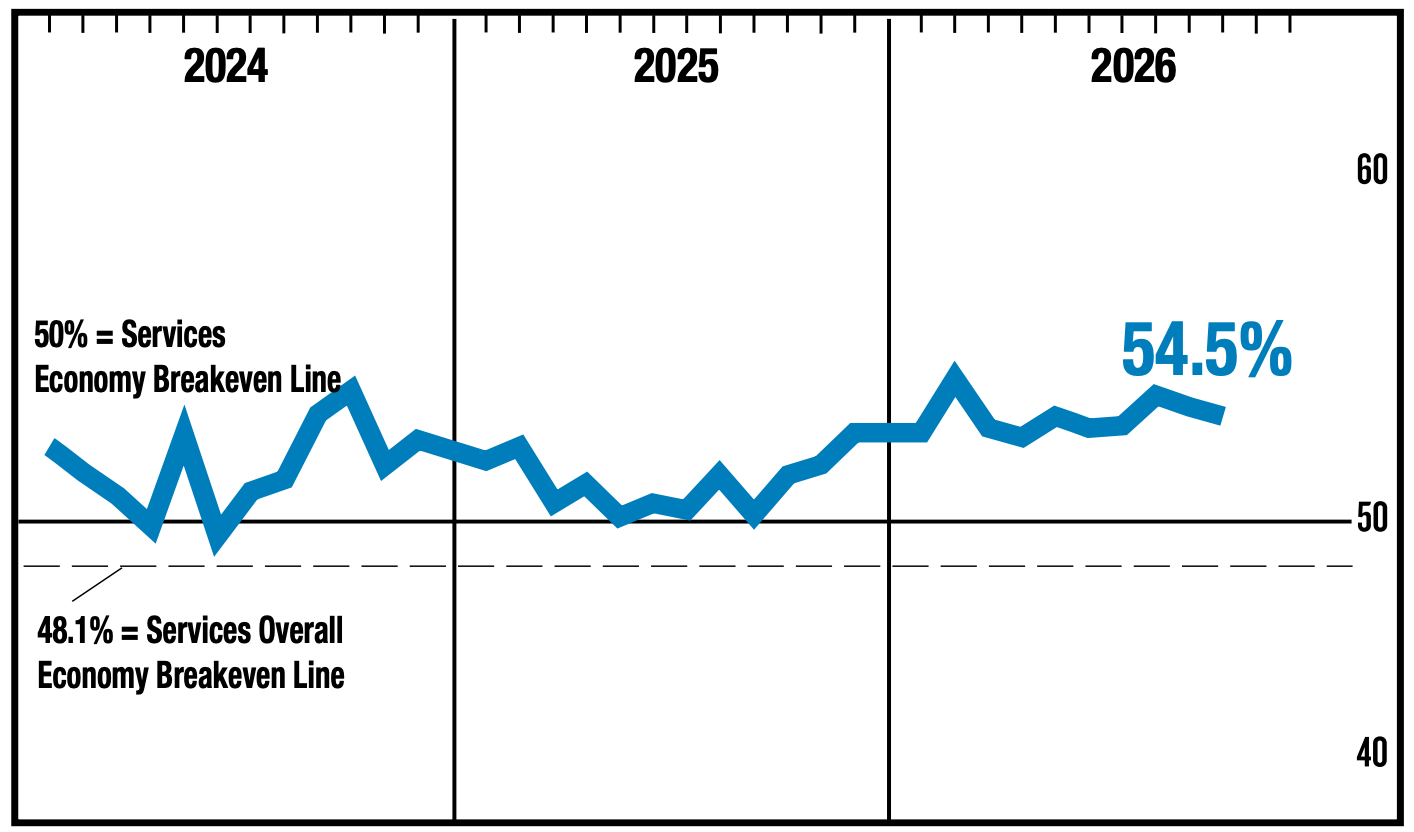
The October ISM Services PMI signaled growth, but at a cooler pace.
10월 ISM 서비스업 PMI도 성장을 시사했으나, 속도는 더뎌졌습니다.
Keep in mind that during times of perceived stress, soft survey data tends to be more exaggerated than actual hard data.
스트레스가 감지되는 시기에는 부드러운 설문조사 데이터가 실제 하드 데이터보다 더 과장되는 경향이 있음을 명심해야 합니다.
For more on this, read: What businesses do > what businesses say 🙊 and 4 sometimes-conflicting ways I’m thinking about the economy 😬😞😎🙃
이에 대한 자세한 내용은 다음을 읽어보세요: 기업이 하는 일 > 기업이 하는 말 🙊 및 경제에 대해 생각하는 다소 상반된 4가지 방식 😬😞😎🙃
🏭 Business investment activity rose. Orders for nondefense capital goods excluding aircraft — a.k.a. core capex or business investment — increased 0.6% in September to a record $88.2 billion.
🏭 기업 투자 활동이 증가했습니다. 항공기를 제외한 비국방 자본재 주문, 즉 핵심 자본재 지출 또는 기업 투자는 9월에 0.6% 증가한 사상 최고치인 882억 달러를 기록했습니다.
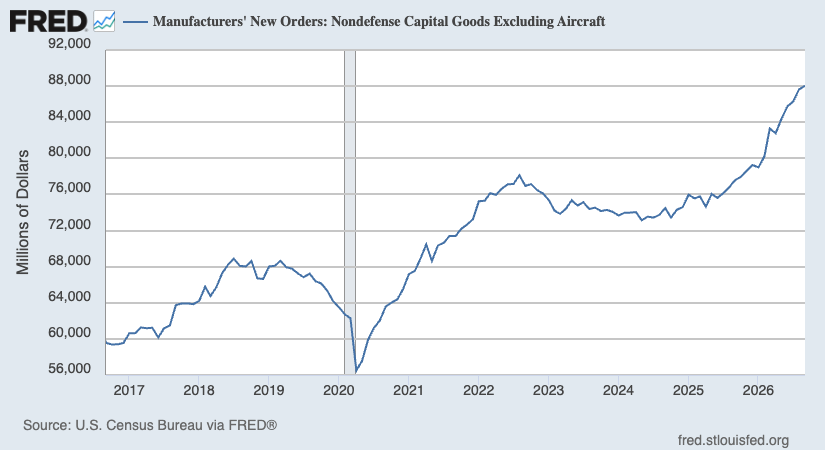
Core capex orders are a leading indicator, meaning they forecast future economic activity.
핵심 자본재 주문은 선행 지표로, 향후 경제 활동을 예측합니다.
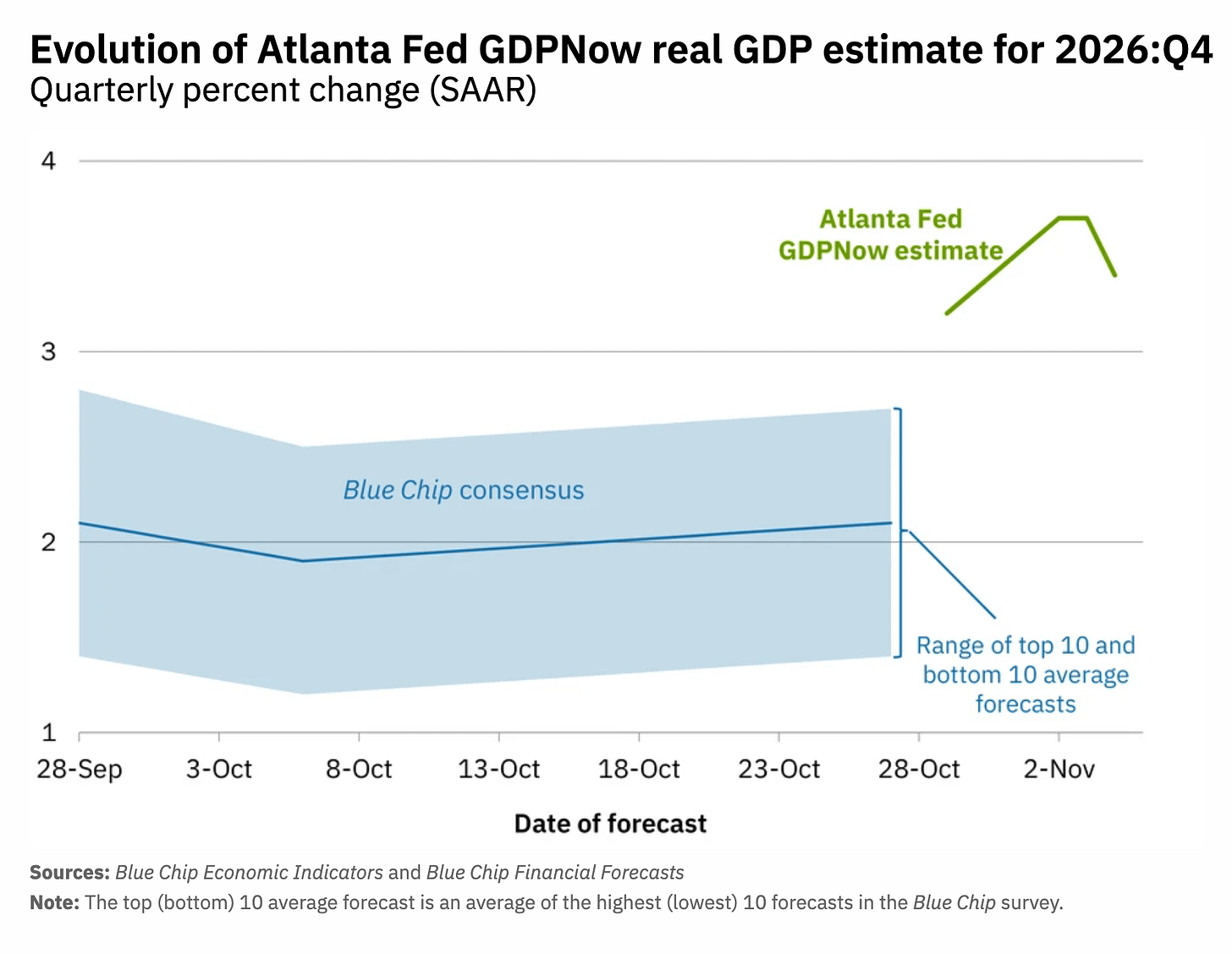
📈 Near-term GDP growth estimates are tracking positively. The Atlanta Fed’s GDPNow model sees real GDP growth rising at a 3.4% rate in Q4.
📈 단기 GDP 성장률 전망치가 긍정적으로 추세 지어지고 있습니다. 애틀랜타 연은의 GDPNow 모델은 4분기 실질 GDP 성장률이 3.4%의 속도로 증가할 것으로 보고 있습니다.
For more on GDP and the economy, read: It’s too ambiguous to just say ‘the economy’ 🤦🏻♂️ and Economic data can often be both ‘worse’ and ‘good’ 🌦️
GDP와 경제에 대한 자세한 내용은 다음을 읽어보세요: 단순히 ‘경제’라고 말하기에는 너무 모호합니다 🤦🏻♂️ 및 경제 데이터는 종종 ‘나쁨’과 ‘좋음’을 동시에 가질 수 있습니다 🌦️
Putting it all together 📋
Earnings look bullish: The long-term outlook for the stock market remains favorable, bolstered by expectations for years of earnings growth. And earnings are the most important driver of stock prices.
실적이 강세를 보이고 있습니다. 주식 시장의 장기적 전망은 수년간의 실적 성장 기대감에 힘입어 여전히 유리한 상태입니다. 그리고 실적은 주가 움직임의 가장 중요한 동력입니다.
Demand is positive: Demand for goods and services remains positive, supported by healthy consumer and business balance sheets. Personal spending activity remains at record levels. Core capex orders, which are a leading indicator of business spending, have been trending higher.
수요가 긍정적입니다. 재화와 서비스에 대한 수요는 건전한 소비자 및 기업 대차대조표의 뒷받침을 받아 여전히 긍정적입니다. 개인 소비 활동은 사상 최고 수준을 유지하고 있습니다. 기업 지출의 선행 지표인 핵심 자본재 주문은 상승 추세를 보이고 있습니다.
Growth rates have cooled: While the economy remains healthy, growth has normalized from much hotter levels earlier in the cycle. The economy is less “coiled” these days as major tailwinds like job openings and excess savings have faded. Job creation, while positive, is not as hot as it used to be. It has become harder to argue that growth is destiny.
성장률이 둔화했습니다. 경제는 여전히 건전하지만, 경기 사이클 초기의 훨씬 뜨거웠던 수준에서 성장세가 정규화되었습니다. 구인 건수와 초과 저축 같은 주요 순풍이 옅어지면서 요즘 경제는 과거처럼 ‘팽팽하게 감겨’ 있지 않습니다. 일자리 창출은 긍정적이기는 하나 예전만큼 뜨겁지 않습니다. 성장이 곧 운명이라고 주장하기는 어려워졌습니다.
Actions speak louder than words: We are in an odd period, as hard economic data has decoupled from soft, sentiment-driven data. Consumer and business sentiment has been relatively poor, even as tangible consumer and business activity continues to grow and trend at record levels. From an investor’s perspective, what matters is that the hard economic data holds up.
말보다 행동이 중요합니다. 하드 경제 데이터가 심리 중심의 소프트 데이터와 디커플링(탈동조화)되면서 우리는 기묘한 시기를 지나고 있습니다. 눈에 보이는 소비자와 기업의 활동이 계속 성장하고 사상 최고 수준의 추세를 보임에도 불구하고 소비자 및 기업 심리는 상대적으로 부진했습니다. 투자자의 관점에서 중요한 것은 하드 경제 데이터가 버텨주느냐 하는 것입니다.
Stocks are not the economy: There’s a case to be made that the U.S. stock market could outperform the U.S. economy in the near term, thanks largely to positive operating leverage. Since the pandemic, companies have aggressively adjusted their cost structures. This included strategic layoffs and investment in new equipment, including AI-powered hardware. These moves are driving positive operating leverage, meaning modest sales growth — in the cooling economy — translates into robust earnings growth.
주식이 곧 경제는 아닙니다. 주로 긍정적인 영업 레버리지 덕분에 미국 주식 시장이 단기적으로 미국 경제를 상회할 가능성이 있다는 주장이 제기될 수 있습니다. 팬데믹 이후 기업들은 전략적 해고와 AI 구동 하드웨어를 비롯한 신규 장비 투자를 포함하여 비용 구조를 공격적으로 조정했습니다. 이러한 움직임은 긍정적인 영업 레버리지를 유발하고 있으며, 이는 쿨링되는 경제 속에서 완만한 매출 성장이 강력한 순익 성장으로 직결됨을 의미합니다.
Mind the ever-present risks: We should not get complacent. There will always be risks to worry about, such as U.S. political uncertainty, geopolitical turmoil, energy price volatility, and cyberattacks. There are also the dreaded unknowns. Any of these risks can flare up and spark short-term market volatility.
언제나 존재하는 리스크에 유의하세요. 안주해서는 안 됩니다. 미국 정치적 불확실성, 지정학적 혼란, 에너지 가격 변동성, 사이버 공격 등 항상 걱정해야 할 리스크가 존재합니다. 두려운 미지의 요소들도 있습니다. 이러한 리스크 중 어느 것이든 불거져 나와 단기적인 시장 변동성을 촉발할 수 있습니다.
Investing is never a smooth ride: Economic recessions and bear markets are harsh realities that all long-term investors should expect as they build wealth in the markets. Always keep your stock market seat belts fastened.
투자는 결코 순탄한 길이 아닙니다. 경기 침체와 베어 마켓(약세장)은 모든 장기 투자자들이 부를 쌓아가는 과정에서 예상해야 하는 가혹한 현실입니다. 항상 주식 시장 안전벨트를 단단히 매고 계시기 바랍니다.
Think long-term: For now, there’s no reason to believe the economy and the markets will face a challenge they can’t overcome. The long game remains undefeated, and long-term investors can expect that streak to continue.
장기적인 시각을 가지세요. 현재로서는 경제와 시장이 극복할 수 없는 난관에 직면할 것이라고 믿을 만한 이유가 없습니다. 오랜 역사의 게임은 결코 패배하지 않았으며, 장기 투자자들은 그 연승 행진이 계속될 것으로 기대할 수 있습니다.
For more on how the macro story is evolving, check out the previous review of the macro crosscurrents. »