Beyond the Accelerator: Why Silicon Challengers Must Transition to Full-System Infrastructure
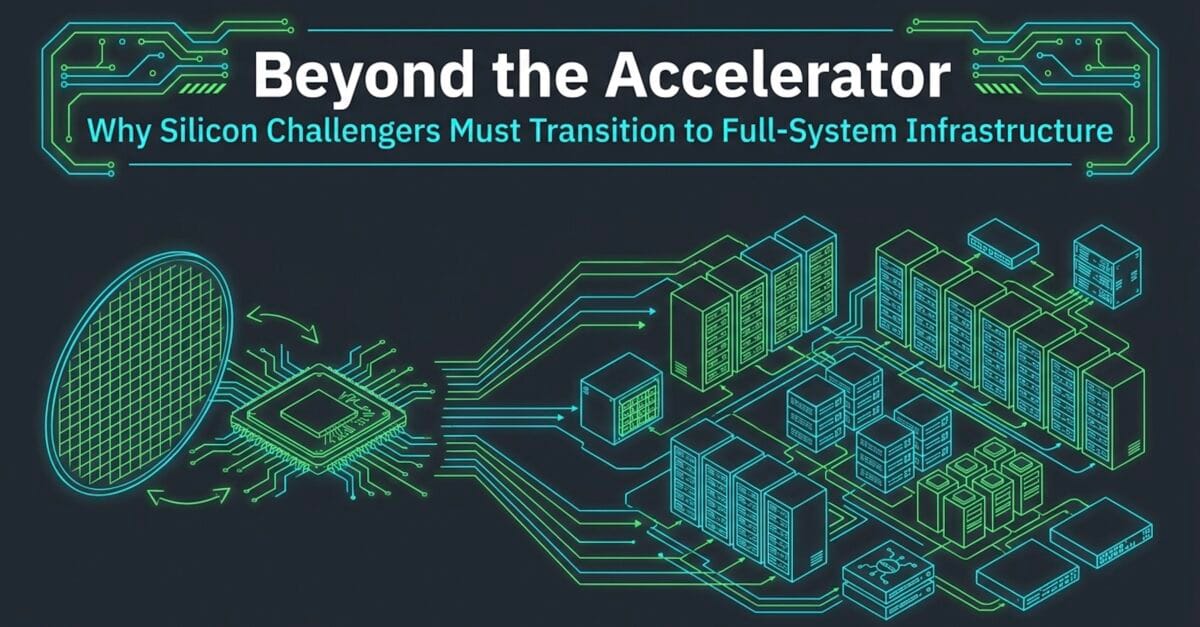
The recent AI Infra Summit was exceptionally jam-packed, filled to the brim with compelling talks, overlapping tracks, and emerging technologies. Amid the noise of the event, there were many excellent presentations detailing the physical realities of scaling hardware. But one presentation in particular caught my attention because it highlighted a major, systemic shift in the market: it introduced another addition to the line of trailblazing, silicon-oriented companies that have realized and made the definitive transition toward true system-level thinking and holistic infrastructure offerings.
최근 개최된 AI 인프라 서밋(AI Infra Summit)은 흥미진진한 강연들과 중복되는 세션, 그리고 신기술들로 말 그대로 발 디딜 틈 없이 꽉 차 있었습니다. 행사의 소란스러움 속에서도 하드웨어 확장의 물리적 현실을 상세히 다룬 훌륭한 발표들이 많았습니다. 하지만 그중에서도 시장의 커다란 구조적 변화를 조명했다는 점에서 유독 제 눈길을 사로잡은 발표가 하나 있었습니다. 그것은 진정한 시스템 차원의 사고와 총체적인 인프라 솔루션으로 확실한 전환을 이루어낸, 선구적인 실리콘 중심 기업들의 대열에 또 하나의 이름을 올린 기업을 소개하는 자리였습니다.
That company is Rebellions. Their talk at the Summit and the strategic roadmap they laid out reveals a clear conviction that the AI infrastructure market is quietly outgrowing its honeymoon phase.
그 기업은 바로 리벨리온(Rebellions)입니다. 서밋에서의 발표와 그들이 제시한 전략적 로드맵은 AI 인프라 시장이 조용히 허니문 단계를 벗어나고 있다는 뚜렷한 확신을 보여줍니다.
For the past few years, the entire industry has been locked in a race to celebrate raw peak performance metrics and laboratory triumphs. But as inference workloads scale up across enterprise ecosystems, the focus of the conversation is shifting. Senior leaders are waking up to a completely different set of metrics: predictable operational costs, system reliability, structural scalability, and the unglamorous realities of day-to-day deployment.
지난 몇 년 동안 전체 업계는 원초적인 최고 성능 지표와 실험실 성과를 자축하는 경쟁에 몰두해 왔습니다. 하지만 기업 생태계 전반에서 추론 워크로드(작업 부하)가 규모를 키워감에 따라 대화의 초점이 바뀌고 있습니다. 고위 리더들은 완전히 다른 일련의 지표들, 즉 예측 가능한 운영 비용, 시스템 신뢰성, 구조적 확장성, 그리고 일상적인 배포 과정에서 마주하는 화려하지 않은 현실에 눈을 뜨고 있습니다.
The future of the market does not belong to companies that merely produce fast chips. It belongs to providers capable of orchestrating complete AI infrastructure. By building toward integrated, rack-scale and pod-scale deployments, the industry is anchoring its identity around a broader vision of AI sovereignty. It is about handing organizations total, localized custody over the hardware and software systems running their mission-critical data.
시장의 미래는 단순히 빠른 칩을 생산하는 기업들의 몫이 아닙니다. 완벽한 AI 인프라를 오케스트레이션할 수 있는 공급자들의 몫입니다. 랙(Rack) 및 팟(Pod) 규모의 통합 배포를 지향함으로써, 업계는 AI 주권이라는 더 넓은 비전을 중심으로 정체성을 다지고 있습니다. 이는 조직들에게 핵심 미션 크리티컬 데이터를 구동하는 하드웨어 및 소프트웨어 시스템에 대한 전면적이고 현지화된 통제권을 쥐어주는 것에 관한 이야기입니다.
From Silicon to Complete Infrastructure
Deploying enterprise-grade inference is no longer as simple as plugging an accelerator into a PCIe slot and walking away. As models find their way into core production pipelines, the operational topology grows incredibly complex. A viable architecture demands a highly coordinated symphony of specialized hardware, sophisticated model compilation, system-wide orchestration, efficient power management, and dense liquid or air cooling.
기업용 수준의 추론을 배포하는 일은 이제 가속기를 PCIe 슬롯에 꽂고 자리를 뜨는 것만큼 간단하지 않습니다. 모델들이 핵심 운영 파이프라인에 자리 잡으면서 운영 토폴로지(기하학적 구조)는 믿을 수 없을 만큼 복잡해집니다. 실행 가능한 아키텍처는 특화된 하드웨어, 정교한 모델 컴파일, 전사적 오케스트레이션, 효율적인 전력 관리, 그리고 고밀도 액체 또는 공랭식 냉각이 긴밀하게 조율된 교향곡과 같은 협력을 요구합니다.
Treating these elements as fragmented, standalone procurement decisions is a recipe for operational gridlock. They must be engineered as an integrated, unified topology.
이 요소들을 파편화되고 독립적인 조달 결정으로 다루는 것은 운영상 교착 상태를 자초하는 지름길입니다. 이들은 통합되고 단일화된 토폴로지로 엔지니어링되어야 합니다.
This philosophy explains the aggressive push into multi-rack and pod-scale architectures designed for hyperscale data centers. As inference continues to swallow up the lion’s share of global corporate infrastructure spending, the market is beginning to evaluate silicon through a much harsher lens. The ultimate scorecard is no longer how blazing fast a chip can finish a specific synthetic benchmark, but how much useful, revenue-generating work the system can execute for every dollar and watt consumed.
이러한 철학은 하이퍼스케일 데이터 센터를 위해 설계된 멀티 랙 및 팟 규모 아키텍처로의 공격적인 진출을 설명해 줍니다. 추론이 전 세계 기업 인프라 지출의 사자 몫을 계속해서 삼켜감에 따라, 시장은 훨씬 더 가혹한 잣대로 실리콘을 평가하기 시작했습니다. 궁극의 성적표는 특정 합성 벤치마크를 얼마나 번개처럼 빠르게 끝낼 수 있는지가 아니라, 소비된 1달러와 1와트당 시스템이 얼마나 유용하고 수익을 창출하는 작업을 수행할 수 있는가입니다.
The Software Strategy: “No Forks”
A great piece of silicon is entirely useless if developer friction keeps it sitting idle in the rack. Historically, hardware challengers have wrecked their own momentum by building proprietary software islands, thereby forcing buyers to learn bizarre new programming languages or maintain specialized toolchains.
개발자들의 마찰(진입 장벽)로 인해 칩이 랙 안에서 유휴 상태로 방치된다면 훌륭한 실리콘 조각도 완전히 무용지물입니다. 역사적으로 하드웨어 도전자들은 독점적인 소프트웨어 섬들을 구축함으로써 스스로의 모멘텀을 갉아먹었고, 이로 인해 구매자들은 기괴한 새로운 프로그래밍 언어를 배우거나 특화된 툴체인을 유지 관리해야 했습니다.
The software approach required to break this bottleneck can be summarized in two words: “no forks.”
이 병목 현상을 타개하는 데 필요한 소프트웨어 접근 방식은 단 두 마디로 요약할 수 있습니다. 바로 "포크 없음(no forks)"입니다.
Instead of hijacking open-source projects to create rigid, proprietary variants that customers must download, test, and patch independently, system-level trailblazers upstream their contributions directly into mainline repositories. They eliminate the traditional onboarding penalty by embedding execution logic natively into the foundations of existing open-source giants including PyTorch, Hugging Face, Arm, and Red Hat OpenShift.
고객이 독자적으로 다운로드하고 테스트하며 패치를 적용해야 하는 경직되고 독점적인 변형 버전을 만들기 위해 오픈소스 프로젝트를 하이재킹하는 대신, 시스템 차원의 선구자들은 자신들의 기여분을 메인라인 저장소에 직접 업스트림(상류 반영)합니다. 그들은 PyTorch, Hugging Face, Arm, Red Hat OpenShift를 비롯한 기존 오픈소스 거물들의 기반에 실행 로직을 네이티브(기본)로 내장함으로써 전통적인 온보딩 패널티를 없애버립니다.
For an enterprise tech organization, this is a massive operational victory. Deploying an alternative accelerator is rarely just a line-item hardware expense. It typically forces an organization to absorb the hidden costs of retraining engineers, rewriting software competencies, and engineering custom deployment procedures. By native-fitting directly into standard open-source ecosystems, greater compatibility effectively erases that friction.
기업용 기술 조직 입장에서 이것은 거대한 운영상 승리입니다. 대체 가속기를 배포하는 것은 결코 단순한 라인 아이템(항목별) 하드웨어 지출에 그치지 않습니다. 그것은 통상적으로 엔지니어 재교육, 소프트웨어 역량 재작성, 그리고 맞춤형 배포 절차 엔지니어링이라는 숨겨진 비용을 조직이 감수하도록 강제합니다. 표준 오픈소스 생태계에 직접 네이티브로 안착함으로써, 향상된 호환성은 그러한 마찰을 효과적으로 지워냅니다.
Ultimately, introducing an alternative engine to the data center environment is no longer just a chip decision but rather an ecosystem decision.
결국 데이터 센터 환경에 대체 엔진을 도입하는 것은 더 이상 단순한 칩의 결정이 아니라 생태계의 결정입니다.
Where does the math actually net out when you take this integrated system approach into the data center? In Part 2 of this series, we break down the contrast between laboratory benchmarks and real production economics as presented by Rebellions, alongside a look into multi-megawatt heterogeneous deployments.
이러한 통합 시스템 접근 방식을 데이터 센터에 도입할 때 실제 수학적 셈법은 과연 어떻게 귀결될까요? 본 시리즈의 2부에서는 리벨리온이 제시한 실험실 벤치마크와 실제 프로덕션 경제학 간의 대비를 분석하고, 멀티 메가와트급 이기종(heterogeneous) 배포에 대해 조명해 보겠습니다.



