Burial – Time Out Of Joint

Source: https://www.electronicsound.co.uk/news/burial-time-out-of-joint
Twenty years after its release, dubstep pioneer Burial’s self-titled debut album sounds like a hauntological premonition of the pandemic years to come
출시된 지 20년이 지난 지금도, 덥스텝(dubstep)의 선구자 버리얼(Burial)의 동명 데뷔 앨범은 다가올 팬데믹 시대를 예언한 유령학적(hauntological) 전조처럼 들립니다.
“There’s nothing worse for a human being than to see a face where it doesn’t belong,” Burial (Will Bevan) told Mark Fisher in 2007. The writer and academic is one of only a handful of journalists to have interviewed dubstep’s feted pioneer, who voluntarily vaporised from public view after the release of his second album, ‘Untrue’, seemingly never to be seen again.
“인간에게 제자리에 있어야 할 얼굴이 엉뚱한 곳에 있는 것만큼 끔찍한 일은 없습니다.” 버리얼(윌 베번)이 2007년 마크 피셔에게 한 말입니다. 이 평론가이자 학자는 덥스텝의 찬사받는 선구자를 인터뷰한 손에 꼽히는 몇 안 되는 기자 중 한 명입니다. 버리얼은 두 번째 앨범 《Untrue》를 발매한 후 자발적으로 대중의 시야에서 흔적도 없이 사라졌으며, 마치 영원히 다시는 볼 수 없을 것처럼 보였습니다.
During the conversation, he and Fisher – who committed suicide in 2017 – mined a remarkable symbiosis that reached far beyond the parameters of agreeably forward-thinking electronic music. One of these connections centred on the works of author MR James, who was famed for the spooked, proto-horror tales he wrote in the early 1900s.
대화 도중, 그와 2017년에 자살로 생을 마감한 피셔는 단순한 미래 지향적 일렉트로닉 음악의 범주를 훨씬 뛰어넘는 놀라운 공생 관계를 파고들었습니다. 이들의 연결고리 중 하나는 1900년대 초반에 유령이 나오는 프로토 호러(공포 소설의 시초격) 이야기를 써서 명성을 얻은 작가 M. R. 제임스의 작품에 집중되어 있었습니다.
“The one that fucked me up when I was little was ‘Oh, Whistle, And I’ll Come To You, My Lad’,” Bevan explained. “Something weird happens with MR James, because even though it’s in writing, there’ll be a moment when the person meets the ghost, where you can’t quite believe what you’ve read. You go cold, just for those few lines when you glimpse the ghost for a second, or he describes the ghost face. It’s like you’re not reading anymore.”
“어렸을 때 저를 완전히 멘탈 나가게 만들었던 건 ‘오, 휘파람을 불어라, 그러면 네게 갈 테니, 내 소년이여(Oh, Whistle, And I’ll Come To You, My Lad)’였습니다.” 베번이 설명했습니다. “M. R. 제임스의 작품을 읽을 때는 뭔가 기묘한 일이 일어납니다. 비록 글일지라도, 주인공이 유령과 마주하는 순간이 오면 내가 방금 읽은 것을 도저히 믿을 수 없게 되거든요. 유령을 잠깐 엿보거나 그가 유령의 얼굴을 묘사하는 그 몇 줄 동안, 당신은 온몸이 얼어붙게 됩니다. 마치 더는 글을 읽고 있는 게 아닌 것 같은 기분이 들죠.”
This particular story details an unsettlingly supernatural trip to the English seaside taken by Parkins, a University of Cambridge professor, who is stalked by a ghastly spectre manifested by a single blast on a bronze whistle, unearthed in the fictitious sand dunes of Burnstow.
이 특정 이야기는 케임브리지 대학교 교수인 파킨스가 영국의 해변으로 떠난 마음 소란스러운 초자연적 여행을 상세히 다루고 있습니다. 그는 가상의 번스토우 모래언덕에서 발굴된 청동 휘파람을 단 한 번 불었을 때 나타난 끔찍한 유령의 스토킹을 당합니다.
Fisher was living in Felixstowe – the real-world setting for much of this 1904 tale – when he passed away, having made his name via the K-punk blog launched in 2003 to considerable acclaim and audience. Writing across culture while teaching at Goldsmiths, University of London, Fisher was a fervent Burial acolyte, describing his self-titled debut – released in May 2006 – as “the kind of album I’ve dreamt of for years”.
피셔는 2003년에 개설되어 엄청난 호평과 독자층을 모은 ‘K-punk’ 블로그를 통해 이름을 알린 후, 이 1904년 이야기의 실제 배경인 펠릭스스토우에 살다가 세상을 떠났습니다. 런던 대학교 골드스미스에서 가르치며 대중문화 전반에 걸쳐 글을 썼던 피셔는 버리얼의 열렬한 추종자였으며, 2006년 5월에 발매된 그의 동명 데뷔 앨범을 “수년간 꿈꿔왔던 그런 종류의 앨범”이라고 평했습니다.
He was entranced by the musician’s sulphurous presence and the bewitching emotional and physical qualities of his output. Indeed, Fisher reasoned that we were in the presence of the 21st century embodiment of hauntology, first proposed by French philosopher Jacques Derrida in 1993’s ‘Specters Of Marx’ and a central plank in his revered work within cultural studies.
그는 이 뮤지션의 황홀하면서도 음산한 존재감과, 그의 음악이 지닌 매혹적인 감정적·신체적 특성에 매료되었습니다. 실제로 피셔는 우리가 21세기 유령학(hauntology)의 화신과 마주하고 있다고 판단했습니다. 유령학은 1993년 프랑스의 철학자 자크 데리다가 저서 《마르크스의 유령들(Specters Of Marx)》에서 처음 제안한 개념으로, 그의 문화 연구 분야에서 추앙받는 저작들의 핵심 축을 이루고 있었습니다.
“Burial makes the most convincing case that our zeitgeist is essentially hauntological,” Fisher stated, heralding Kode9’s first signing to his Hyperdub label. “The power of Derrida’s concept lay in its idea of being haunted by events that had not actually happened – futures that failed to materialise and remained spectral.”
“버리얼은 우리의 시대정신이 본질적으로 유령학적이라는 사실을 가장 설득력 있게 증명해 줍니다.” 피셔는 코드나인(Kode9)의 하이퍼덥(Hyperdub) 레이블 첫 번째 영입을 알리며 이렇게 말했습니다. “데리다 개념의 힘은 실제로 일어나지 않은 사건들, 즉 실현되지 못하고 유령으로 남은 미래들에게 사로잡힌다는 아이디어에 있었습니다.”
Two decades after the release of ‘Burial’, little – famously – is known about William Emmanuel Bevan. He reportedly attended Putney’s Elliott School comprehensive, like Kieran Hebden (Four Tet), and was described by Fisher in The Wire – who named ‘Burial’ 2006’s album of the year – as “an elfin, quietly intense presence who speaks in a low whisper”. The following year, Dan Hancox, author of ‘Inner City Pressure: The Story Of Grime’, conducted what has become renowned as Burial’s “last interview”.
‘버리얼(Burial)’의 발매로부터 20년이 지난 지금도, 윌리엄 엠마누엘 베번에 대해서는 알려진 바가 거의 없기로 유명합니다. 그는 포 테트(Four Tet)로 활동하는 키런 헤브던(Kieran Hebden)처럼 퍼트니의 엘리엇 스쿨 종합학교를 다닌 것으로 알려져 있으며, ‘버리얼’을 2006년 올해의 앨범으로 꼽았던 《더 와이어(The Wire)》의 피셔는 그를 “낮은 속삭임으로 말하는, 요정 같고 조용히 강렬한 존재”라고 묘사했습니다. 그 다음 해, 《이너 시티 프레셔: 더 스토리 오브 그라임(Inner City Pressure: The Story Of Grime)》의 저자인 댄 핸콕스(Dan Hancox)가 버리얼의 “마지막 인터뷰”로 유명해진 인터뷰를 진행했습니다.
In this vacuum, Bevan has adapted Aphex Twin’s obfuscating template and malleable visage, building an unequivocally mythical image populated by a handful of press photos and illustrations. However, musically, he’s responsible for a back catalogue which nails this visceral sound – a singular, cinematic recalibration of UK garage, jungle and 2-step, twilit by the afterglow of rave – to a geographic ground zero far beyond any visual representation of art and the creatives behind it.
이러한 공백 속에서, 베번은 에이펙스 트윈(Aphex Twin)의 베일에 싸인 전형과 유연한 얼굴(이미지)을 차용하여, 적은 수의 언론용 사진과 일러스트로 이루어진 틀림없는 신화적 이미지를 구축했습니다. 하지만 음악적으로 그는 이 원초적인 사운드—영국 개러지, 정글, 투스텝의 독창적이고 시네마틱한 재조정이며, 레이브의 여광으로 황혼처럼 물든 사운드—를 예술의 시각적 표현이나 그 배후의 창작자들을 훨씬 뛰어넘는 지리적 그라운드 제로에 확실하게 못 박아 둔 디스코그래피를 만들어 냈습니다.
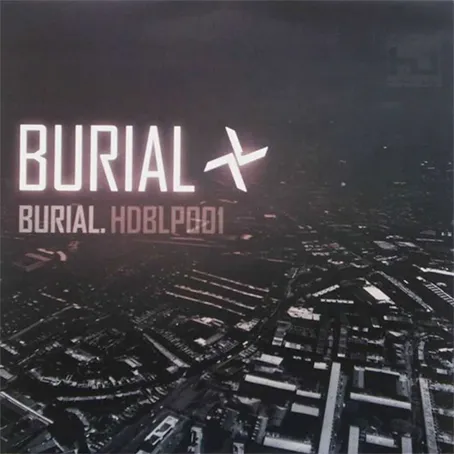
Burial’s first extended transmission came via 2005’s ‘South London Boroughs’ EP, a prescient title foreshadowing the hyperlocal focus of what followed. The defining role of these evocative environs were again directly communicated with the debut LP’s aerial cover shot of Wandsworth. Acting like a Batman-style overlook atop Gotham City, we can imagine Burial scanning the metropolis, retreating into a cavernous studio facility/his bedroom to craft sonic soliloquies for the disenchanted souls below.
버리얼의 첫 번째 장편 송출은 2005년의 EP ‘사우스 런던 버로스(South London Boroughs)’를 통해 이루어졌으며, 이는 이후 전개될 초지역적(hyperlocal) 초점을 예고하는 선견지명 있는 제목이었습니다. 이러한 환기력 있는 환경들이 지닌 결정적인 역할은 데뷔 LP의 표지를 장식한 완즈스워스의 항공 촬영 사진을 통해 다시 한번 직접적으로 전달되었습니다. 고담 시티 꼭대기의 배트맨 스타일 전망대처럼, 우리는 버리얼이 대도시를 훑어보며, 아래에 있는 실망하고 환멸 느낀 영혼들을 위한 소리 없는 독백(음악)을 만들기 위해 동굴 같은 스튜디오 시설이자 자신의 침실로 물러서는 모습을 상상할 수 있습니다.
“Burial’s London is a wounded city, populated by ecstasy casualties on day release from psychiatric units, disappointed lovers on night buses, parents who can’t quite bring themselves to sell their rave 12-inches at a car boot sale, all of them with haunted looks on their faces, but also haunting their interpassively nihilist kids with the thought that things weren’t always like this,” Mark Fisher wrote, pinpointing the “3D depth of field” of these “schizophonic” soundscapes.
“버리얼의 런던은 상처 입은 도시이며, 정신병원에서 잠시 외출 나온 엑스터시 중독자들, 야간 버스에 탄 실낙한 연인들, 벼룩시장(자동차 트렁크 세일)에서 자기 레이브 12인치 음판들을 쉽사리 팔지 못하는 부모들로 가득 차 있습니다. 이들 모두는 얼굴에 유령에 홀린 듯한 표정을 짓고 있으면서도, ‘세상이 늘 이렇지는 않았다’는 생각으로 상호수동적으로(interpassively) 허무주의에 빠진 아이들을 유령처럼 맴돌고 있습니다.” 마크 피셔는 이 “스키조포닉(schizophonic, 분열음향적)” 사운드스케이프의 “3차원 심도”를 정확히 짚어내며 이렇게 썼습니다.
What gives ‘Burial’ such a microscopic, atmospheric sense of place? The thrumming momentum of urban infrastructure hits from the first beat of ‘Distant Lights’, a dislocated, archetypal percussive loop rotating like mechanised machine music. In all its post-millennium tension, this is the sound of the city.
‘버리얼(Burial)’에 그토록 미시적이면서도 분위기가 느껴지는 장소감을 부여하는 것은 무엇일까요? ‘디스턴트 라이츠(Distant Lights)’의 첫 비트부터 도시 기반 시설의 웅장한 진동 모멘텀이 밀려옵니다. 기계화된 음악처럼 회전하는, 탈위치화된 전형적인 타악기 루프 말입니다. 밀레니엄 이후의 모든 긴장 속에서, 이것이 바로 도시의 소리입니다.
“What you momentarily thought was muffled bass turns out only to be the rumbling of tube trains,” Fisher observed.
“당신이 순간적으로 먹먹한 저음(베이스)이라고 생각했던 것은 알고 보니 지하철 열차가 덜컹거리는 소리일 뿐임이 드러납니다.” 피셔는 이렇게 관찰했습니다.
Elsewhere, the distant signals of ‘Wounder’ seem to emanate from a Drexciya-style civilisation camped in the depths of the River Thames, and ‘Southern Comfort’ is like pre-dawn time-lapse CCTV on the Old Kent Road, capturing the illuminated push and pull of illicit nocturnal traffic. Meanwhile, ‘Prayer’ sonifies the blades of a circling Met Police chopper surveying potential targets. In these vivid snapshots, Burial frames the grey menace of South London in the same way the hazy neon drama of Nicolas Winding Refn’s LA was depicted in the transportive synthpop soundtrack of ‘Drive’.
그 밖에도, ‘운더(Wounder)’의 아득한 신호들은 템즈강 깊은 곳에 진을 친 드렉시야(Drexciya) 스타일의 문명에서 흘러나오는 듯하며, ‘서던 컴포트(Southern Comfort)’는 올드 켄트 로드(Old Kent Road)를 비추는 새벽녘의 타임랩스 CCTV처럼 불법적인 야간 교통의 불빛 어린 밀고 당김을 포착해 냅니다. 한편 ‘프레이어(Prayer)’는 잠재적 목표물을 정찰하는 런던경찰청(Met Police) 헬리콥터의 선회하는 날개 소리를 음악화합니다. 이러한 생생한 단면들 속에서, 버리얼은 니콜라스 윈딩 레픈(Nicolas Winding Refn) 감독의 영화 《드라이브(Drive)》가 지닌 몰입감 넘치는 신스팝 사운드트랙에서 LA의 아스라이 빛나는 네온 드라마가 그려졌던 것과 똑같은 방식으로 사우스 런던의 회색빛 위협을 프레임에 담아냅니다.
This psychogeography is central to both Burial and Fisher, as Sophie Mellor and Simon Poulter – makers of a new documentary, ‘We Are Making A Film About Mark Fisher’ – contend.
이러한 심리적 지리학(psychogeography)은 마크 피셔에 관한 새로운 다큐멘터리 ‘우리는 마크 피셔에 관한 영화를 만들고 있다(We Are Making A Film About Mark Fisher)’의 제작자인 소피 멜로어와 사이먼 풀터가 주장하듯, 버리얼과 피셔 모두에게 핵심적입니다.
“We’ve both lived in that part of London,” Poulter says. “Burial’s sound art is very spatiotemporally located. It’s not generic music from a studio session but music that tells you about the place it was made.
“우리 둘 다 런던의 그 지역에 살았어요.” 풀터가 말합니다. “버리얼의 사운드 아트는 매우 시공간적으로 특정한 장소에 뿌리내리고 있습니다. 그것은 스튜디오 세션에서 만들어진 흔해 빠진 음악이 아니라, 자신이 만들어진 그 장소에 대해 이야기해 주는 음악입니다.”
“The same thing is in play with Fisher – how we make things about a location. He is to Felixstowe as Burial is to South London. There’s the same intense connectivity. But what’s interesting is that this placemaking is almost imbued in their work to a level of uncomfortability.”
“피셔에게도 똑같은 원리가 작용합니다—우리가 어떻게 장소에 관한 무언가를 만들어내는가 하는 점이죠. 피셔에게 펠릭스스토우가 곧 버리얼에게 사우스 런던인 셈입니다. 거기에는 똑같이 강렬한 연결성이 존재합니다. 하지만 흥미로운 점은 이러한 장소 만들기(placemaking)가 그들의 작업 속에 거의 불편함을 느낄 정도로까지 깊이 스며들어 있다는 사실입니다.”
Mellor suggests an alternative terminology – “placehaunting”.
멜로어는 “장소유령화(placehaunting)”라는 대안적 용어를 제안합니다.
Burial’s use of samples is also pivotal. The weaponised FX of ‘Distant Lights’ come from the Metal Gear Solid video game series – a recurring source – while the repeating vocal line is lifted from ‘Emotion’ by Destiny’s Child. Bevan has a predilection for disembodied, pitch-shifted “half-boy, half-girl” samples, likening them to “something not human I’ve got chained up in the yard” to heighten the dread tenor.
버리얼의 샘플 활용 또한 매우 중요합니다. ‘디스턴트 라이츠(Distant Lights)’에 등장하는 무기화된 효과음들은 반복적으로 차용되는 원천인 비디오 게임 《메탈 기어 솔리드》 시리즈에서 가져온 것이며, 반복되는 보컬 라인은 데스티니 차일드(Destiny’s Child)의 ‘이모션(Emotion)’에서 따온 것입니다. 베번은 공포의 기조를 고조시키기 위해, 자신의 샘플들을 “마당에 쇠사슬로 묶어 둔 인간이 아닌 무언가”에 비유하며 유령 같은 피치시프트(음고 변조)가 적용된, 실체 없는 “반쪽 소년, 반쪽 소녀” 목소리 샘플들을 편애합니다.
Alongside other more conventional and familiar mainstream samples – Massive Attack’s ‘Teardrop’ pulse on ‘Prayer’, and the “drop” in ‘U Hurt Me’ from Nas’ ‘Represent’ – he leans into totemic pop cultural texts to build the hauntological vibe, most notably in the rain-drenched canvases.
매시브 어택(Massive Attack)의 ‘티어드롭(Teardrop)’의 맥박 같은 비트가 쓰인 ‘프레이어(Prayer)’와, 나스(Nas)의 ‘리프레젠트(Represent)’에서 가져온 ‘유 허트 미(U Hurt Me)’의 “드롭”처럼 보다 전통적이고 친숙한 주류 샘플들과 더불어, 그는 유령학적 분위기를 구축하기 위해 토템적인 대중문화 텍스트들에 기대며, 특히 비에 젖은 화폭 속에서 그 경향이 두드러집니다.
“Burial’s music conjures urban scenes under ‘Blade Runner’ perma-drizzle,” Fisher suggested, reflecting Bevan’s self-confessed obsession with a scene in 1982’s original movie, when Harrison Ford’s Deckard eats noodles during a downpour. It’s an apposite point. In 1959, Philip K Dick released his novel ‘Time Out Of Joint’, perhaps hauntology’s defining conceptual phrase, which actually originated 350 or so years earlier – “The time is out of joint; O cursed spite!” – in William Shakespeare’s ‘Hamlet’.
“버리얼의 음악은 ‘블레이드 러너’의 영구적인 이슬비 아래 펼쳐지는 도시 풍경을 자아냅니다.” 해리슨 포드가 연기한 데카드가 폭우 속에서 국수를 먹는 1982년 원작 영화의 한 장면에 집착했다는 베번의 고백을 되돌아보며 피셔는 이렇게 제안했습니다. 이는 적절한 지적입니다. 1959년, 필립 K. 딕은 유령학의 결정적인 개념적 문구일지도 모르는 소설 《타임 아웃 오브 조인트(Time Out Of Joint)》를 출간했는데, 이 문구는 사실 350년쯤 전 윌리엄 셰익스피어의 《햄릿》에 등장했던 대사—”시공간이 어긋났어, 아 저주받을 원한이여!”—에서 유래한 것입니다.
Crackle is another liberally deployed atmospheric device. In this context, Fisher referenced Pole, The Caretaker and Tricky, calling it “the audio-correlate of hauntology itself”.
지지직거리는 잡음(크랙클)은 자유롭게 활용되는 또 다른 분위기 조성 장치입니다. 이러한 맥락에서 피셔는 폴(Pole), 더 케어테이커(The Caretaker), 트릭키(Tricky)를 언급하며 이를 “유령학 그 자체의 오디오적 상관물”이라고 불렀습니다.
“In veiling the past, crackle also makes the dimension of time audible,” he continued. “It is through this scratching of the scanner-lens that we can hear the time-wound, the chronological fracture, the expression of the sense, crucial to hauntology, that ‘time is out of joint’.”
“과거를 베일로 가림으로써, 크랙클(지지직거리는 잡음)은 시간이라는 차원을 청각적으로 드러나게 만듭니다.” 그는 말을 이었습니다. “바로 이 스캐너 렌즈의 긁힘을 통해 우리는 시간의 상처, 연대기적 파열, 그리고 유령학에 있어 핵심적인 감각인 ‘시간이 어긋나 있다’는 표현을 들을 수 있습니다.”
Elsewhere, a sense of 21st century ennui is made more apparent in tracks like ‘Gutted’, which quotes Forest Whitaker in 1999’s ‘Ghost Dog: The Way of The Samurai’.
그 밖에도, 1999년작 영화 《고스트 독: 사무라이의 길(Ghost Dog: The Way of The Samurai)》에서 포레스트 휘터커의 대사를 인용하는 ‘거티드(Gutted)’ 같은 트랙들에서는 21세기적 권태감이 더욱 뚜렷하게 드러납니다.
“Me and him, we’re from different, ancient tribes / Now we’re both almost extinct / But sometimes you gotta stick with the ancient ways.”
“나와 그는 서로 다른 고대 부족 출신이지 / 이제 우리 둘 다 거의 자취를 감췄지만 / 가끔은 고대 방식을 고수해야 할 때가 있는 법이야.”
Thousand-yard stare memories of acid house colour ‘Burial’ as they do ‘Untrue’, which culminates in the majestically downcast ‘Raver’. Again, the DNA is hauntological.
애시드 하우스의 색채를 띤 ‘천 리를 멍하니 바라보는 듯한(사우전드 야드 스테어)’ 기억들은 ‘언트루(Untrue)’에서와 마찬가지로 ‘버리얼(Burial)’에도 깊게 배어 있으며, 이는 장엄할 정도로 침울한 ‘레이버(Raver)’에서 절정에 달합니다. 여기서도 그 본질은 유령학에 닿아 있습니다.
“I’ve never been to a festival, a rave in a field, a big warehouse or an illegal party,” Bevan told Fisher. “My brother might bring back these records that seemed really adult to me and I couldn’t believe I had them. It was like when you first saw ‘Terminator’ or ‘Alien’ when you were only little. I’d get a rush from it… I was hearing this other world.”
“저는 페스티벌이나 들판에서의 레이브 파티, 큰 창고 파티나 불법 파티에 가본 적이 한 번도 없어요.” 베번은 피셔에게 이렇게 털어놓았습니다. “형이 가져온 레코드판들은 제게 무척 어른스럽게 느껴졌고, 제가 그런 음반을 갖고 있다는 사실이 믿기지 않았을 정도였죠. 어렸을 때 《터미네이터》나 《에이리언》을 처음 봤을 때의 충격과 비슷했어요. 엄청난 전율이 일었죠… 저 너머의 다른 세계를 듣고 있는 기분이었습니다.”
Fisher called the soundtrack to ‘Terminator’ “epochal”, highlighting how “its vocal samples talked of time paradoxes” and pinpointing a flooring line uttered by Linda Hamilton’s Sarah Connor.
피셔는 《터미네이터》의 사운드트랙을 “시대적 명작”이라 일컬으며, “그 보컬 샘플들이 시간의 역설을 이야기하고 있다”고 강조했고, 린다 해밀턴이 연기한 사라 코너의 뼈를 때리는 대사를 정확히 짚어냈습니다.
“You’re talking about things that I haven’t done yet in the past tense”.
“당신은 내가 아직 하지도 않은 일들을 과거형으로 말하고 있군요.”
In 2014’s ‘Ghosts Of My Life: Writings On Depression, Hauntology And Lost Futures’, Fisher defined this central disjuncture as “that which (in actuality) has not yet happened, but which is already effective in the virtual (an attractor, an anticipation shaping current behaviour)”. He also called Burial’s music “a work of mourning rather than of melancholia”.
2014년 작 《나 인생의 유령들: 우울증, 유령학, 잃어버린 미래들에 관한 글들(Ghosts Of My Life: Writings On Depression, Hauntology And Lost Futures)》에서 피셔는 이러한 핵심적 괴리를 “(현실에서는) 아직 일어나지 않았지만, 가상 속에서는 이미 작용하고 있는 것(현재의 행동을 형성하는 인력(attractor)이자 예감)”으로 정의했습니다. 또한 그는 버리얼의 음악을 “멜랑콜리라기보다는 애도 작업에 가깝다”고 평했습니다.
Applying this analogy to the serenely bleak ‘Night Bus’ and also ‘Forgive’ (a recalibration of the uncanny ambient dimensions of Aphex Twin’s ‘Selected Ambient Works Volume II’ – see also Untrue’s blackhearted ‘In McDonalds’), it might be argued that what we actually witness on ‘Burial’ is the harbinger of an approaching global tsunami, an unwitting soundtrack for the inescapable news footage of eerie and deserted cities that accompanied 2019’s Covid pandemic. Or, as Fisher put it, “A drowned world catastrophe leaking back in time”.
고요하면서도 황량한 ‘나이트 버스(Night Bus)’와 ‘포기브(Forgive)’—에이펙스 트윈의 《셀렉티드 앰비언트 워크스 볼륨 2(Selected Ambient Works Volume II)》가 지닌 묘한 앰비언트적 차원을 재조정하고, 《언트루》의 비정하고 냉혹한 ‘인 맥도널즈(In McDonalds)’로 이어지는 곡들—에 이러한 비유를 적용해 본다면, 우리가 ‘버리얼’의 음악 속에서 실제로 목격하는 것은 다가올 거대한 세계적 재난의 전조이자, 2019년 코로나 팬데믹 시기에 전 세계의 유령처럼 적막해진 도시들을 비추던 피할 수 없는 뉴스 화면을 위한 무심한 사운드트랙이라고 주장할 수 있을 것입니다. 혹은 피셔의 표현대로, “시간을 거슬러 스며 나온 물에 잠긴 세계의 대참사”라고 할 수 있습니다.
Burial’s music is often deployed as the aural backdrop for the dystopian documentaries of Adam Curtis. The 2021 BBC series, ‘Can’t Get You Out Of My Head’, was originally named after the inscription on the whistle found by Perkins in ‘Oh, Whistle, And I’ll Come To You, My Lad’, which reads, “Who is this who is coming?”. The original working title chosen by Curtis was ‘What Is It That Is Coming?’.
버리얼의 음악은 애덤 커티스의 디스토피아적 다큐멘터리에서 배경 음악으로 자주 쓰입니다. 2021년 BBC 시리즈 《캔트 겟 유 아웃 오브 마이 헤드(Can’t Get You Out Of My Head)》는 원래 M. R. 제임스의 단편 ‘오, 휘슬, 앤드 아일 컴 투 유, 마이 래드(Oh, Whistle, And I’ll Come To You, My Lad)’에서 퍼킨스가 발견한 호루라기에 새겨진 문구 “이 다가오는 자는 누구인가?”에서 제목을 따왔습니다. 커티스가 처음에 선택했던 가제는 “이 다가오는 것은 무엇인가?”였습니다.
“Burial’s sound evokes what the press release calls a ‘near future South London underwater. You can never tell if the crackle is the burning static off pirate radio, or the tropical downpour of the submerged city out of the window’,” Fisher wrote after first hearing ‘Burial’. “Burial is haunted by what once was, what could have been, and – most keeningly – what could still happen.”
“버리얼의 사운드는 보도자료에서 일컬듯 ‘머지않은 미래의 물에 잠긴 남런던’을 떠올리게 한다. 지직거리는 잡음이 해적 방송에서 흘러나오는 타오르는 정전기인지, 아니면 창밖으로 쏟아지는 물에 잠긴 도시의 열대성 폭우인지 분간할 수조차 없다”고 피셔는 버리얼의 음악을 처음 들은 뒤 적었습니다. “버리얼은 한때 존재했던 것, 존재할 수도 있었던 것, 그리고 무엇보다 간절하게—앞으로 일어날지도 모르는 것에 의해 유령처럼 사로잡혀 있습니다.”
Was it a near future South London underwater he foresaw? Or perhaps under lockdown?
그가 예견한 것은 머지않은 미래의 물에 잠긴 남런던이었을까요? 아니면 어쩌면 봉쇄(락다운)된 도시의 모습이었을까요?
‘We Are Making A Film About Mark Fisher’ outlines Italian Marxist philosopher Franco “Bifo” Berardi’s theorising on “the slow cancellation of the future”. Onscreen, this eventuality also references Banksy, describing “the ones you have promised, but never received – the job, the house, the holiday, the life. We’re sorry. The future you ordered is out of stock”.
‘우리는 마크 피셔에 관한 영화를 만들고 있다(We Are Making A Film About Mark Fisher)’는 이탈리아의 마르크스주의 철학자 프랑코 “비포” 베라르디가 주장한 “미래의 느린 취소” 이론을 개괄합니다. 화면에서는 이러한 가능성을 뱅크시의 작업과도 연결하며 다음과 같이 설명합니다. “여러분이 약속받았으나 결코 손에 넣지 못한 것들—직장, 집, 휴가, 그리고 삶. 죄송합니다. 주문하신 미래는 품절되었습니다.”
At screenings, Simon Poulter and Sophie Mellor – who cite Fisher as central to Burial’s myth – have grown accustomed to meeting Gen Z audience members who, post-pandemic, foresee little to look forward to.
버리얼의 신화에서 피셔의 존재가 핵심적이라고 말하는 사이먼 풀터와 소피 멜로어는 상영회 자리에서, 팬데믹 이후 미래에 대해 기대할 것이 거의 없다고 내다보는 Z세대 관객들을 만나는 데 익숙해져 있습니다.
“More people have entered into the realm of the lost futures over the last 20 years,” Poulter says, highlighting another influential Fisher text, ‘Capitalist Realism: Is There No Alternative?’. “It’s actually quite a depressing read in many respects because for a lot of people it doesn’t offer solutions. If you are of a certain generation, you might be thinking – as we have discovered – that this book describes exactly what you’re experiencing in 2026.
“지난 20년 동안 더 많은 사람들이 잃어버린 미래의 영역으로 발을 들여놓았습니다”라고 풀터는 말하며, 피셔의 또 다른 영향력 있는 저서인 《자본주의적 리얼리즘: 대안은 없는가?(Capitalist Realism: Is There No Alternative?)》를 강조합니다. “이 책은 여러모로 읽기에 꽤 우울한 면이 있습니다. 많은 이들에게 뚜렷한 해결책을 제시해 주지 않기 때문이죠. 특정 세대에 속한다면, 우리가 발견했듯이 이 책이 바로 2026년에 여러분이 겪고 있는 현실을 정확히 묘사하고 있다고 생각하게 될지도 모릅니다.”
“We’ve gone from the early internet and inspirational DIY period to the global crash, where banks were too big to fail and were bailed out, while everybody else paid through austerity. The working class and those in precarious living conditions had to pick up the bill, which is what Fisher said. Then we come through to another generation, which is not just picking up the bill but paying in advance for a future that might not happen.”
“우리는 초기 인터넷과 영감 넘치는 DIY의 시대로부터, 은행들은 너무 거대해서 망할 수 없다며 구제 금융을 받았지만 그 외의 모든 이들은 긴축 재정으로 대가를 치러야 했던 세계적 경제 위기의 시대로 접어들었습니다. 피셔가 말했듯이 노동계급과 불안정한 삶의 조건에 놓인 이들이 그 비용을 떠안아야 했습니다. 그러고 나서 우리는 또 다른 세대를 맞이하게 되는데, 이들은 단순히 그 비용을 떠안는 것을 넘어 어쩌면 오지 않을지도 모를 미래의 값을 미리부터 치르고 있습니다.”
“It’s this time of permacrisis,” Mellor adds. “It’s not just the pandemic, it’s also Brexit, Trump and the climate emergency. We’ve got one crisis after another – the public luxury we were used to has gone and it’s never coming back.”
“이러한 끊임없는 위기의 시대가 이어지고 있습니다”라고 멜로어는 덧붙입니다. “팬데믹뿐만 아니라 브렉시트, 트럼프, 기후 비상사태까지 겹쳤죠. 위기가 끝없이 이어지면서 우리가 누리던 공공의 안락함은 이미 사라졌고, 결코 돌아오지 않을 것입니다.”
Writing about Fisher and Burial’s duality in 2018, author and cultural critic Simon Reynolds was struck by the “mutually intensifying feedback loop between the music-theorist and the music-practitioner”, describing the former as “possibly the last of a disappearing breed – the music critic as prophet”. With ‘Burial’, Will Bevan fused the circle forever connecting these two visionary figures.
2018년 피셔와 버리얼의 이원론에 대해 글을 쓰며, 저자이자 문화 평론가인 사이먼 레이놀즈는 “음악 이론가와 음악 실천가 사이의 상호 강화적인 피드백 루프”에 깊은 인상을 받았습니다. 그는 전자를 가리켜 “사라져 가는 종족, 즉 예언자로서의 음악 평론가 중 어쩌면 마지막 남은 인물”이라고 묘사했습니다. ‘버리얼’을 통해 윌 베번은 이 두 선구적 인물을 영원히 이어주는 고리를 하나로 융합해 냈습니다.