Samsung Might Be the Most Unusual Company on Earth
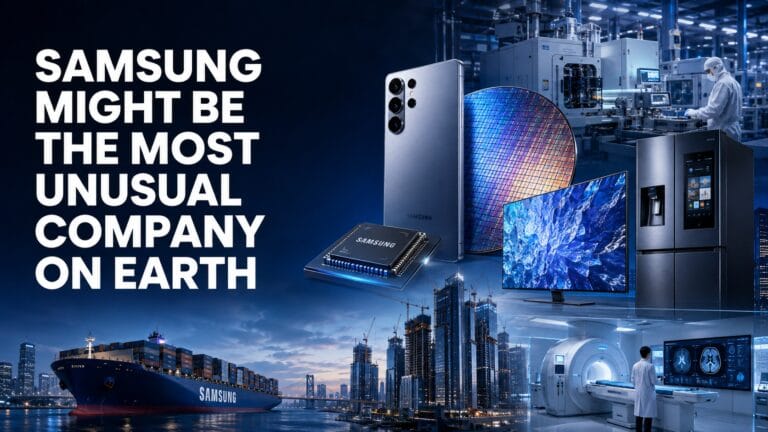
Samsung might be the most unusual company on earth because it is difficult to decide what kind of company it actually is. To most consumers, Samsung means smartphones, televisions, refrigerators. Yet the name also appears on apartment towers, cargo ships, hospital equipment, insurance policies, construction projects, and machinery. It is less like a conventional corporation than a commercial ecosystem: a network of businesses broad enough to touch every stage of modern life, from the materials inside a device to the building where its owner lives.
삼성은 지구상에서 가장 특이한 기업일지도 모른다. 그 이유는 이 회사가 실제로 어떤 종류의 기업인지 규정하기가 매우 어렵기 때문이다. 대다수의 소비자들에게 삼성은 스마트폰, 텔레비전, 냉장고를 의미한다. 하지만 삼성이라는 이름은 아파트 단지, 화물선, 병원 장비, 보험 상품, 건설 프로젝트, 그리고 각종 기계류에도 등장한다. 삼성은 전통적인 기업이라기보다는 상업 생태계에 가깝다. 즉, 기기 내부의 원자재부터 소유주가 사는 건물에 이르기까지 현대 생활의 모든 단계를 아우를 만큼 방대한 사업 네트워크를 갖추고 있다.
Its strangeness begins with scale. Many companies dominate one field. Apple is identified with consumer technology; Toyota with cars; Shell with energy. Samsung, by contrast, has spent decades spreading across fields. Its affiliates make electronics and medicines, build ships and skyscrapers, and sell financial services. This variety allows Samsung to operate on several levels of the economy at once. It can develop raw technologies, manufacture components, assemble finished products, finance expansion, and construct the infrastructure that industries require.
삼성의 기묘함은 그 규모에서 시작된다. 많은 기업들이 한 분야를 지배한다. 애플은 소비자 기술, 토요타는 자동차, 셸은 에너지로 각인되어 있다. 이와 대조적으로 삼성은 수십 년에 걸쳐 여러 분야로 영역을 넓혀왔다. 계열사들은 전자제품과 의약품을 만들고, 선박과 초고층 빌딩을 짓고, 금융 서비스도 판매한다. 이러한 다양성 덕분에 삼성은 경제의 여러 층위에서 동시에 활동할 수 있다. 원천 기술을 개발하고, 부품을 제조하고, 완제품을 조립하고, 확장을 위한 자금을 조달하며, 산업에 필요한 인프라를 건설할 수 있는 것이다.
Semiconductors are at the center of this system. Samsung is not simply a company that puts chips into its own Galaxy phones, televisions, and appliances. It is a major producer of memory chips, processors, image sensors, and other components used throughout the technology industry. Its semiconductor factories are among the most complex manufacturing facilities ever built. They require precision, huge investments, machinery, and years of research. A tiny flaw can ruin a chip, while a successful design can power millions of devices.
이 시스템의 중심에는 반도체가 있다. 삼성은 단순히 자사의 갤럭시폰, 텔레비전, 가전제품에 칩을 넣는 회사가 아니다. 삼성은 전 세계 기술 산업 전반에서 쓰이는 메모리 칩, 프로세서, 이미지 센서 및 기타 부품의 주요 생산자다. 삼성의 반도체 공장은 지금까지 건설된 제조 시설 중 가장 복잡한 곳들에 속한다. 이곳에는 정밀성, 막대한 투자, 기계 장비, 그리고 수년간의 연구가 필요하다. 아주 작은 결함 하나가 칩 전체를 망칠 수 있는 반면, 성공적인 설계는 수백만 대의 기기를 구동할 수 있다.
This chip business reveals what makes Samsung so distinctive. Most people encounter the company through products, but much of its power lies deeper in the supply chain. Samsung can design a phone while also producing its memory, storage, display, memory and processor components. It also sells parts to rival manufacturers. A company competing against Samsung in the smartphone market may simultaneously depend on Samsung for hardware. Samsung is therefore both a consumer brand and part of the hidden industrial machinery behind other brands. Few corporations manage this double identity so.
이러한 반도체 사업은 삼성의 독특함을 여실히 보여준다. 대부분의 사람들은 제품을 통해 삼성과 접촉하지만, 삼성의 힘 중 상당 부분은 공급망의 더 깊은 곳에 숨어 있다. 삼성은 스마트폰을 디자인하는 동시에 그에 들어가는 메모리, 저장장치, 디스플레이, 프로세서 부품을 직접 생산할 수 있다. 또한 경쟁 제조사들에 부품을 판매하기도 한다. 스마트폰 시장에서 삼성과 경쟁하는 기업이 동시에 하드웨어 측면에서는 삼성에 의존할 수 있는 것이다. 따라서 삼성은 소비자 브랜드인 동시에 다른 브랜드들 뒤에 숨겨진 보이지 않는 산업적 기계 장치의 일부이기도 하다. 이처럼 두 가지 정체성을 성공적으로 관리하는 기업은 드물다.
Samsung’s structure reflects South Korea’s chaebol system: family-influenced business groups whose legally separate affiliates are connected through history, ownership, and strategy. Samsung is not one simple corporate entity but a constellation. Its rise was closely tied to South Korea’s transformation from a war-damaged country into an export powerhouse. As the nation industrialized, Samsung moved from trading groceries into textiles, electronics, heavy industry, finance, and advanced technology. Semiconductors became strategically important because they combined expertise, manufacturing scale, and global demand.
삼성의 구조는 한국의 재벌 시스템을 반영하고 있다. 즉, 법적으로는 분리되어 있으나 역사, 소유 구조, 전략으로 얽혀 있는 가족 영향력 아래의 기업 집단이다. 삼성은 단순한 단일 기업체가 아니라 하나의 성좌(constellation)와 같다. 삼성의 성장은 한국이 전쟁의 폐허를 딛고 수출 강국으로 변모해 온 과정과 긴밀하게 맞닿아 있다. 국가가 산업화됨에 따라 삼성은 식료품 무역에서 직물, 전자, 중공업, 금융, 첨단 기술로 사업을 확장해 나갔다. 반도체는 전문성, 제조 규모, 글로벌 수요를 모두 충족했기 때문에 전략적으로 중요한 분야가 되었다.
The company is unusual culturally as well. Its image combines futuristic engineering with the traditions of a family dynasty. It competes at the frontier while facing questions about succession, family control, political influence, and corporate governance. That tension makes Samsung appear simultaneously modern and old-fashioned. Its semiconductor campuses may represent the future of computing, yet the organization carries the institutional weight of an older industrial empire.
삼성은 문화적으로도 특이하다. 이 회사의 이미지는 미래지향적인 공학 기술과 가족 왕조의 전통이 결합해 있다. 삼성은 최전선에서 경쟁하면서도 경영권 승계, 오너 가문의 지배력, 정치적 영향력, 기업 지배구조에 대한 질문들에 직면해 있다. 이러한 긴장감 덕분에 삼성은 현대적이면서도 동시에 구식인 모습 양쪽을 모두 띠고 있다. 반도체 캠퍼스는 컴퓨팅의 미래를 대변하는 것 같지만, 조직 자체는 오래된 산업 제국의 제도적 무게감을 지니고 있다.
Samsung’s breadth creates both strength and risk. Semiconductor manufacturing is cyclical: demand, supply, and chip prices can change. Building fabs costs billions, and yesterday’s production process can quickly become outdated. Samsung can absorb some of these pressures because it operates across many industries, but its size also gives it economic influence. Complex relationships among affiliates may reduce transparency, while family leadership can conflict with the interests of shareholders. Its story includes scandals and controversies alongside engineering triumphs.
삼성의 방대함은 강점인 동시에 리스크를 낳는다. 반도체 제조는 순환 주기를 타는 산업이라 수요, 공급, 칩 가격이 급변할 수 있다. 공장(Fab)을 짓는 데는 수십억 달러가 소요되며, 어제의 생산 공정은 순식간에 구식이 될 수 있다. 삼성은 여러 산업에 걸쳐 사업을 영위하고 있기 때문에 이러한 압박의 일부를 흡수할 수 있지만, 그 규모 자체로 엄청난 경제적 영향력을 갖게 되기도 한다. 계열사 간의 복잡한 관계는 투명성을 떨어뜨릴 수 있으며, 오너십 중심의 리더십은 주주들의 이익과 상충될 수 있다. 삼성의 역사에는 공학적 승리와 함께 스캔들과 논란들도 함께 담겨 있다.
Bottom line: Perhaps that is why Samsung inspires fascination. It can be encountered in a pocket, a kitchen, a hospital, a portfolio, a shipyard, or a city skyline. Even when its logo is absent, its chips or displays may be inside the device someone is using. Calling Samsung an electronics company is accurate in the same way that calling a city a collection of buildings is accurate: true, but radically incomplete. Samsung might be the most unusual company on earth because it does not sell products. It helps manufacture the foundations on which industries depend.
결론적으로: 어쩌면 이것이 바로 사람들이 삼성에 매료되는 이유일지도 모른다. 삼성은 주머니 속, 부엌, 병원, 포트폴리오, 조선소, 혹은 도시의 스카이라인 어디에서든 마주칠 수 있다. 설령 삼성의 로고가 보이지 않더라도, 누군가 사용하는 기기 안에는 삼성의 칩이나 디스플레이가 들어있을 수 있다. 도시를 단순히 건물의 집합체라고 부르는 것이 참이지만 턱없이 불완전한 것과 마찬가지로, 삼성레벨의 기업을 단순히 전자회사라고 부르는 것 역시 참이지만 턱없이 불완전하다. 삼성은 제품을 파는 기업이 아니기 때문에 지구상에서 가장 특이한 기업일지 모른다. 삼성은 산업들이 의존하는 기반 자체를 제조하는 것을 돕는 기업이다.