SPECIAL EDITION: TKer’s 5th year taught us you could be right about valuations but wrong about prices
Source: https://www.tker.co/p/tker-year-five-stock-market-truth-six
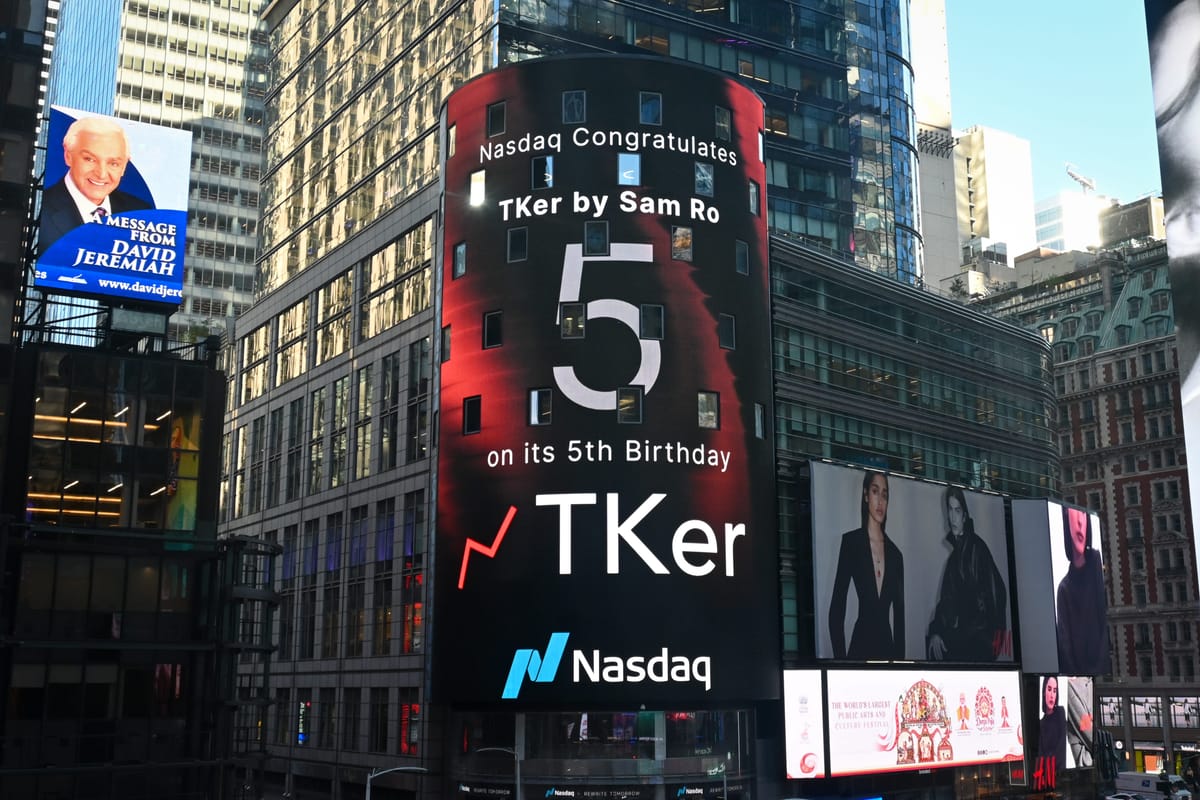
Five years ago, on October 14, I launched TKer, the newsletter that tells the story of how the stock market usually goes up.
5년 전 오늘인 10월 14일, 저는 주식시장이 대개 우상향한다는 이야기를 전하는 뉴스레터인 티커(TKer)를 창간했습니다.
📉 That first year was highlighted by a bear market as the Federal Reserve went to war against inflation. The S&P 500 fell 19%.
📉 첫해는 연방준비제도(Fed)가 인플레이션과의 전쟁에 돌입하면서 약세장이 펼쳐졌던 시기로 기억됩니다. S&P 500 지수는 19% 하락했습니다.
📈 Year two brought an impressive stock market rebound. It began two days after the current bull market started. That year, the S&P ended up 21% higher despite lingering uncertainty.
📈 2년 차에는 인상적인 주식시장 반등이 찾아왔습니다. 이는 현재의 강세장이 시작된 지 이틀 뒤부터 본격화되었습니다. 그해 S&P 500은 지속되는 불확실성 속에서도 21% 상승한 채 마감했습니다.
📈 Year three extended the rally, with the S&P surging an incredible 35%. Interestingly, the average annualized return since TKer’s launch up to that point was an extraordinarily average 9%.
📈 3년 차에는 랠리가 더욱 연장되어 S&P 500이 무려 35% 급등했습니다. 흥미롭게도 TKer 창간 이후 그 시점까지의 연평균 수익률은 지극히 평범한 수준인 9%를 기록했습니다.
📈 Year four brought political upheaval after the U.S. presidential election, trade wars sparked by new tariffs, volatility in interest rates and currency markets, heightened geopolitical tensions, threats to Federal Reserve independence, and a government shutdown, which added to concerns about the quality of economic data. Yet the stock market repeatedly set new all-time highs, climbing 14% during the period — arguably because earnings were resilient.
📈 4년 차에는 미국 대선 이후의 정치적 격변, 새로운 관세로 촉발된 무역 전쟁, 금리 및 통화 시장의 변동성, 고조된 지정학적 긴장, 연방준비제도 독립성에 대한 위협, 그리고 경제 데이터의 신뢰성에 대한 우려를 가중시킨 연방 정부 셔터다운(업무 정지)이 겹쳤습니다. 그럼에도 불구하고 주식시장은 탄탄한 실적을 바탕으로 최고가 행진을 거듭하며 이 기간 동안 14% 상승했습니다.
📈 Year five saw many of year four’s challenges linger. But one key difference was that the forward price-to-earnings (P/E) ratio was unusually elevated at close to 23x, the highest level since 2020.
📈 5년 차에는 4년 차에 겪었던 난제들 중 상당수가 여전히 가시지 않은 상태로 남아 있었습니다. 다만 한 가지 결정적인 차이점은 선행 주가수익비율(P/E)이 23배에 가까워지며 2020년 이후 최고 수준으로 비정상적으로 높았다는 점입니다.
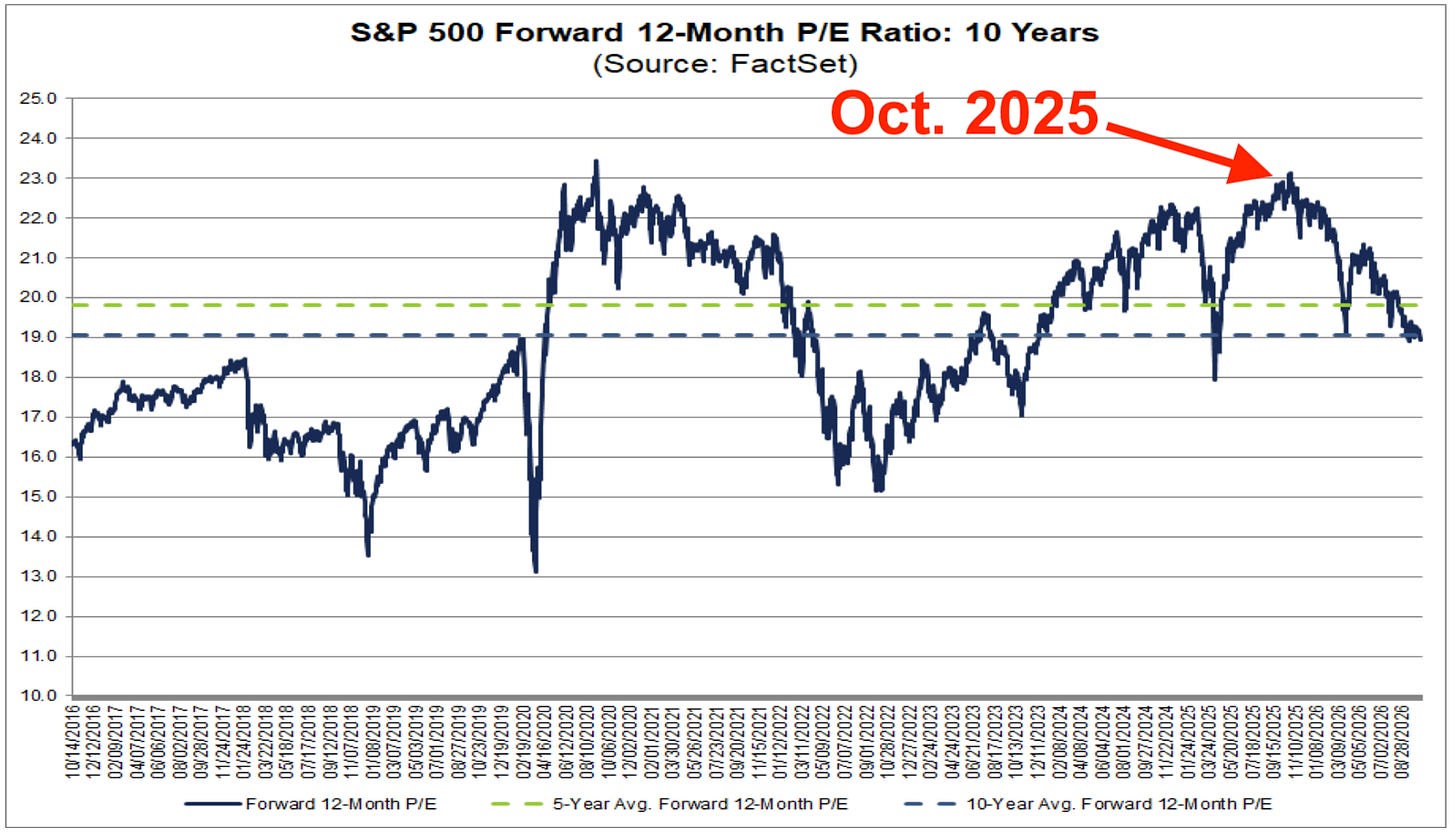
In other words, stocks looked expensive when I published my previous annual update.
다시 말해, 제가 이전 연간 업데이트를 발행했을 당시 주식은 비싸 보였습니다.
But as we’ve discussed for years, elevated valuations don’t mean prices are likely to fall soon. We were reminded of this in TKer’s fifth year as the S&P 500 climbed 16%.
하지만 우리가 수년 동안 논의해 왔듯이, 밸류에이션이 높다고 해서 주가가 조만간 하락할 것으로 예상되는 것은 아닙니다. S&P 500 지수가 16% 상승한 TKer의 5년 차를 거치며 우리는 이 사실을 다시 한번 확인했습니다.
TKer Stock Market Truth No. 6 📜
About a year ago, some of Wall Street’s most prominent strategists made a bold prediction: High valuations were justified, and they’ll remain elevated in 2026 as stock prices go higher.
약 1년 전, 월스트리트의 가장 저명한 전략가들 중 일부는 대담한 전망을 내놓았습니다. 높은 밸류에이션은 정당화될 수 있으며, 2026년에도 주가가 상승함에 따라 높은 수준을 유지할 것이라는 주장이었습니다.
Others argued valuations were a headwind and at risk of contracting, capping price returns.
반면 밸류에이션이 역풍으로 작용하여 하락 압력을 받고 가격 수익률을 제한할 것이라고 주장하는 이들도 있었습니다.
I’ve written before that P/E ratio forecasts are where Wall Street’s year-end price target calculations often go wrong, mostly because the direction of the ratio is hard to predict over short periods.
제가 이전에 쓴 적이 있듯이, P/E 비율 전망치는 월스트리트의 연말 목표가 계산이 자주 빗나가는 영역입니다. 대개 짧은 기간 동안 P/E 비율의 방향성을 예측하기란 매우 어렵기 때문입니다.
But ten months into 2026, P/E ratios have been contracting. Does that mean the bulls were wrong and the skeptics were right?
그러나 2026년이 10개월 지난 지금, P/E 비율은 하락(수축)하고 있습니다. 그렇다면 강세론자들이 틀렸고 회의론자들이 맞았던 것일까요?
Sort of, but also not really.
어느 정도는 그렇지만, 꼭 그렇다고만 할 수도 없습니다.
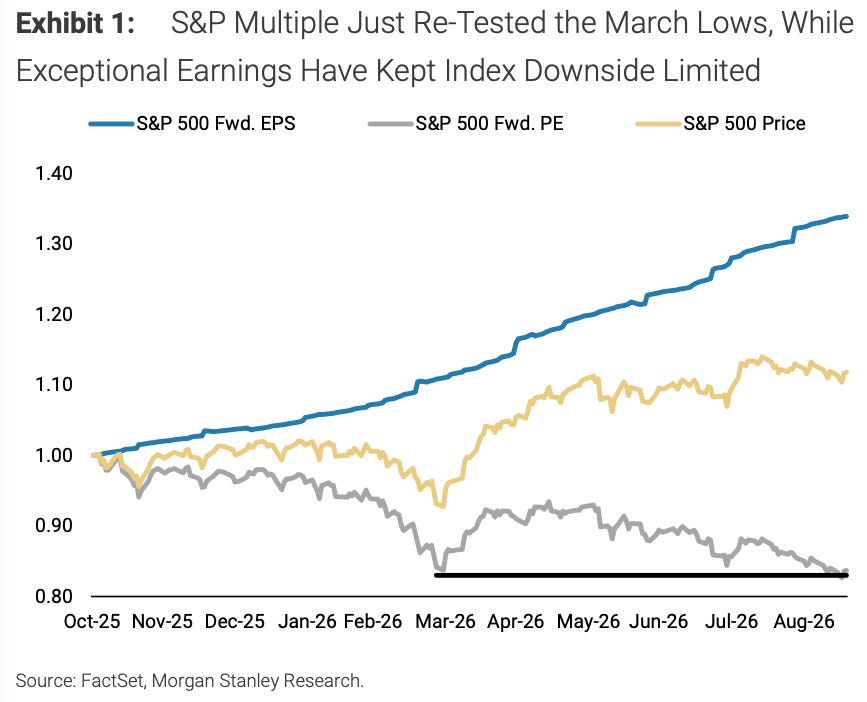
One of this year’s defining market stories has been the aggressive, ongoing upward revisions to earnings forecasts, which have pulled P/E ratios down. This occurred even as stock prices trended higher. Fractions 101: If the denominator (E) rises faster than the numerator (P), then the P/E falls.
올해 시장을 정의하는 주요 특징 중 하나는 이익 전망치가 공격적이고 지속적으로 상향 조정되면서 P/E 비율을 끌어내렸다는 점입니다. 이는 주가가 상승세를 타는 중에도 발생했습니다. 분수 공식의 기초를 떠올려보십시오. 분모(실적 E)가 분자(주가 P)보다 더 빨리 상승하면 P/E는 하락하게 됩니다.
This brings us to TKer Stock Market Truth No. 6:
6. Valuations won’t tell you much about next year
There are many valuation methods that’ll help you estimate whether a stock or stock market is cheap or expensive. We won’t go through all of those here.
While valuation methods may tell you something about long-term returns, most tell you almost nothing about where prices are headed in the next 12 months. Over short periods like this, expensive things can get more expensive and cheap things can get cheaper.
It’s worth noting that prices can be cheap or expensive for extended periods of time. In fact, some folks would argue valuations are not mean-reverting.
이것이 바로 TKer 주식시장 진실 제6호로 이어집니다.
6. 밸류에이션은 내년 주가를 거의 말해주지 않는다
주식이나 주식시장이 저평가되었는지 고평가되었는지 추정하는 데 도움을 주는 밸류에이션 방법은 다양합니다. 여기서는 그 모든 방법을 일일이 다루지 않겠습니다.
밸류에이션 방법이 장기 수익률에 대해서는 무언가를 말해줄 수 있을지 몰라도, 향후 12개월 동안 주가가 어디로 향할지에 대해서는 거의 아무것도 알려주지 못합니다. 이처럼 짧은 기간 동안에는 비싼 자산이 더 비싸질 수 있고 싼 자산이 더 싸질 수 있습니다.
자산 가격이 장기간에 걸쳐 고평가되거나 저평가된 상태로 머무를 수 있다는 점은 주목할 가치가 있습니다. 실제로 어떤 이들은 밸류에이션이 평균 회귀(mean-reverting) 성격을 띠지 않는다고 주장하기도 합니다.
Expensive stocks often get more expensive. Cheap stocks often get cheaper.
비싼 주식은 종종 더 비싸집니다. 싼 주식은 종종 더 싸집니다.
And sometimes prices fall as stocks get more expensive, and prices rise as they get cheaper.
그리고 때로는 주식이 더 비싸지는데도 가격이 하락하고, 더 싸지는데도 가격이 상승하는 현상이 발생합니다.
Trading the stock market can be hard. You could’ve been absolutely right if you predicted P/E ratios would contract. But if you used that information to sell stocks, you might’ve made a huge mistake.
주식시장에서 거래하는 일은 어려울 수 있습니다. 만약 여러분이 P/E 비율이 하락할 것이라고 예측했다면 그 예측 자체는 전적으로 맞았을 것입니다. 하지만 그 정보를 바탕으로 주식을 팔아버렸다면 엄청난 실수를 저지른 것일 수 있습니다.
The state of TKer 📈
This past year’s highlights include being quoted in Barron’s weekend magazine, speaking on a panel at Odd Lots Live, appearing on The Compound and Friends, and presenting at the Money Show in Las Vegas, where I also won the conference poker tournament!
지난해 주요 하이라이트로는 주말 매거진 배런스(Barron's) 인용 보도, '오드 롯 라이브(Odd Lots Live)' 패널 토론 참여, '더 컴파운드 앤 프렌즈(The Compound and Friends)' 출연, 그리고 라스베이거스에서 열린 '머니 쇼(Money Show)' 발표 등이 있으며, 이 자리에서 콘퍼런스 포커 토너먼트 우승까지 거머쥐었습니다!
TKer’s message continues to resonate with a growing audience.
TKer의 메시지는 점점 더 늘어나는 독자층에게 계속해서 공감을 얻고 있습니다.
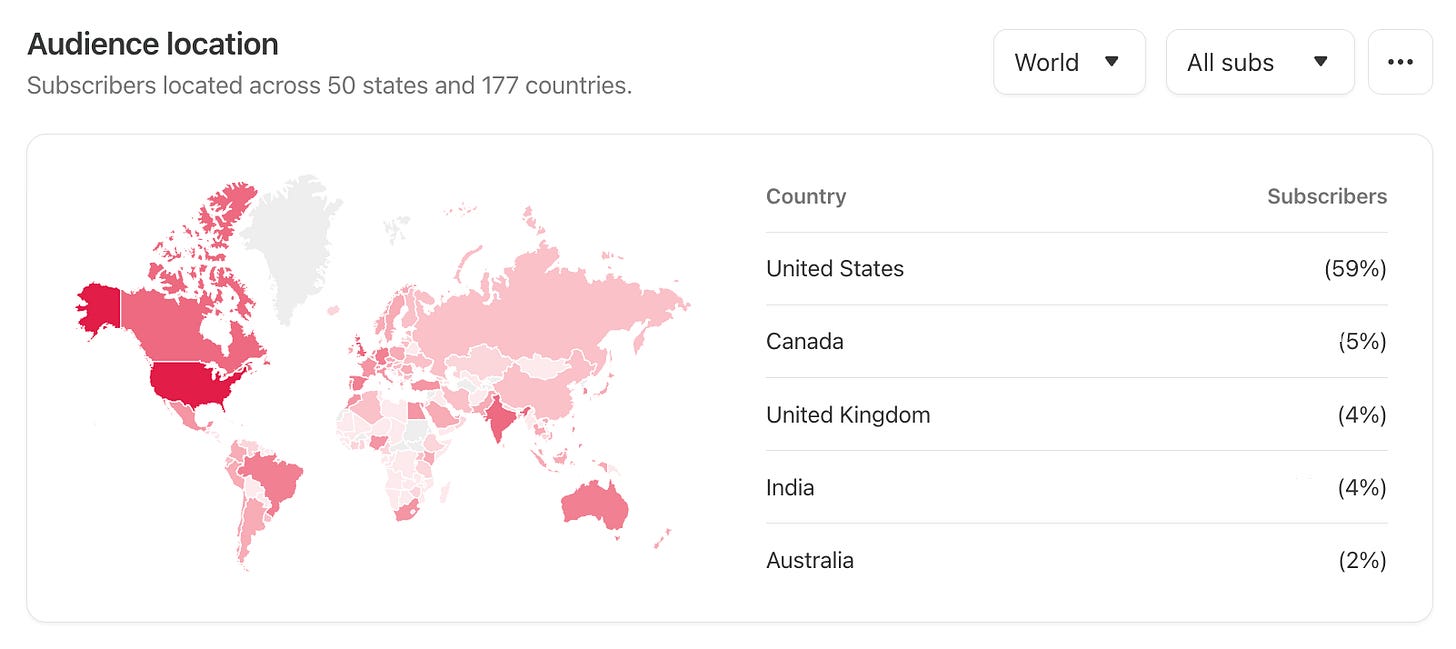
More than 36,000 subscribers are receiving TKer newsletters in their inboxes. TKer is read across all 50 states and in 177 countries.
3만 6천 명이 넘는 구독자가 받은편지함으로 TKer 뉴스레터를 받아보고 있습니다. TKer는 미국의 50개 주 전역과 전 세계 177개국에서 읽히고 있습니다.
Paid subscription revenue hit a record high in July, but growth has since plateaued. This isn’t surprising, given the stock market has traded near record levels for months. As I’ve written before, reader interest tends to be highest during market downturns and volatile periods.
유료 구독 수익은 7월에 역대 최고치를 기록했으나, 이후 성장세는 정체되었습니다. 주식시장이 수개월 동안 사상 최고치 근처에서 거래되어 온 것을 감상하면 이는 놀라운 일이 아닙니다. 제가 이전에 썼듯이, 독자들의 관심은 시장 침체기나 변동성이 큰 시기에 가장 높은 경향이 있습니다.
I continue to receive great suggestions on how to boost growth by improving the reader experience, and I’ve implemented some of them. But one thing I won’t do is adjust the content strategy for the sake of growth if it means compromising what readers value about TKer.
저는 독자 경험을 개선하여 성장을 촉진하는 방법에 대해 훌륭한 제안들을 계속 받고 있으며, 그중 일부를 실행에 옮겼습니다. 하지만 독자들이 TKer에서 가치 있게 여기는 부분을 훼손하는 일이 된다면, 성장을 위해 콘텐츠 전략을 조정하지는 않을 것입니다.
What I care about most is that I have the right readers, including curious long-term investors, experienced Wall Street professionals, independent financial advisors, markets reporters, and many other individuals who can appreciate that the stock market usually goes up.
제가 가장 중요하게 생각하는 것은 호기심 많은 장기 투자자, 노련한 월스트리트 전문가, 독립 재무 자문가, 시장 전문 기자, 그리고 주식시장이 대개 우상향한다는 사실을 이해하는 수많은 개인들을 포함하여 올바른 독자층을 확보하는 것입니다.
Thank you for your support! I’m especially grateful for you paid subscribers. TKer is a reader-supported small business, so paid subscriptions keep me going.
성원해 주셔서 감사합니다! 특히 유료 구독자 여러분께 깊은 감사를 드립니다. TKer는 독자 후원으로 운영되는 소상공인 사업체이므로, 유료 구독이 저를 계속 움직이게 하는 원동력입니다.
If you’re a free subscriber and you find value in TKer, please consider upgrading to a paid subscription!
무료 구독자이신데 TKer에서 유익함을 느끼셨다면, 유료 구독으로 업그레이드하는 것을 고려해 주세요!
-
Related from TKer:
- Telling the story of how the stock market usually goes up, year 1 📈🎂
- Telling the story of how the stock market usually goes up, year 2 📈🎂
- TKer’s 3rd birthday comes with an extraordinarily average stock market stat 📈🎂
- TKer’s 4th year reminded us what drives the stock market 📈🎂
- 10 truths about the stock market 📈
Review of the macro crosscurrents 🔀
📉The stock market fell last week, with the S&P 500 shedding 1.9% to end at 7,659.44. The index is now down 2.0% from its October 6 closing high of 7,818.93 and up 14.1% year-to-date. For market insights, check out the Stock Market tab at TKer. »
📉 지난주 주식시장은 하락세를 보였습니다. S&P 500 지수는 1.9% 하락하며 7,659.44로 마감했습니다. 이로써 이 지수는 지난 10월 6일 기록한 종가 기준 최고점인 7,818.93 대비 2.0% 하락했으며, 연초 대비로는 14.1% 상승한 상태입니다. 시장 인사이트를 확인하시려면 TKer의 주식시장(Stock Market) 탭을 참조하세요. »
There were several notable data points and macroeconomic developments since our last review:
마지막 점검 이후 주목할 만한 몇 가지 데이터 포인트와 거시경제적 발전 사항은 다음과 같습니다.
🏦 America’s top banks confirm that the economy remains resilient, but uncertainty is up: From JPMorgan’s Jamie Dimon: “The U.S. economy continued to be fueled by strong business investment and ongoing consumer spending. However, large fiscal deficits, sticky inflation, elevated asset prices, rising interest rates and geopolitical conditions continue to shift under the surface. These forces may be manageable, but we remain prepared for a wide range of outcomes.”
🏦 미국의 주요 은행들은 경제가 여전히 회복력을 유지하고 있다고 확인했으나, 불확실성은 커졌습니다. JP모건의 제이미 다이먼(Jamie Dimon)의 발언입니다. "미국 경제는 강력한 기업 투자와 지속적인 소비 지출에 힘입어 계속해서 활력을 얻었습니다. 그러나 대규모 재정 적자, 끈질긴 인플레이션, 높은 자산 가격, 금리 상승 및 지정학적 여건은 수면 아래에서 계속 변화하고 있습니다. 이러한 요인들은 관리 가능한 수준일 수 있지만, 우리는 여전히 다양한 시나리오에 대비하고 있습니다."
Here’s Wells Fargo’s Charlie Scharf: “While economic uncertainty exists and consumer sentiment remains mixed, our data shows that our consumer and business customers are doing well. Consumers are spending more, loan delinquencies are low, and deposit and investment balances have grown. Businesses continue to have strong balance sheets and losses remain low. While higher interest rates, higher oil prices and persistent inflation create risks to the economy, strong positive forces such as the investment in AI infrastructure, high employment levels and consistent wage growth continue to outweigh the risks.”
다음은 웰스파고의 찰리 샤프(Charlie Scharf)의 발언입니다. "경제적 불확실성이 존재하고 소비자 심리가 엇갈리고 있지만, 당사의 데이터는 소비자와 기업 고객들이 잘 지내고 있음을 보여줍니다. 소비자들은 지출을 늘리고 있고, 대출 연체율은 낮으며, 예금 및 투자 잔액은 증가했습니다. 기업들은 계속해서 탄탄한 대시제표를 유지하고 있으며 손실은 낮은 수준에 머물러 있습니다. 고금리, 고유가, 지속되는 인플레이션이 경제에 리스크를 유발하고 있지만, AI 인프라 투자, 높은 고용 수준, 꾸준한 임금 상승과 같은 강력한 긍정적 요인들이 리스크를 계속해서 압도하고 있습니다."
And Citi’s Jane Fraser: “In the U.S., whilst much has been made of the AI boom, the consumer is still driving much of the growth, the labor market is stable, and companies remain active. Our near-term economic outlook remains positive.“
마지막으로 씨티의 제인 프레이저(Jane Fraser)의 발언입니다. "미국에서는 AI 붐에 대해 많은 이야기가 나오고 있지만, 여전히 소비자가 성장의 상당 부분을 견인하고 있고, 노동 시장은 안정적이며, 기업들은 활발한 활동을 이어가고 있습니다. 당사의 단기 경제 전망은 여전히 긍정적입니다."
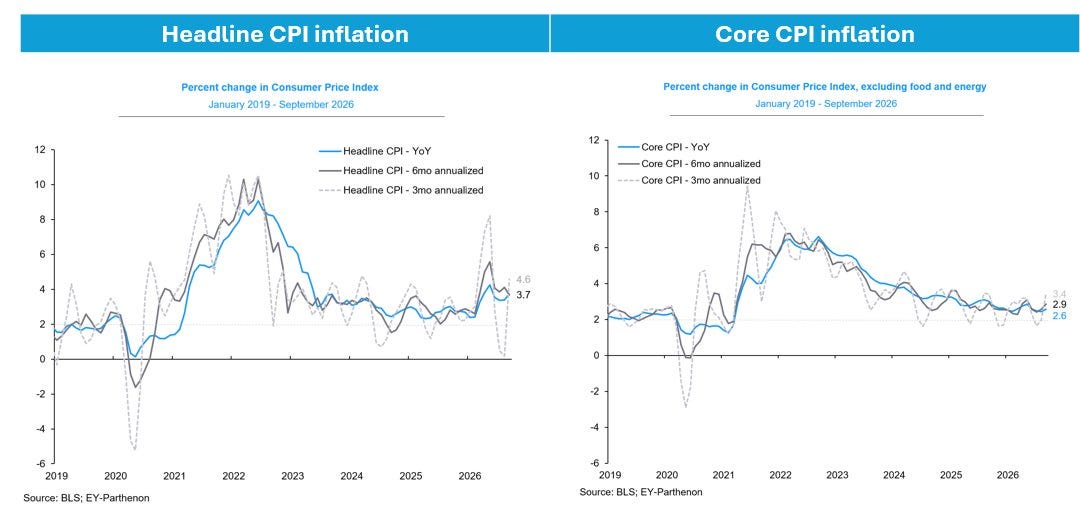
🎈Consumer price inflation heated up. The Consumer Price Index (CPI) increased 3.7% year-over-year in September, up from 3.4% in the prior month. Adjusted for food and energy, core CPI rose 2.6, up from 2.4%.
🎈 소비자물가 상승률이 다시 올랐습니다. 9월 소비자물가지수(CPI)는 전년 동기 대비 3.7% 상승하여 전월의 3.4%에서 높아졌습니다. 식품과 에너지를 제외한 근원 CPI는 2.4%에서 2.6%로 상승했습니다.
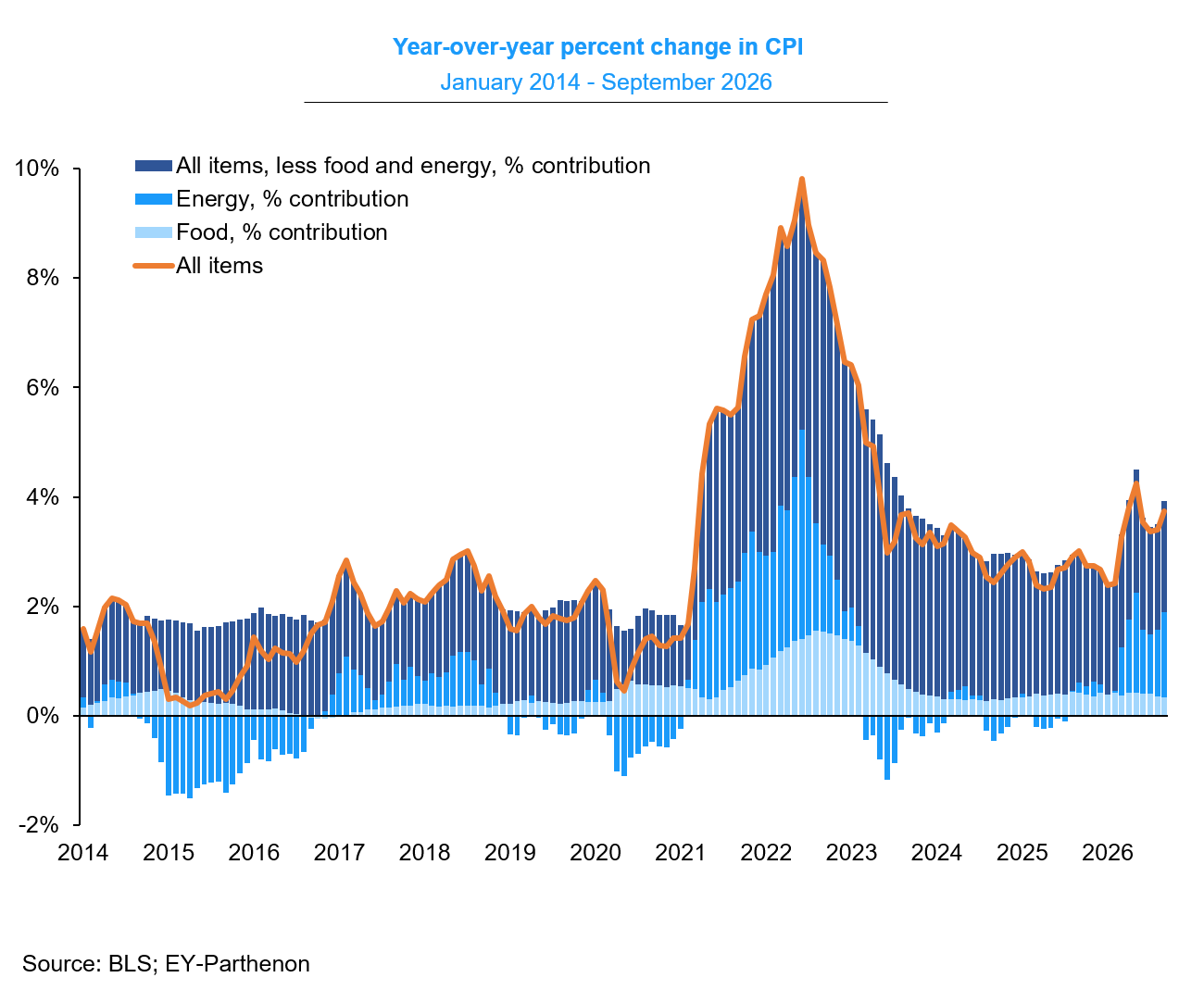
Month over month, CPI rose 0.6% as energy prices jumped 5.2%. Core CPI was up 0.3%. If you annualize the three-month and six-month figures — a reflection of the short-term trend in prices — core CPI climbed 3.4% and 2.9%, respectively.
전월 대비로는 에너지 가격이 5.2% 급등하면서 CPI가 0.6% 상승했습니다. 근원 CPI는 0.3% 올랐습니다. 3개월 및 6개월 수치를 연율화해 보면(단기 물가 추세를 반영하는 지표), 근원 CPI는 각각 3.4%와 2.9% 상승했습니다.
For more discussion on inflation and monetary policy, read: The other side of the Fed’s inflation ‘mistake’ 🧐 and ‘When will the Fed cut rates?’ is not the right question for investors right now ✂️
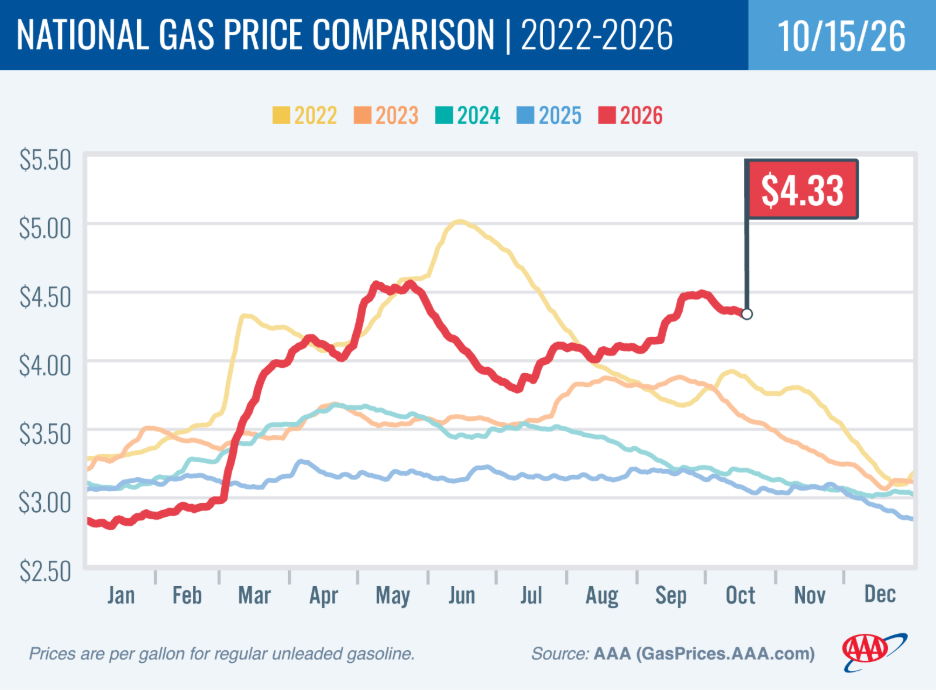
⛽️ Gas prices tick lower, but remain high. From AAA: “The national average for a gallon of regular gasoline is down a couple of cents from last week at $4.33. Gas prices aren’t budging much as crude oil prices remain high, once again nearing $100 per barrel. The national average has stayed above $4 per gallon since late July and is currently more than a dollar higher than it was this time last year. As the graph below shows, the fall months typically bring lower gas prices, but volatility in the oil market has led to seasonal record highs this year. “
⛽️ 휘발유 가격이 소폭 하락했으나 여전히 높은 수준을 유지하고 있습니다. 전미자동차협회(AAA)에 따르면: "일반 휘발유 1갤런당 전국 평균 가격은 지난주보다 몇 센트 하락한 4.33달러를 기록했습니다. 원유 가격이 배럴당 100달러에 다시 육박하며 여전히 높은 수준을 유지하고 있어 휘발유 가격은 좀처럼 떨어지지 않고 있습니다. 전국 평균 가격은 7월 말 이후 갤런당 4달러를 상회하고 있으며, 현재 작년 이맘때보다 1달러 이상 높은 수준입니다. 아래 그래프에서 볼 수 있듯이 가을철에는 대개 휘발유 가격이 하락하는 경향이 있으나, 올해는 원유 시장의 변동성으로 인해 계절적 역대 최고치를 기록했습니다."
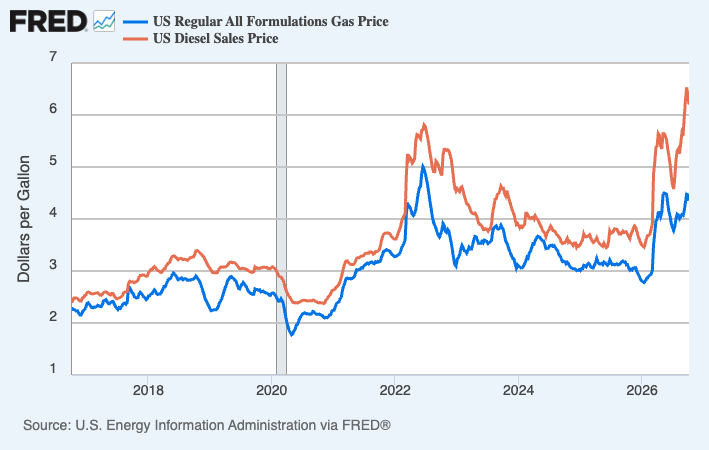
Here’s a longer-term look at gas and diesel price trends, as tracked by the EIA.
에너지 정보청(EIA)이 추적한 휘발유 및 경유 가격 추세의 장기적 관점은 다음과 같습니다.
For more on energy prices, read: Our love-hate relationship with rising oil prices in charts 💔🛢️📊
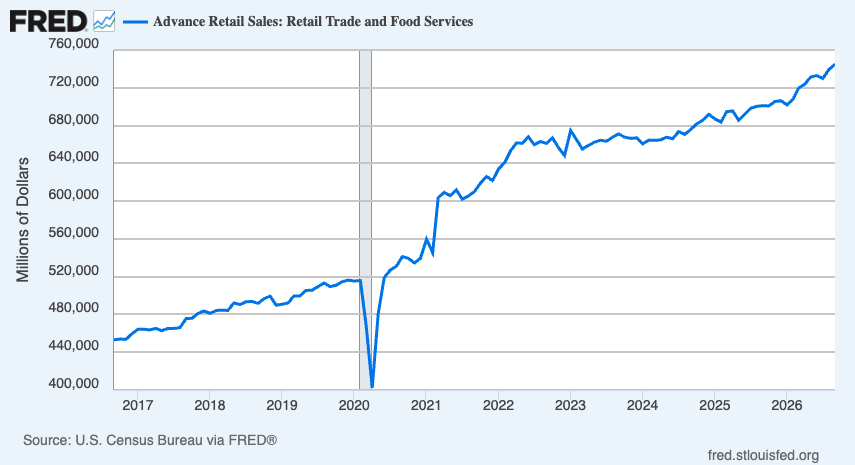
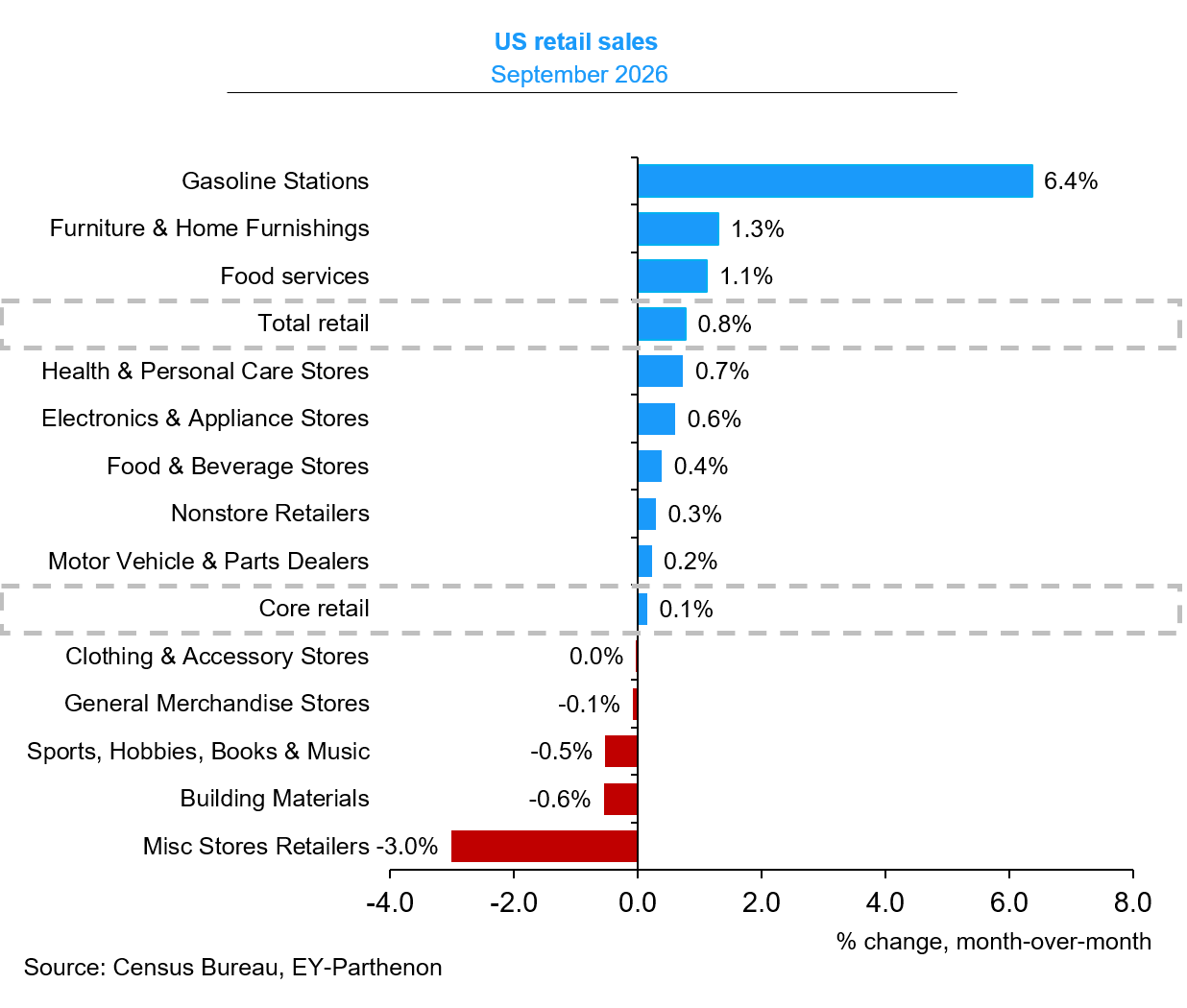
🛍️ Retail shopping activity rose to record levels. Retail sales rose 0.8% in September to a record $745 billion. Gas station sales jumped 6.2% as energy prices heat up.
🛍️ 소매 쇼핑 활동이 사상 최고 수준으로 증가했습니다. 9월 소매판매는 0.8% 증가하여 사상 최대치인 7,450억 달러를 기록했습니다. 에너지 가격 상승 여파로 주유소 판매가 6.2% 급증했습니다.
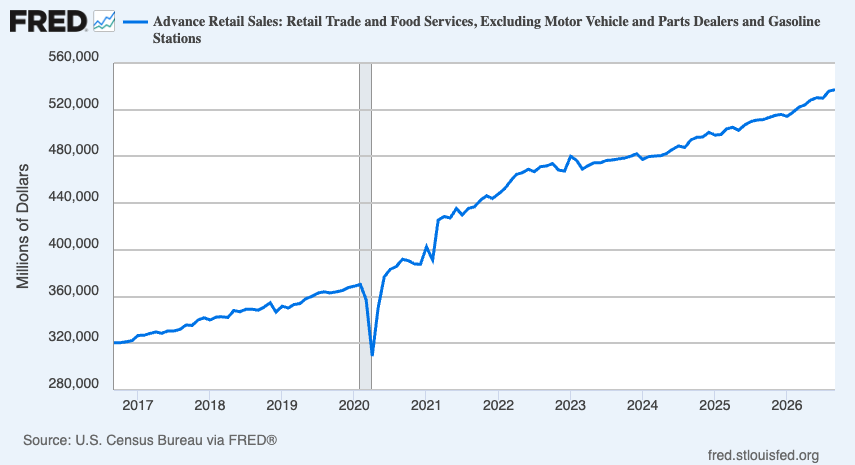
Excluding autos and gas, which tend to be short-term volatile, retail sales rose 0.2%.
단기 변동성이 큰 자동차와 휘발유를 제외한 소매판매는 0.2% 증가했습니다.
Here’s how retail sales changed by category.
카테고리별 소매판매 변화는 다음과 같습니다.
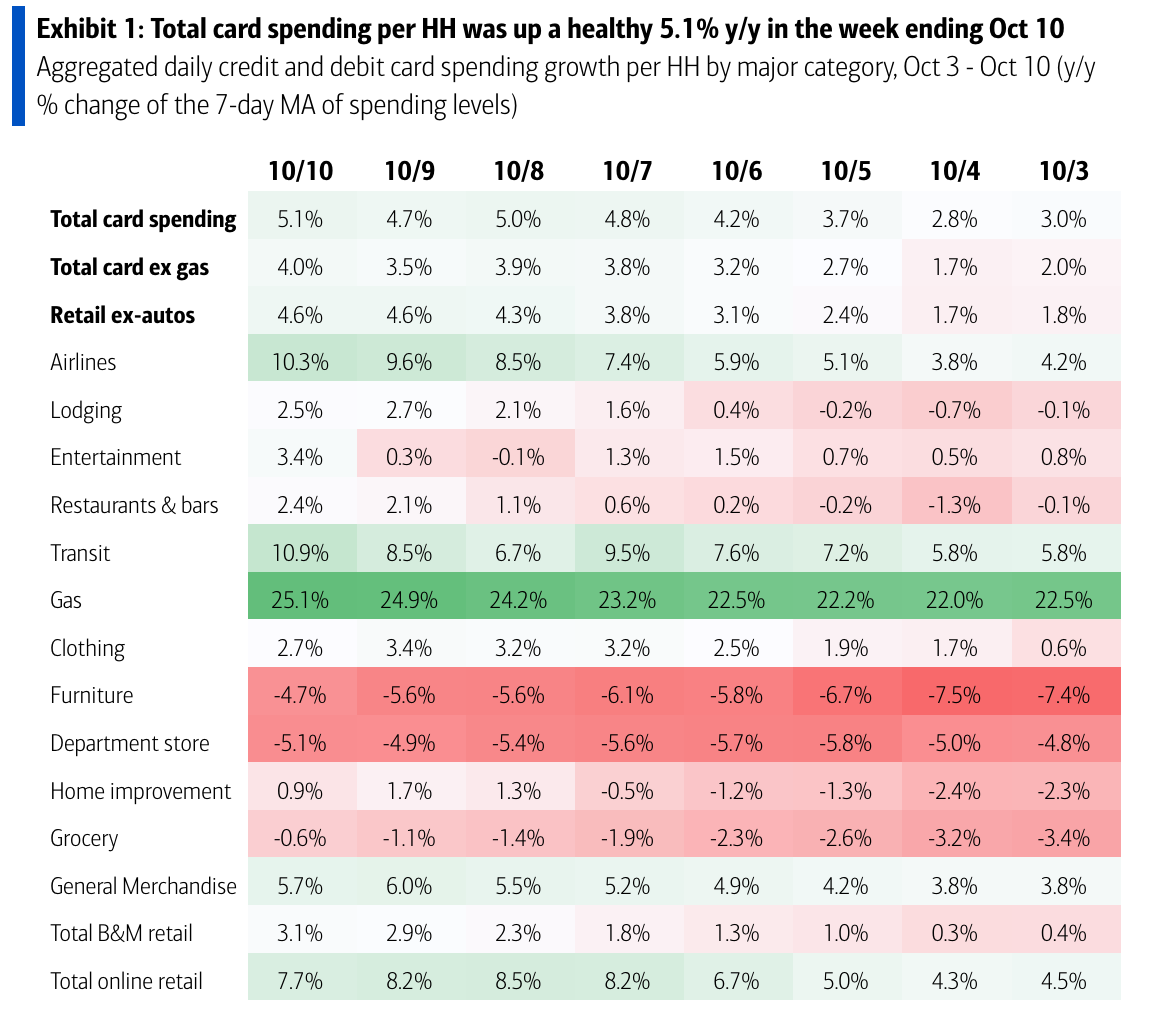
💳 Card spending data is holding up. From BofA: “Total card spending per HH was up 5.1% y/y in the week ending Oct 10, according to BAC aggregated credit and debit card data. Hurricane Isaias’s impact was limited to some sectors like restaurants in the South. Overall, spending remains healthy. Lower-income spending growth has consistently outpaced higher-income spending growth over the past several weeks.”
💳 카드 지출 데이터는 견조한 흐름을 보이고 있습니다. 뱅크오브아메리카(BofA)에 따르면: "BAC의 통합 신용 및 체크카드 데이터에 따르면, 10월 10일로 끝난 주의 가구당 총 카드 지출은 전년 동기 대비 5.1% 증가했습니다. 허리케인 이사이야스의 영향은 남부 지역의 레스토랑 등 일부 부문에 국한되었습니다. 전반적으로 지출은 건전한 상태를 유지하고 있습니다. 지난 몇 주 동안 저소득층의 지출 증가율은 고소득층의 지출 증가율을 꾸준히 상회했습니다."
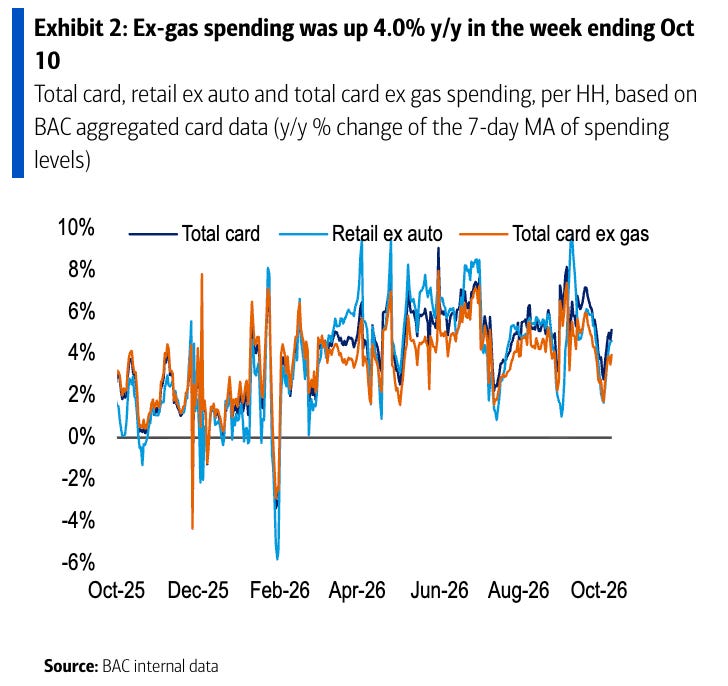
Consumer spending data has looked a lot better than consumer sentiment readings. For more on this contradiction, read: We’re taking that vacation whether we like it or not 🛫 and Household finances are both ‘worse’ and ‘good’ 🌦️
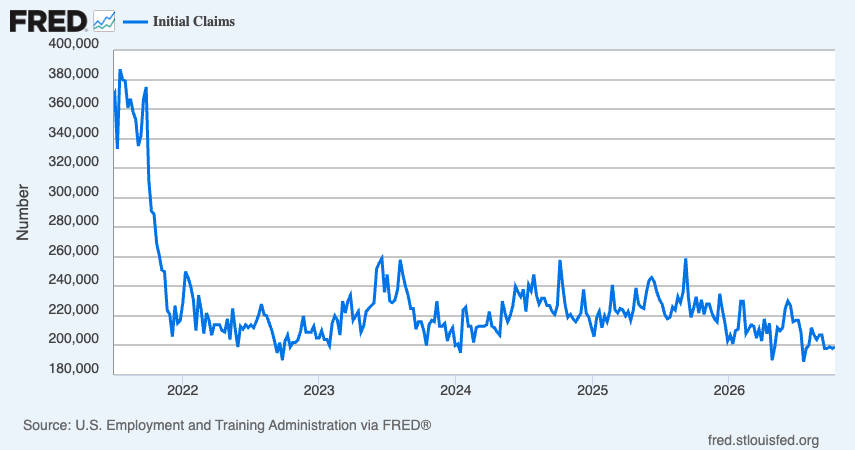
💼 New unemployment insurance claims, total ongoing claims remain low. Initial claims for unemployment benefits ticked up to 199,000 during the week ending Oct. 10, up from 198,000 the week prior. This metric remains at levels historically associated with economic growth.
💼 신규 실업수급 청구 건수와 계속 실업수급 청구 건수 총계가 낮은 수준을 유지하고 있습니다. 10월 10일로 끝난 주간 실업급여 초기 청구 건수는 19만 9천 건으로 직전 주의 19만 8천 건에서 소폭 증가했습니다. 이 지표는 역사적으로 경제 성장과 연동되던 수준을 여전히 유지하고 있습니다.
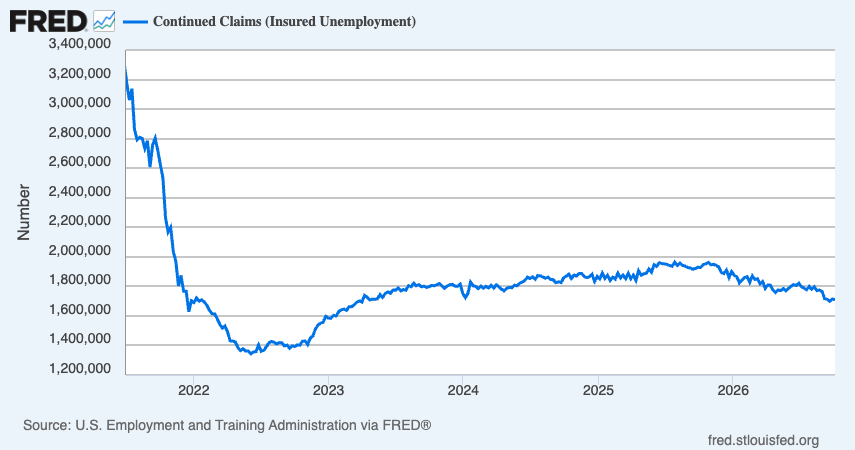
Insured unemployment, which captures those who continue to claim unemployment benefits, ticked down to 1.71 million during the week ending Oct. 3.
실업급여를 계속 수급하는 이들을 포착하는 피보험 실업자 수는 10월 3일로 끝난 주간에 171만 명으로 소폭 감소했습니다.
For more on the labor market, read: Why mass tech layoffs have little effect on total employment 💾
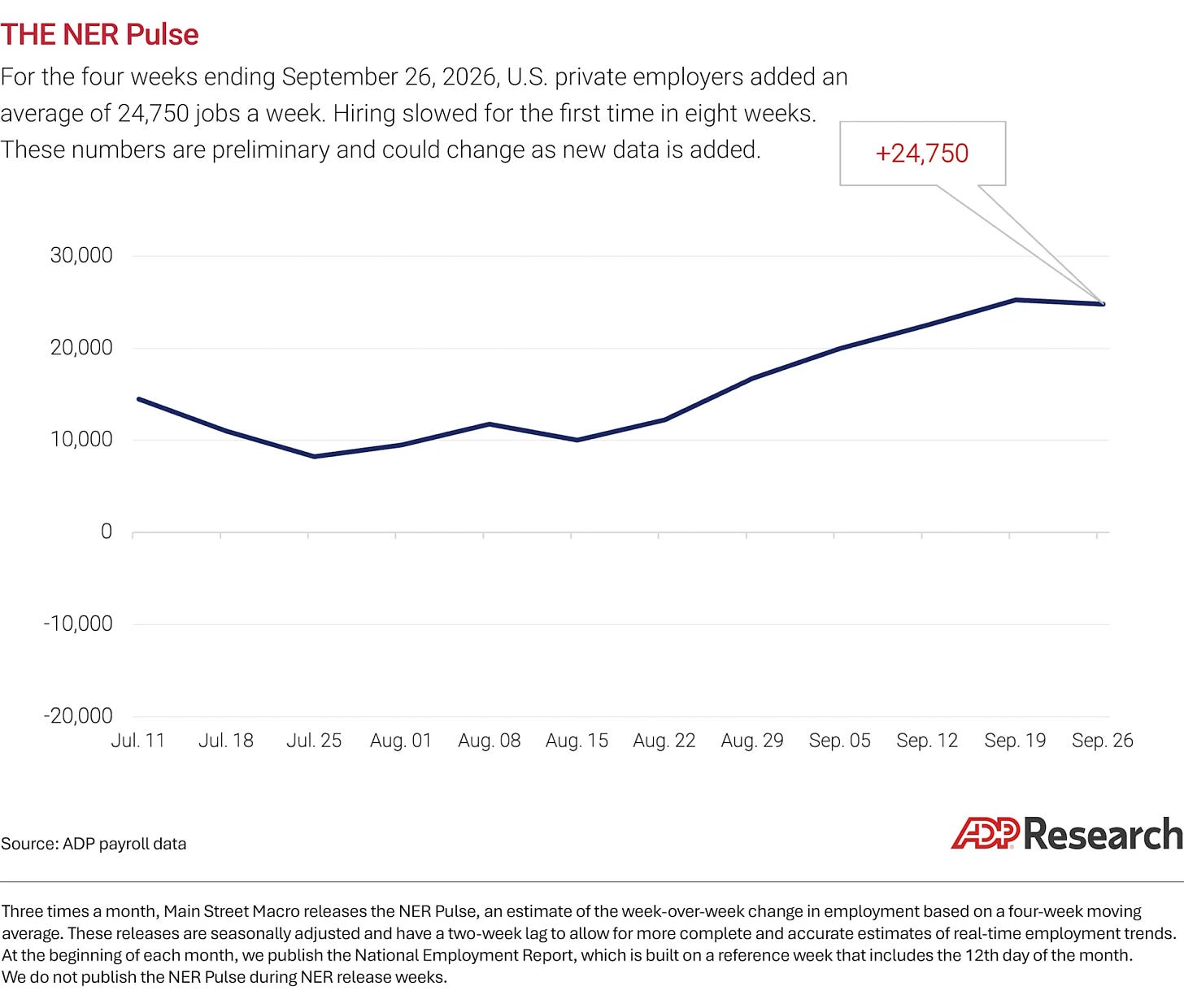
🤔 Recent private job growth is positive. According to payroll processor ADP, private U.S. employers added 24,750 jobs in the four weeks ending Sept. 26.
🤔 최근 민간 부문 일자리 증가세는 긍정적입니다. 급여 처리 업체 ADP에 따르면, 미국의 민간 고용주들은 9월 26일로 끝난 4주 동안 2만 4,750개의 일자리를 추가했습니다.
For more on the labor market, read: Things are looking up in the labor market 👍
🏠 Mortgage rates remain elevated. According to Freddie Mac, the average 30-year fixed-rate mortgage stood at 7.4%, unchanged from last week. It remains at the highest average rate since Nov. 2023.
🏠 모기지 금리가 높은 수준을 유지하고 있습니다. 프레디맥에 따르면 평균 30년 고정 모기지 금리는 7.4%로 지난주와 변동이 없었습니다. 이는 2023년 11월 이후 가장 높은 평균 금리 수준을 지속하고 있습니다.
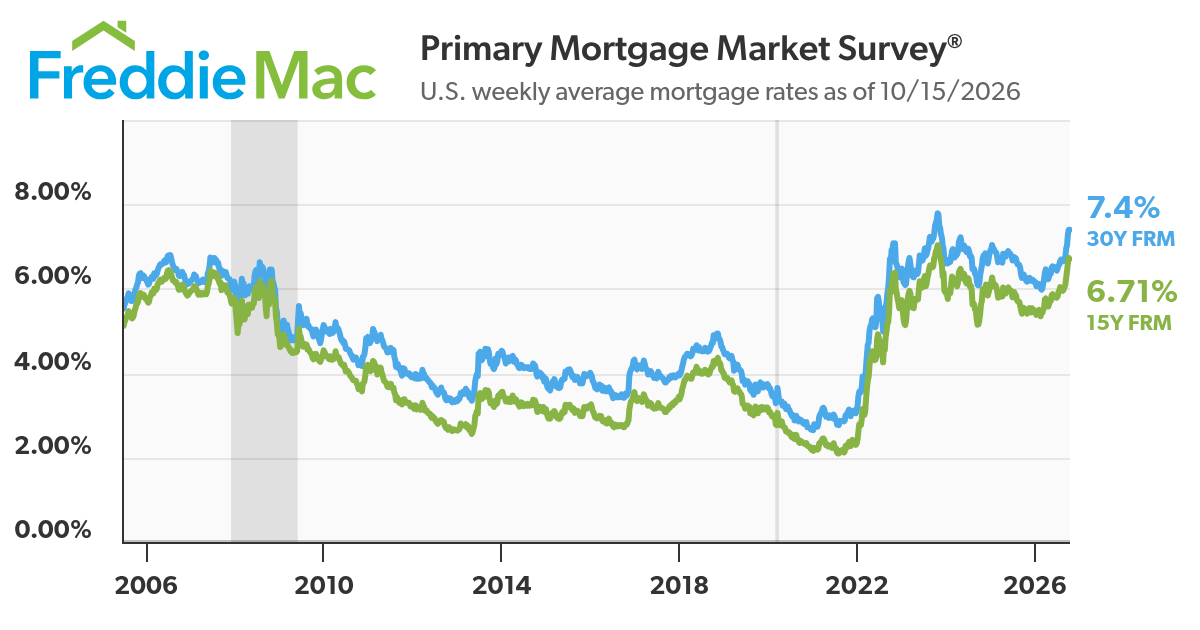
As of Q2, there were 149.5 million housing units in the U.S., of which 87.0 million were owner-occupied and about 40% were mortgage-free. Of those carrying mortgage debt, almost all have fixed-rate mortgages, and most of those mortgages have rates that were locked in before rates surged from 2021 lows. All of this is to say: Most homeowners are not particularly sensitive to the weekly movements in home prices or mortgage rates.
2분기 기준 미국의 주택 유니트는 1억 4,950만 채였으며, 이 중 8,700만 채가 자가 소유였고 약 40%는 모기지 대출이 없는 상태였습니다. 모기지 부채를 안고 있는 주택 중 거의 대부분이 고정금리 모기지였으며, 대다수의 모기지는 2021년 저점에서 금리가 급등하기 전에 고정된 금리를 적용받고 있습니다. 이 모든 것은 대부분의 주택 소유자들이 주택 가격이나 모기지 금리의 주간 변동에 크게 민감하지 않다는 점을 시사합니다.
For more on mortgages and home prices, read: Why home prices and rents are creating all sorts of confusion about inflation 😖
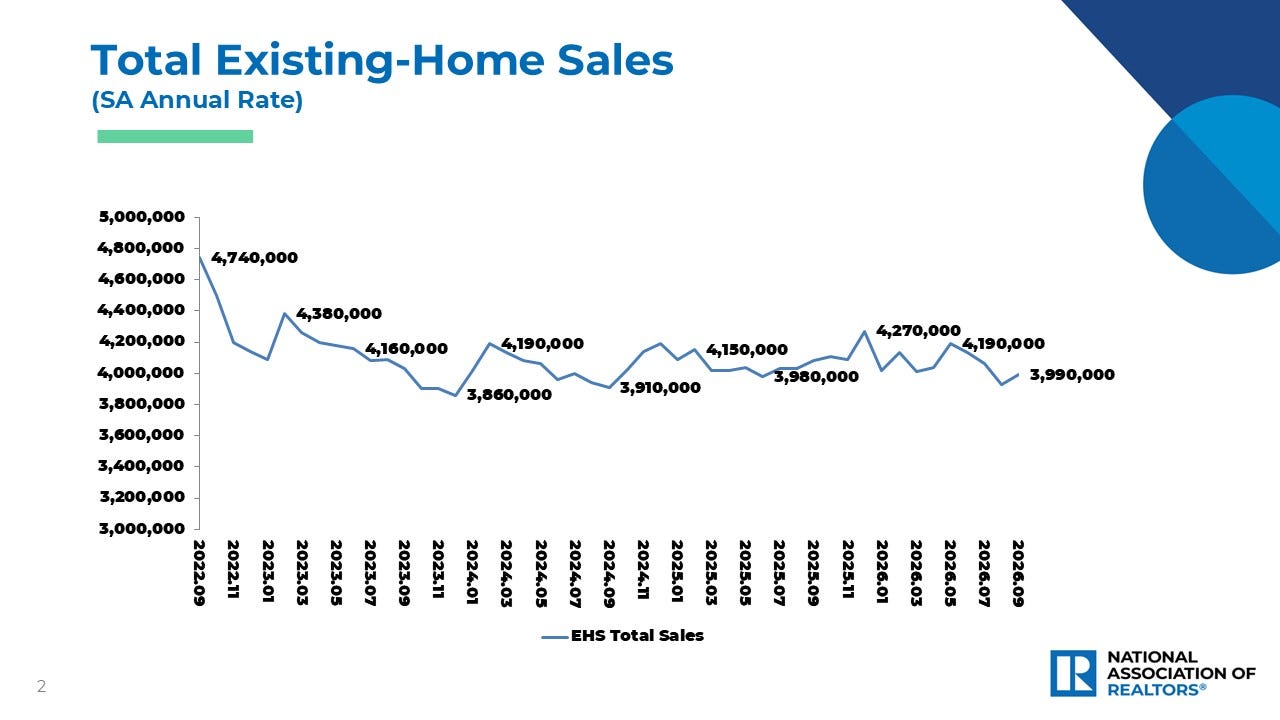
🏚 Home sales rose. Sales of previously owned homes increased 1.5% in September to an annualized rate of 3.99 million units. From NAR chief economist Lawrence Yun: “Despite the small monthly gain on a seasonally adjusted basis, August and September marked the two slowest months for home sales this year. Further increases in mortgage rates in recent weeks mean fewer buyers can qualify to purchase a home.”
🏚 주택 거래량이 증가했습니다. 9월 기존 주택 판매량은 연율 환산 기준 399만 채로 1.5% 증가했습니다. 전미부동산중개인협회(NAR)의 수석 이코노미스트 로렌스 윤(Lawrence Yun)의 발언입니다. "계절 조정 기준으로 월간 소폭 상승을 기록했음에도 불구하고, 8월과 9월은 올해 주택 거래가 가장 부진했던 두 달이었습니다. 최근 몇 주간 모기지 금리가 추가로 상승함에 따라 주택 구입 자격을 갖추는 구매자가 더 줄어들었습니다."
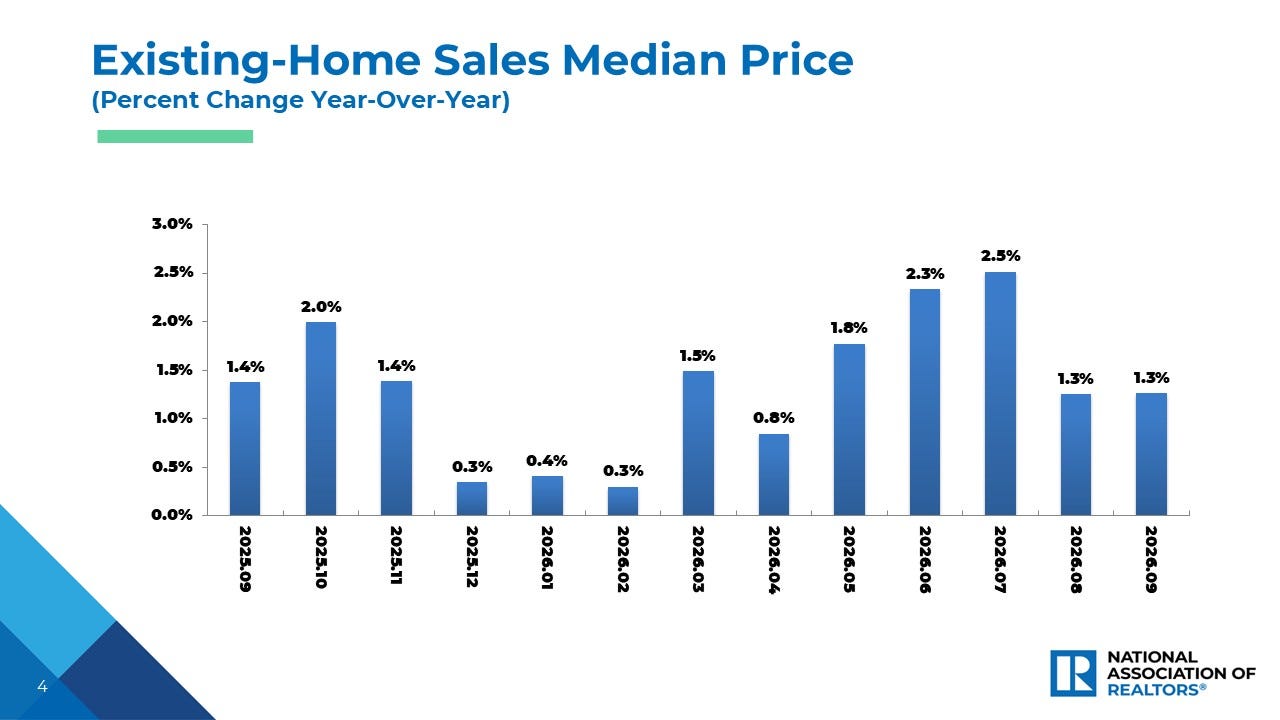
On prices, from the NAR: “The median existing-home sales price for all housing types in September was $417,500, up 1.3% from one year ago ($412,300) – the 39th consecutive month of year-over-year price increases.“
가격에 대해 NAR은 다음과 같이 전했습니다. "9월 모든 주택 유형의 기존 주택 중위 판매 가격은 41만 7,500달러로 1년 전(41만 2,300달러) 대비 1.3% 상승했으며, 이는 39개월 연속 전년 동기 대비 가격 상승세를 기록한 것입니다."
👎 Small business optimism deteriorated. The NFIB’s Small Business Optimism Index declined to 97.9 in September, down from 98.7 in August. From the NFIB: “Small business owners are proceeding with caution as they interpret how rising costs, interest rates, and the difficulty in finding qualified employees are impacting their business.”
👎 소상공인 낙관론이 악화되었습니다. 전미자영업연맹(NFIB)의 소상공인 낙관지수는 8월 98.7에서 9월 97.9로 하락했습니다. NFIB의 설명입니다. "소상공인들은 상승하는 비용, 금리, 자격을 갖춘 직원 채용의 어려움이 자신들의 사업에 미치는 영향을 해석하며 신중하게 행동하고 있습니다."
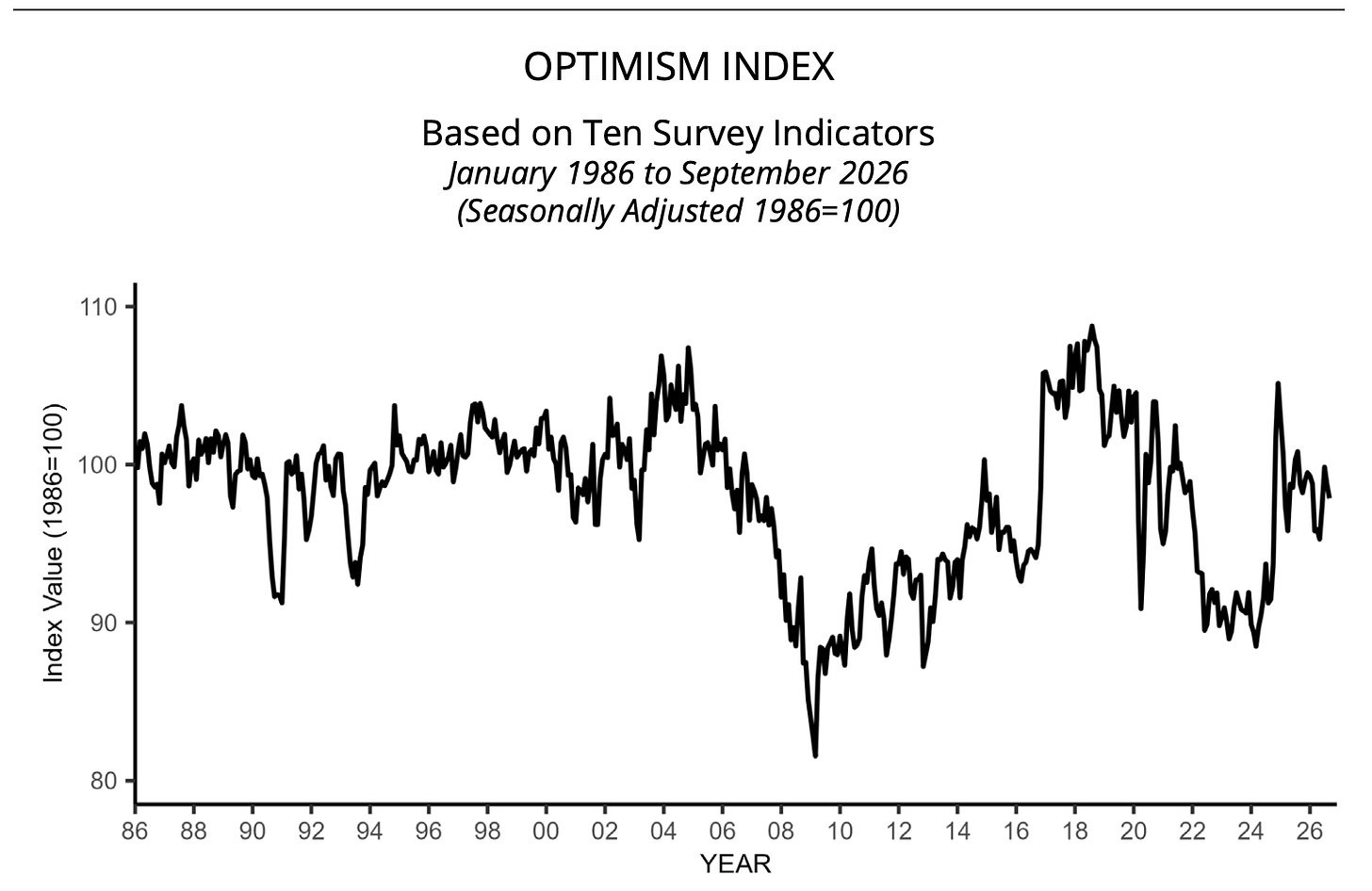
Keep in mind that during times of perceived stress, soft survey data tends to be more exaggerated than actual hard data.
스트레스가 감지되는 시기에는 부드러운 설문조사 데이터가 실제 하드 데이터보다 더 과장되는 경향이 있다는 점을 염두에 두어야 합니다.
For more on this, read: What businesses do > what businesses say 🙊 and 4 sometimes-conflicting ways I’m thinking about the economy 😬😞😎🙃
😬 This is the stuff pros are worried about. From BofA’s October Global Fund Manager Survey: “Investors believe that the biggest tail risk to markets is a ‘disorderly rise in bond yields’ (31%), then ‘AI bubble’ (23%), ‘2nd wave of inflation’ (20%), and ‘hyperscaler credit event’ (11%).”
😬 이는 전문가들이 우려하고 있는 사안들입니다. BofA의 10월 글로벌 펀드 매니저 설문조사에 따르면: "투자자들은 시장에 가장 큰 꼬리 리스크(tail risk)로 '국채 금리의 무질서한 상승'(31%), 'AI 버블'(23%), '인플레이션 2차 파동'(20%), 그리고 '초대형 클라우드 사업자(하이퍼스케일러) 신용 이벤트'(11%)를 꼽았습니다."
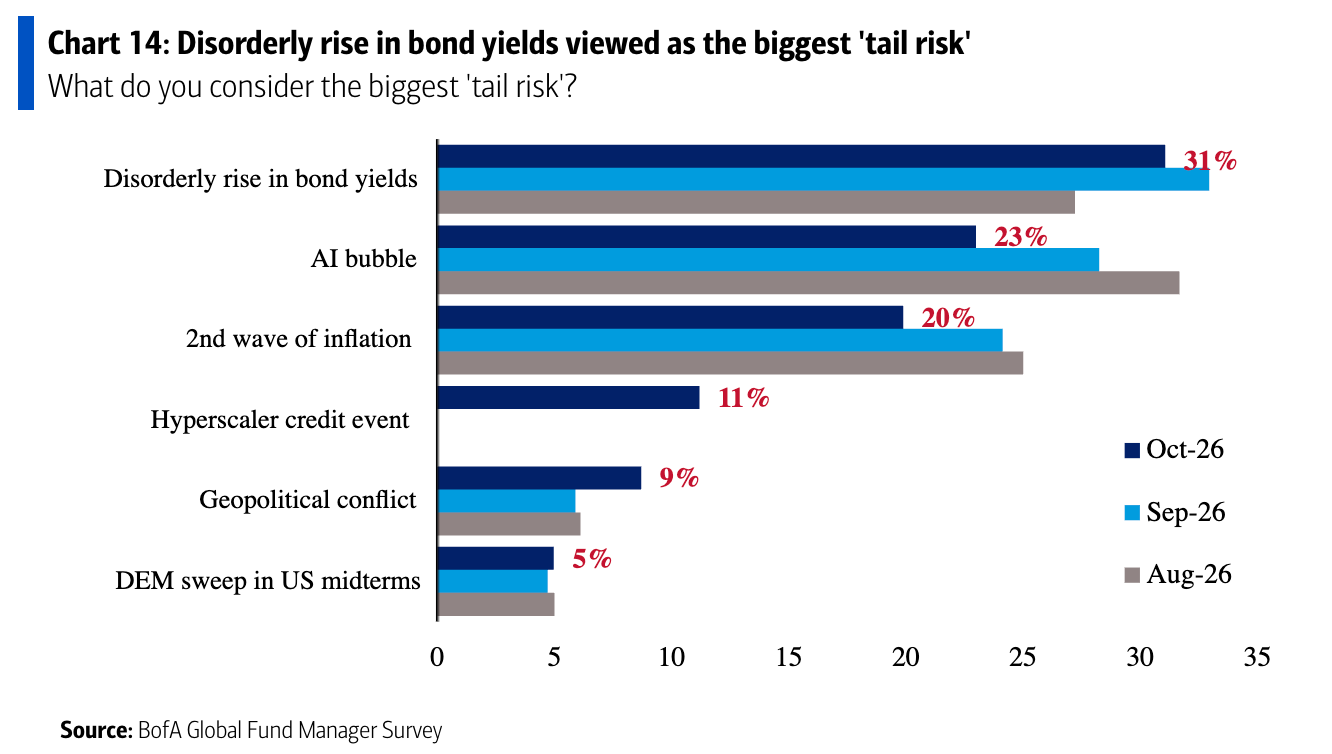
Here’s how the biggest “tail risk” has evolved over the years.
가장 큰 '꼬리 리스크'가 수년에 걸쳐 어떻게 진화해 왔는지는 다음과 같습니다.
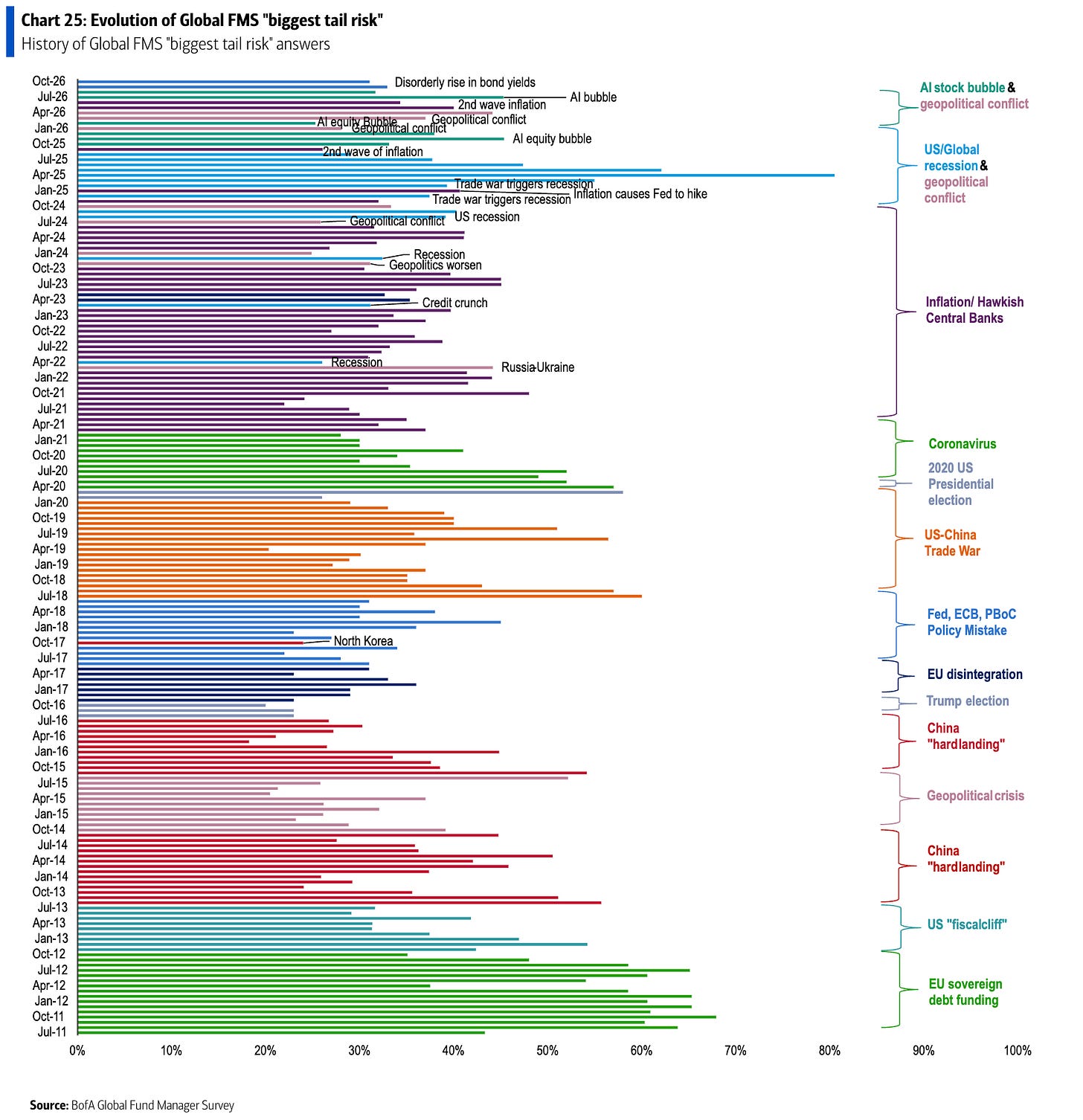
For more on risks, read: Known worries and unknown unknowns 😬 and Two times when uncertainty seemed low and confidence was high 🌈
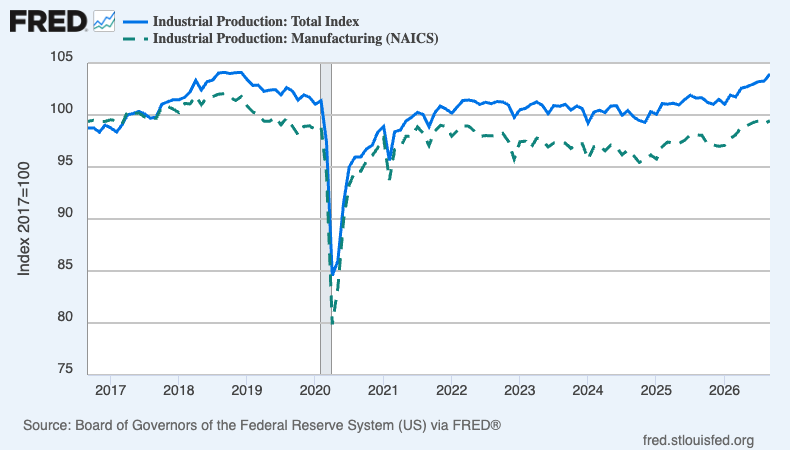
🛠️ Industrial activity picked up. Industrial production activity in September rose 0.1% from the prior month. Manufacturing output rose 0.3% compared to the prior month.
🛠️ 산업 활동이 반등했습니다. 9월 산업 생산 활동은 전월 대비 0.1% 증가했습니다. 제조업 생산량은 전월 대비 0.3% 늘었습니다.
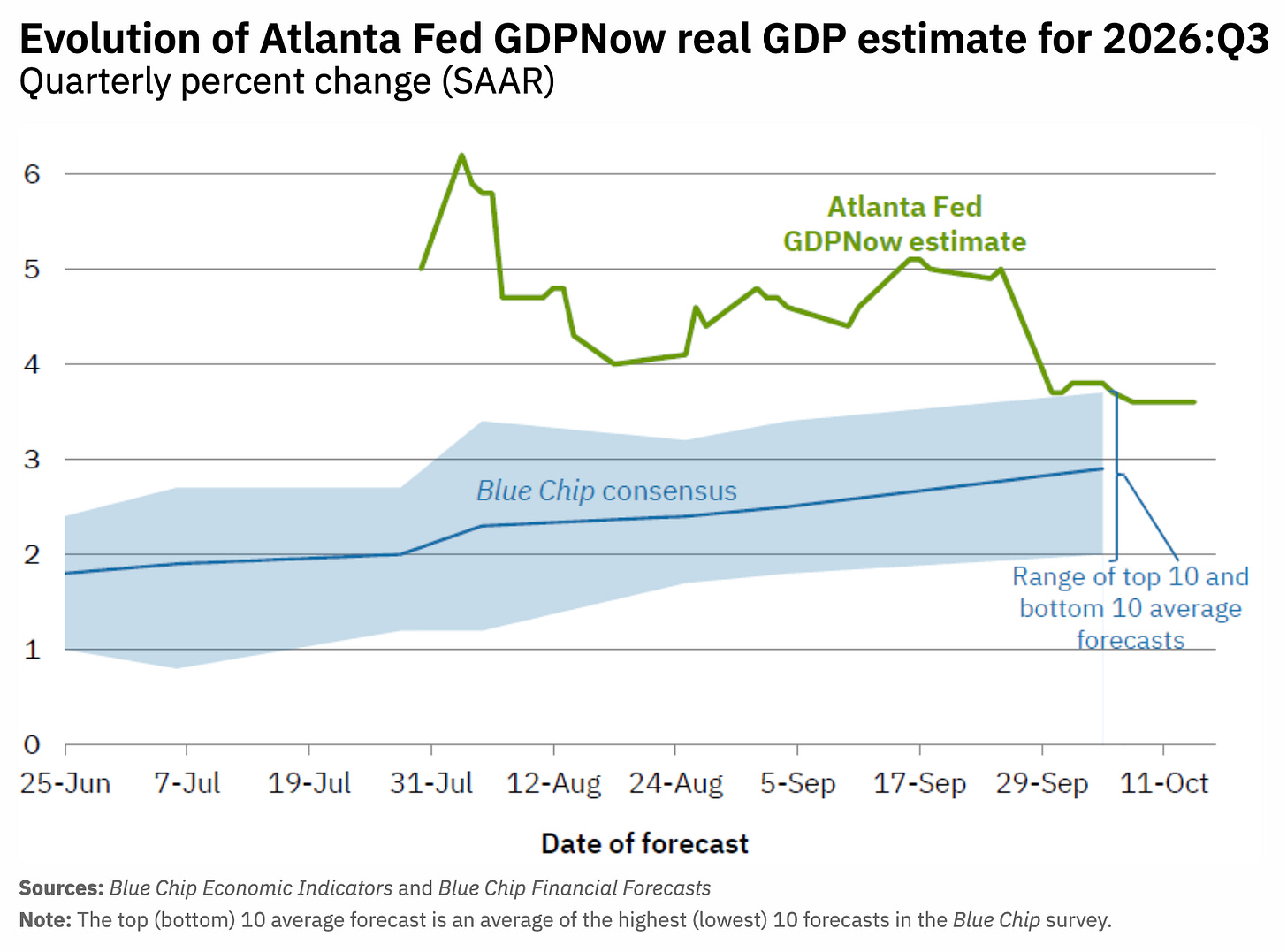
📈 Near-term GDP growth estimates are tracking positively. The Atlanta Fed’s GDPNow model sees real GDP growth rising at a 3.6% rate in Q3.
📈 단기 GDP 성장률 전망치는 긍정적인 궤도를 그리고 있습니다. 애틀랜타 연은의 GDPNow 모델은 3분기 실질 GDP 성장률이 3.6%의 속도로 확장될 것으로 전망하고 있습니다.
For more on GDP and the economy, read: It’s too ambiguous to just say ‘the economy’ 🤦🏻♂️ and Economic data can often be both ‘worse’ and ‘good’ 🌦️
Putting it all together 📋
Earnings look bullish: The long-term outlook for the stock market remains favorable, bolstered by expectations for years of earnings growth. And earnings are the most important driver of stock prices.
실적은 강세 신호를 보이고 있습니다. 주식시장의 장기 전망은 수년간의 이익 성장에 대한 기대감에 힘입어 여전히 유리합니다. 그리고 실적은 주가의 가장 중요한 동력입니다.
Demand is positive: Demand for goods and services remains positive, supported by healthy consumer and business balance sheets. Personal spending activity remains at record levels. Core capex orders, which are a leading indicator of business spending, have been trending higher.
수요는 긍정적입니다. 재화와 서비스에 대한 수요는 건전한 가계 및 기업 대시제표의 뒷받침을 받아 여전히 긍정적입니다. 개인 소비 활동은 사상 최고 수준을 유지하고 있습니다. 기업 지출의 선행 지표인 핵심 자본재 수주도 상승 추세를 보이고 있습니다.
Growth rates have cooled: While the economy remains healthy, growth has normalized from much hotter levels earlier in the cycle. The economy is less “coiled” these days as major tailwinds like job openings and excess savings have faded. Job creation, while positive, is not as hot as it used to be. It has become harder to argue that growth is destiny.
성장 속도는 진정되었습니다. 경제는 여전히 건전하지만, 사이클 초기의 훨씬 뜨거웠던 수준에 비해서는 성장이 정상화되었습니다. 구인 건수나 초과 저축과 같은 주요 성장 동력이 약화되면서 현재 경제는 과거만큼 '팽팽하게 압축된' 상태는 아닙니다. 일자리 창출 역시 긍정적이기는 하나 과거만큼 뜨겁지는 않습니다. 성장이 곧 운명이라고 주장하기는 더 어려워졌습니다.
Actions speak louder than words: We are in an odd period, as hard economic data has decoupled from soft, sentiment-driven data. Consumer and business sentiment has been relatively poor, even as tangible consumer and business activity continues to grow and trend at record levels. From an investor’s perspective, what matters is that the hard economic data holds up.
말보다 행동이 중요합니다. 실제 경제 데이터가 감정 기반의 부드러운 데이터와 괴리되는 기묘한 국면에 처해 있습니다. 실질적인 가계 및 기업 활동이 계속해서 성장하며 사상 최고치를 경신하고 있음에도 불구하고, 소비자와 기업의 심리는 상대적으로 부진했습니다. 투자자의 관점에서 중요한 것은 실질 경제 데이터가 얼마나 버텨주느냐 하는 것입니다.
Stocks are not the economy: There’s a case to be made that the U.S. stock market could outperform the U.S. economy in the near term, thanks largely to positive operating leverage. Since the pandemic, companies have aggressively adjusted their cost structures. This included strategic layoffs and investment in new equipment, including AI-powered hardware. These moves are driving positive operating leverage, meaning modest sales growth — in the cooling economy — translates into robust earnings growth.
주식시장은 곧 경제가 아닙니다. 긍정적인 영업 레버리지(operating leverage)에 힘입어 단기적으로 미국 주식시장이 미국 경제를 아웃퍼폼(상회)할 수 있다는 주장에 무게가 실립니다. 팬데믹 이후 기업들은 비용 구조를 공격적으로 조정해 왔습니다. 여기에는 전략적 감원과 AI 기반 하드웨어를 포함한 신규 장비 투자가 포함되었습니다. 이러한 조치들은 긍정적인 영업 레버리지를 유발하고 있으며, 이는 둔화되는 경제 속에서의 완만한 매출 증가가 강력한 이익 성장으로 직결됨을 의미합니다.
Mind the ever-present risks: We should not get complacent. There will always be risks to worry about, such as U.S. political uncertainty, geopolitical turmoil, energy price volatility, and cyberattacks. There are also the dreaded unknowns. Any of these risks can flare up and spark short-term market volatility.
상존하는 리스크를 주의하십시오. 안주해서는 안 됩니다. 미국의 정치적 불확실성, 지정학적 혼란, 에너지 가격 변동성, 사이버 공격 등 우려해야 할 리스크는 언제나 존재합니다. 두려운 미지의 요인들도 도사리고 있습니다. 이러한 리스크 중 어느 것이든 불거져 나와 단기적인 시장 변동성을 촉발할 수 있습니다.
Investing is never a smooth ride: Economic recessions and bear markets are harsh realities that all long-term investors should expect as they build wealth in the markets. Always keep your stock market seat belts fastened.
투자는 결코 순탄치 않습니다. 경제 침체와 약세장은 장기 투자자들이 시장에서 부를 축적해 나가는 과정에서 마주하게 될 가혹한 현실입니다. 주식시장 안전벨트는 항상 단단히 매고 계십시오.
Think long-term: For now, there’s no reason to believe the economy and the markets will face a challenge they can’t overcome. The long game remains undefeated, and long-term investors can expect that streak to continue.
장기적으로 생각하십시오. 현재로서는 경제와 시장이 극복하지 못할 난관에 직면할 것이라고 믿을 만한 이유는 없습니다. 장기 게임은 여전히 패배한 적이 없으며, 장기 투자자들은 그러한 흐름이 앞으로도 계속될 것으로 기대할 수 있습니다.
For more on how the macro story is evolving, check out the previous review of the macro crosscurrents. »



