Steve Reich The ECM Recordings
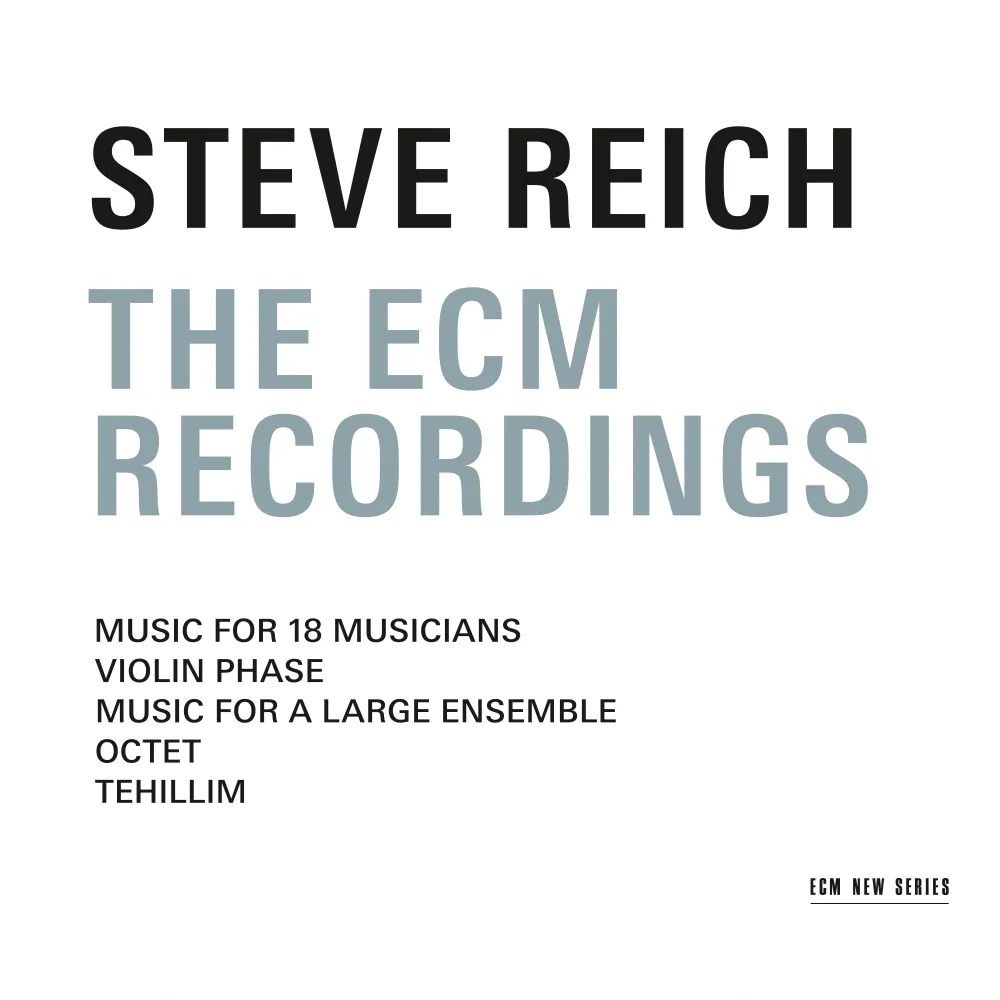
Source: https://thequietus.com/quietus-reviews/steve-reich-the-ecm-recordings-review/
ECM
A new box set marking the composer's 90th birthday gathers together three seminal albums released by ECM in the late 70s and early 80s
작곡가의 90세 생일을 기념하는 새 박스 세트는 70년대 후반과 80년대 초반 ECM 레이블을 통해 발매된 그(녀)의 시초가 되는(지대한 영향을 미친) 3장의 앨범을 한데 모았습니다.
Robert Barry
Published 5:55am 12 October 2026
When does the last wall separating so-called ‘classical’ music from ‘pop’ finally collapse? At what point in music history does that distinction, maintained in various forms since the great flourishing of the publishing industry at the end of the eighteenth century, pass the point at which it makes any real sense or has any real explanatory use? There’s a strong argument to be made that it happens somewhere in the midst of these three records, released by the German label ECM between 1978 and 1982.
흔히 말하는 ‘클래식’ 음악과 ‘팝’ 음악을 가르는 마지막 벽은 언제 비로소 무너진 것일까요? 18세기 말 출판업의 대대적인 번창 이후 다양한 형태로 유지되어 온 그 구분이, 어떠한 실질적인 의미나 설명력을 잃어버리는 지점은 음악사에서 과연 어느 때일까요? 독일 레이블 ECM이 1978년에서 1982년 사이에 발매한 이 세 장의 음반 한가운데에서 바로 그 일이 일어났다고 주장할 만한 강력한 근거가 있습니다.
I remember meeting someone once who insisted to me that Arvo Pärt was not a good composer; it’s just that Manfred Eicher’s a really, really good producer. The popular success of his Tabula Rasa, he claimed, is due less to the way its written than the way its recorded. The current collection offers a remarkably direct way of testing at least part of my interlocutor’s proposition.
저는 예전에 아르보 패르트(Arvo Pärt)가 뛰어난 작곡가가 아니며, 단지 만프레트 아이허(Manfred Eicher)가 매우 훌륭한 프로듀서일 뿐이라고 제게 우기던 사람을 만났던 기억이 납니다. 그의 주장에 따르면 패르트의 《Tabula Rasa》가 거둔 상업적 성공은 곡이 쓰인 방식보다는 녹음된 방식 덕분이라는 것이었죠. 이번에 나온 박스 세트는 내 대화 상대의 그 명제 중 적어도 일부분을 시험해 볼 수 있는 놀라울 정도로 직관적인 기회를 제공합니다.
Steve Reich came to ECM in 1978 with Music for 18 Musicians already in the can. The work had been premiered at New York’s Town Hall in March 1976 and subsequently recorded in Paris by engineers from Deutsche Grammophon. Having captured it on tape, however, DG – and especially their parent company, Polydor – didn’t know what to do with the thing.
스티브 라이히(Steve Reich)는 1978년, 이미 모든 녹음 작업이 완료(in the can)된 《Music for 18 Musicians》를 들고 ECM을 찾아왔습니다. 이 작품은 1976년 3월 뉴욕 타운홀에서 초연되었고, 이후 도이치 그라모폰(DG)의 엔지니어들에 의해 파리에서 녹음되었습니다. 하지만 이 곡을 테이프에 담아놓고도 DG, 그리고 특히 그 부모 회사인 폴리도어(Polydor)는 이 물건을 어떻게 처리해야 할지 알지 못했습니다.
Major labels at that time liked to keep their eggs in very different baskets. A record was either one genre or another genre or else it was nothing at all. 18 Musicians, with its novel mix of Ghanaian polyrhythms and ars antiqua medieval polyphony, was looking very much like the latter. But ECM, up until that point predominantly a label associated with jazz, didn’t see things that way. Eicher released the recording in April 1978 and it sold a hundred thousand copies in less than a year.
당시의 메이저 레이블들은 자신들의 계란을 완전히 다른 바구니들에 나누어 담는 것을 선호했습니다. 음반이란 이 장르이거나 저 장르여야 했고, 그렇지 않다면 아무것도 아닌 존재가 되었습니다. 가나의 복합 리듬(polyrhythm)과 아르스 안티쿠아(ars antiqua) 중세 다성음악이라는 신선한 조합을 보여준 《18 Musicians》는 그야말로 '아무것도 아닌 것'처럼 보였습니다. 그러나 그때까지 주로 재즈 레이블로 인식되던 ECM은 상황을 다르게 보았습니다. 아이허는 1978년 4월 이 녹음을 발매했고, 1년도 채 되지 않아 10만 장이 팔려나갔습니다.
Eicher didn’t sign multi-album deals. Every release was a new contract. But after the success of the first, it’s unsurprising that he and Reich were keen to make a second record together. This time Eicher would produce the record himself. Now, don’t get me wrong. Music for 18 Musicians sounds great. DG’s engineers, at that time, were about as good as classical music got. Eicher’s first job, after leaving the Berlin Philharmonic, was as a recording assistant for Deutsche Grammophon. That’s where he learnt his craft and he learnt from the best. But listening to the ECM album Octet ∙ Music For A Large Ensemble ∙ Violin Phase is a revelation. There is a crystalline clarity, a depth of space, a feeling for the unique functions and qualities of each voice that its predecessor just doesn’t quite have. It has the sheen of great pop – and used many of the same techniques (such as close-miking each instrument, the artful application of electronic reverberation). 18 Musicians is the faithful document of a live performance; Music For A Large Ensemble is something else.
아이허는 여러 음반을 한 번에 계약하지 않았습니다. 매 발매가 새로운 계약이었습니다. 하지만 첫 음반이 성공을 거둔 후, 그와 라이히가 두 번째 음반을 함께 만들고 싶어 한 것은 당연한 수순이었습니다. 이번에는 아이허가 직접 프로듀싱을 맡기로 했습니다. 오해는 하지 마시길 바랍니다. 《Music for 18 Musicians》의 소리도 훌륭합니다. 당시 DG의 엔지니어들은 클래식 음악계에서 최고 수준이었습니다. 아이허 역시 베를린 필하모닉을 떠난 후 첫 직업이 도이치 그라모폰의 녹음 보조(recording assistant)였습니다. 그곳이 그가 기술을 배운 곳이었고, 그는 최고의 교사들에게 배웠습니다. 하지만 ECM에서 나온 음반 《Octet ∙ Music For A Large Ensemble ∙ Violin Phase》를 들어보면 이는 하나의 놀라운 깨달음으로 다가옵니다. 전작에는 약간 부족했던 수정 같은 투명함, 공간의 깊이감, 그리고 각 악기 음성의 독특한 기능과 특성에 대한 감각이 담겨 있습니다. 이 음반은 위대한 팝 음악이 갖는 매끄러운 윤기(sheen)를 지니고 있으며, 동일한 기술들(각 악기에 마이크를 바짝 대는 근접 마이킹, 전자적 리버브의 기교 있는 적용 등)을 다수 사용했습니다. 《18 Musicians》가 라이브 연주의 충실한 기록이라면, 《Music For A Large Ensemble》은 전혀 다른 차원의 작품입니다.
Few twentieth-century composers of instrumental music are as inseparable from the process of recording as Reich. The phasing technique that structured early works like Piano Phase and Reed Phase was directly inspired by observing the effect of tape loops spooling out of sync. It is impossible to imagine the process music of his early, experimental years absent that technology. The composer’s second, imperial phase arguably starts from his work with Eicher at the turn of the 1980s. As Paul Griffiths notes in his liner notes to the collection, Tehilim, their third album together, marked the birth of “a new era” – and not just for Reich and ECM. Music would never be the same again.
20세기 기악 음악 작곡가 중 라이히만큼 녹음 과정과 떼려야 뗄 수 없는 인물도 드뭅니다. 《Piano Phase》나 《Reed Phase》 같은 초기 작품들의 구조를 형성했던 페이징(phasing) 기법은 위상(sync)이 어긋나며 돌아가는 테이프 루프의 효과를 관찰하는 과정에서 직접적인 영감을 받았습니다. 그러한 기술이 없었다면 그의 초기 실험적 시절을 다스린 과정 음악(process music)은 상상조차 할 수 없습니다. 이 작곡가의 두 번째 전성기(imperial phase)는 1980년대 초 아이허와 함께한 작업에서 시작되었다고 볼 수 있습니다. 폴 그리피스(Paul Griffiths)가 이 박스 세트의 해설지에 적었듯, 그들이 함께 만든 세 번째 앨범 《Tehilim》은 라이히와 ECM뿐만 아니라 음악계 전체에 있어 "새로운 시대"의 탄생을 알렸습니다. 음악은 다시는 예전과 같지 않을 것이었습니다.