Teradyne Unveils Magnum E2 for the Next Wave of AI Memory
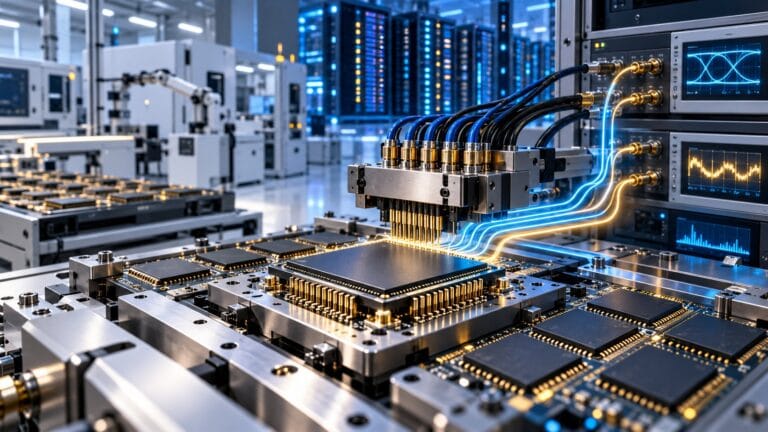
Teradyne has announced Magnum E2, a memory test system designed to address the increasingly demanding interfaces used in artificial intelligence and high performance computing. The platform targets advanced DRAM and flash technologies, including LPDDR6, DDR6, GDDR7, and NAND flash, while combining engineering and production capabilities within a common hardware and software environment.
테라다인(Teradyne)은 인공지능(AI) 및 고성능 컴퓨팅(HPC)에서 사용되는 점점 더 까다로워지는 인터페이스를 처리하도록 설계된 메모리 테스트 시스템인 ‘매그넘 E2(Magnum E2)’를 발표했습니다. 이 플랫폼은 LPDDR6, DDR6, GDDR7, 낸드 플래시를 포함한 차세대 DRAM 및 플래시 기술을 겨냥하고 있으며, 공통 하드웨어 및 소프트웨어 환경 내에서 엔지니어링과 양산(production) 능력을 결합합니다.
The announcement highlights a less visible part of the AI hardware race: verifying that memory devices work reliably at the speeds their specifications promise. Faster processors depend on memory systems that can supply and store data effectively. As memory interfaces become more complex, manufacturers need test equipment that can keep pace without making production prohibitively slow or expensive.
이번 발표는 AI 하드웨어 경쟁에서 눈에 잘 띄지 않는 부분, 즉 메모리 장치가 사양에서 약속한 속도로 안정적으로 작동하는지 검증하는 과정을 조명합니다. 더 빠른 프로세서는 데이터를 효과적으로 공급하고 저장할 수 있는 메모리 시스템에 의존합니다. 메모리 인터페이스가 더욱 복잡해짐에 따라 제조업체들은 생산 속도를 지나치게 느리게 하거나 비용을 과도하게 높이지 않으면서도 이를 따라잡을 수 있는 테스트 장비가 필요합니다.
Magnum E2 builds on Teradyne’s Near-DUT Test architecture, also used in its Magnum EPIC platform. DUT means device under test. The approach places digital instruments close to the memory device, shortening the electrical path between the tester and the component being evaluated.
매그넘 E2는 테라다인의 ‘DUT 근접 테스트(Near-DUT Test)’ 아키텍처를 기반으로 하며, 이는 자사의 매그넘 EPIC 플랫폼에도 사용된 방식입니다. 여기서 DUT(device under test)는 테스트 대상 기기를 의미합니다. 이 접근 방식은 디지털 측정 기기를 메모리 장치와 가까운 곳에 배치하여 테스터와 평가 대상 부품 사이의 전기적 경로를 단축합니다.
That proximity matters because the test connection itself can affect measurements. At high speeds, signal degradation can reduce the apparent operating margin of a device. Teradyne says its architecture preserves signal integrity and protects AC margin, helping manufacturers avoid losing usable performance margin through the limitations of the testing setup.
이러한 근접성이 중요한 이유는 테스트 연결 자체로 인해 측정 결과가 영향을 받을 수 있기 때문입니다. 고속 환경에서는 신호 저하로 인해 장치의 가상 작동 여유(operating margin)가 줄어들 수 있습니다. 테라다인은 자사의 아키텍처가 신호 무결성을 유지하고 AC 마진을 보호하여, 제조업체가 테스트 설정의 한계로 인해 사용 가능한 성능 마진을 잃는 것을 방지한다고 설명합니다.
The company presents this as a way to improve yield at speed. However, the announcement does not provide quantified yield improvements or comparative measurements. The practical significance is therefore the architectural objective: making the tester a more faithful evaluator of the device’s capabilities as interface speeds increase.
회사는 이를 고속 상태에서 수율(yield)을 향상시키는 방법으로 제시합니다. 그러나 이번 발표에서는 정량화된 수율 향상이나 비교 측정 데이터는 제공되지 않았습니다. 따라서 실질적인 의의는 인터페이스 속도가 빨라짐에 따라 테스터가 장치의 성능을 더욱 충실하게 평가할 수 있도록 만드는 아키텍처적 목표에 있습니다.
Another priority is parallelism, or testing multiple devices simultaneously. Memory manufacturers must balance detailed electrical evaluation with the need to process large production volumes. Teradyne says Magnum E2 addresses higher pin counts and increased parallelism while maintaining signal quality, positioning the system around both measurement capability and manufacturing throughput.
또 다른 우선순위는 병렬성, 즉 여러 장치를 동시에 테스트하는 기능입니다. 메모리 제조업체들은 세부적인 전기적 평가와 대규모 생산 물량을 처리해야 하는 필요성 사이의 균형을 유지해야 합니다. 테라다인은 매그넘 E2가 신호 품질을 유지하면서 더 높은 핀 카운트와 향상된 병렬성을 처리하여, 측정 능력과 제조 처리량(throughput)을 모두 충족하도록 시스템을 포지셔닝했다고 밝혔습니다.
The platform supports NRZ, PAM3, and PAM4 signaling. These formats encode information differently, creating different requirements for generating signals and evaluating device responses. Support for multiple formats gives manufacturers flexibility as products and interfaces evolve, although it does not mean every listed memory standard uses every signaling format.
이 플랫폼은 NRZ, PAM3 및 PAM4 시그널링을 지원합니다. 이 형식들은 정보를 서로 다르게 인코딩하므로 신호 생성 및 장치 응답 평가에 대한 요구 사항도 달라집니다. 여러 형식을 지원함으로써 제품과 인터페이스가 진화함에 따라 제조업체에 유연성을 제공하지만, 이는 나열된 모든 메모리 표준이 모든 시그널링 형식을 사용한다는 의미는 아닙니다.
Teradyne also highlights a programmable APG architecture on common hardware. Its stated purpose is to accommodate current and emerging DRAM and NAND standards without requiring replacement of the tester. For customers, that could make investment decisions easier by allowing an installed platform to support a broader product roadmap.
테라다인은 또한 공통 하드웨어 상에서 프로그래밍 가능한 APG 아키텍처를 강조합니다. 이는 테스터를 교체할 필요 없이 현재 및 미래의 DRAM과 낸드 표준을 수용하기 위한 목적을 가집니다. 고객의 입장에서 이는 기존 플랫폼이 더 광범위한 제품 로드맵을 지원할 수 있도록 함으로써 투자 결정을 더 쉽게 만들어 줄 수 있습니다.
A common engineering and production platform is another important feature. Magnum E2 is intended to cover qualification through high volume manufacturing. Using shared hardware and software across those stages could simplify the transfer of test programs and reduce the effort needed to maintain separate environments. Actual benefits will depend on each manufacturer’s workflows and implementation.
공통 엔지니어링 및 생산 플랫폼은 또 다른 중요한 특징입니다. 매그넘 E2는 소자 인증(qualification)부터 대량 양산(high volume manufacturing)까지 아우르도록 설계되었습니다. 이 단계 전반에 걸쳐 공유되는 하드웨어와 소프트웨어를 사용하면 테스트 프로그램의 이전(transfer)이 간소화되고 개별 환경을 유지하는 데 필요한 노력이 줄어들 수 있습니다. 실제적인 이점은 각 제조업체의 워크플로와 구현 방식에 따라 달라집니다.
Built-in logic testing broadens the system’s scope beyond memory alone. Teradyne says this capability can help customers consolidate test insertions and reduce program complexity. Where a device requires both memory and logic evaluation, combining capabilities could reduce separate testing steps, although the announcement does not quantify time or cost savings.
내장형 로직 테스팅은 시스템의 적용 범위를 메모리 단독을 넘어 확장합니다. 테라다인은 이 기능이 고객이 테스트 삽입 과정을 통합하고 프로그램 복잡성을 줄이는 데 도움을 줄 수 있다고 밝혔습니다. 장치에 메모리와 로직 평가가 모두 필요한 경우, 기능을 결합함으로써 별도의 테스트 단계를 줄일 수 있으나 이번 발표에서는 시간이나 비용 절감 효과가 수치화되지는 않았습니다.
Why this matters extends beyond the tester’s specifications. AI infrastructure depends on a supply chain capable of delivering reliable components in volume. Advanced memory development creates opportunities only if manufacturers can qualify products, identify defective devices, and sustain production economics. Test equipment connects technological progress with dependable commercial output.
이것이 중요한 이유는 테스터의 사양 그 이상을 아우릅니다. AI 인프라는 안정적인 부품을 대량으로 공급할 수 있는 공급망에 의존하고 있습니다. 첨단 메모리 개발은 제조업체가 제품을 인증하고, 결함이 있는 장치를 식별하며, 생산 경제성을 유지할 수 있을 때만 기회를 창출합니다. 테스트 장비는 기술적 진보와 신뢰할 수 있는 상업적 산출물을 연결해 줍니다.
Magnum E2 therefore represents an investment in the manufacturing infrastructure behind AI rather than a new compute chip. Its potential value lies in supporting faster interfaces, preserving measurement quality, and adapting to evolving products on a shared platform.
따라서 매그넘 E2는 새로운 컴퓨팅 칩이라기보다는 AI 이면의 제조 인프라에 대한 투자라고 볼 수 있습니다. 잠재적 가치는 더 빠른 인터페이스 지원, 측정 품질 유지, 그리고 공통 플랫폼 상에서 진화하는 제품에 대한 적응력에 있습니다.
Bottom line: Teradyne’s proposition is clear: memory testing must advance alongside memory technology, and manufacturers need flexibility without sacrificing either signal integrity or throughput as future AI systems grow more demanding. Execution will determine the payoff, absolutely.
요약하자면, 테라다인의 제안은 명확합니다. 메모리 테스트는 메모리 기술과 발맞추어 발전해야 하며, 미래의 AI 시스템이 더욱 까다로워짐에 따라 제조업체들은 신호 무결성이나 처리량 중 어느 것도 희생하지 않으면서 유연성을 확보해야 한다는 것입니다. 성패는 오직 실행력에 달려 있습니다.