The AI earnings headwind and accounting headache that’s set to intensify 🌬️
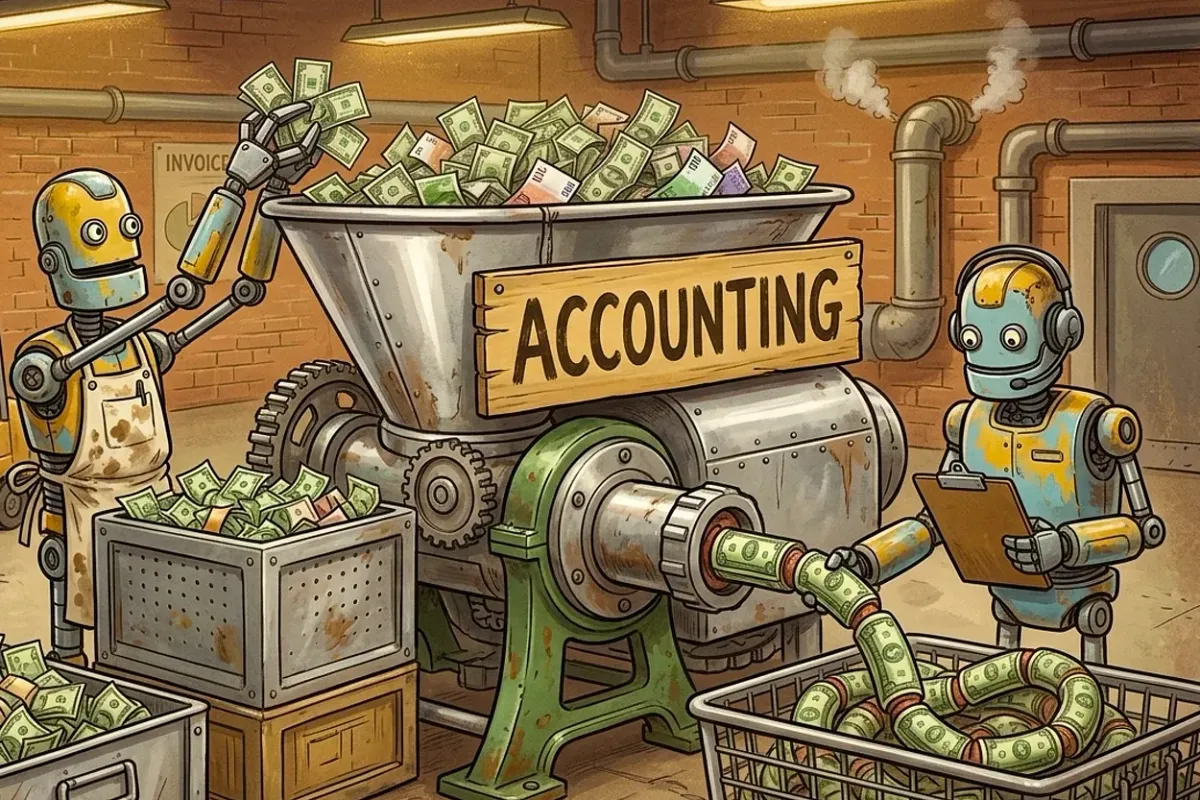
Source: https://www.tker.co/p/ai-depreciation-expense-earnings-accounting-headwind
Is the massive and growing investment in AI infrastructure worth it? It’s a loaded question that yields different answers — depending on who you ask.
AI 인프라에 대한 대규모의 지속적인 투자는 과연 그만한 가치가 있을까요? 이는 누구에게 묻느냐에 따라 서로 다른 대답이 나오는, 함축적이고도 복잡한 질문입니다.
One of the sloppier answers I often hear goes something like this: “Every quarter, mega-cap tech companies announce new huge investments in AI. But even after spending all that money, they’ve been reporting huge quarterly profits.”
제가 자주 듣는 다소 엉성한 답변 중 하나는 대략 이렇습니다. “대형 기술 기업들은 매분기마다 AI에 대한 새로운 막대한 투자를 발표합니다. 하지만 그 모든 돈을 쓰고 나서도, 여전히 엄청난 분기 순이익을 보고하고 있죠.”
This view isn’t technically wrong, but it obfuscates how companies account for the investments in their financial statements. While it is true that companies are spending massive amounts of cash on AI (as reported on cash flow statements), the bulk of these investments have yet to appear as accrued expenses on future income statements.
이러한 시각이 기술적으로 틀린 것은 아니지만, 기업들이 재무제표에 이러한 투자를 어떻게 회계 처리하는지를 흐리게 만듭니다. 기업들이 (현금흐름표에 보고되듯) AI에 막대한 현금을 쏟아붓고 있는 것은 사실이지만, 이 투자금의 대부분은 아직 미래의 손익계산서상에 발생 비용으로 나타나지 않았습니다.
And it’s the income statement that gives us the quarterly earnings we hear about in the news every three months. It’s how we get a better sense of a company’s ongoing profitability.
그리고 우리가 뉴스에서 3개월마다 접하는 분기 실적을 보여주는 것은 바로 이 손익계산서입니다. 이를 통해 기업의 지속적인 수익성을 더욱 정확하게 파악할 수 있습니다.
This is a wonkier topic than what I usually write about. But I suspect it’ll become increasingly important to understand as these expenses become a bigger part of quarterly earnings announcements.
이번 주제는 평소 제가 다루는 내용보다 다소 전문적이고 복잡합니다. 하지만 앞으로 이러한 비용이 분기 실적 발표에서 차지하는 비중이 점점 커질수록, 이를 이해하는 것이 더욱 중요해질 것으로 생각합니다.
From capex to depreciation expense 🧮
For the past few years, mega-cap tech companies have committed increasing amounts of capital toward buying hardware and building the massive facilities needed to support booming demand for AI. These capital expenditures (capex) are already in the high nine figures and are expected to cross the $1 trillion mark soon. The size and speed of the investment are why these companies — including Amazon, Meta, Alphabet, Microsoft, and Oracle — are called hyperscalers.
지난 몇 년간 대형 기술 기업들은 AI에 대한 폭발적인 수요를 뒷받침하기 위해 하드웨어 구매와 거대한 시설 구축에 투입하는 자본을 점점 늘려왔습니다. 이러한 자본적 지출(Capex)은 이미 10억 달러의 고위 자릿수에 달해 있으며 곧 1조 달러 선을 넘어설 것으로 예상됩니다. 아마존, 메타, 알파벳, 마이크로소프트, 오라클을 포함한 이 기업들이 '하이퍼스케러(초대형 클라우드 서비스 사업자)'라 불리는 이유는 바로 이 투자의 규모와 속도 때문입니다.
The companies selling the products and services to support this buildout have seen an immediate earnings boom, which has helped bolster the stock market this year.
이러한 인프라 구축을 지원하는 제품과 서비스를 판매하는 기업들은 즉각적인 실적 호황을 누렸으며, 이는 올해 주식 시장을 떠받치는 데 기여했습니다.
“The mega-cap U.S. hyperscalers are on track to spend $800 billion on capex this year, an increase of 94% vs. 2025,” Goldman Sachs’ Ben Snider wrote in a Sept. 18 note. “That spending is flowing through to the earnings of the AI infrastructure complex including semiconductor, tech hardware, industrials, and utilities companies, which are collectively accounting for roughly half of consensus S&P 500 earnings growth this year.”
골드만삭스의 벤 스나이더(Ben Snider)는 9월 18자 리포트에서 "미국의 대형 하이퍼스케러들은 올해 자본적 지출로 8,000억 달러를 지출할 것으로 예상되며, 이는 2025년 대비 94% 증가한 수치"라고 밝혔습니다. 이어 "이러한 지출은 반도체, 기술 하드웨어, 산업재, 유틸리티 기업을 포함한 AI 인프라 생태계의 실적으로 이어지고 있으며, 이들 기업은 올해 S&P 500 전체 컨센서스 이익 성장의 약 절반을 공동으로 차지하고 있다"고 썼습니다.
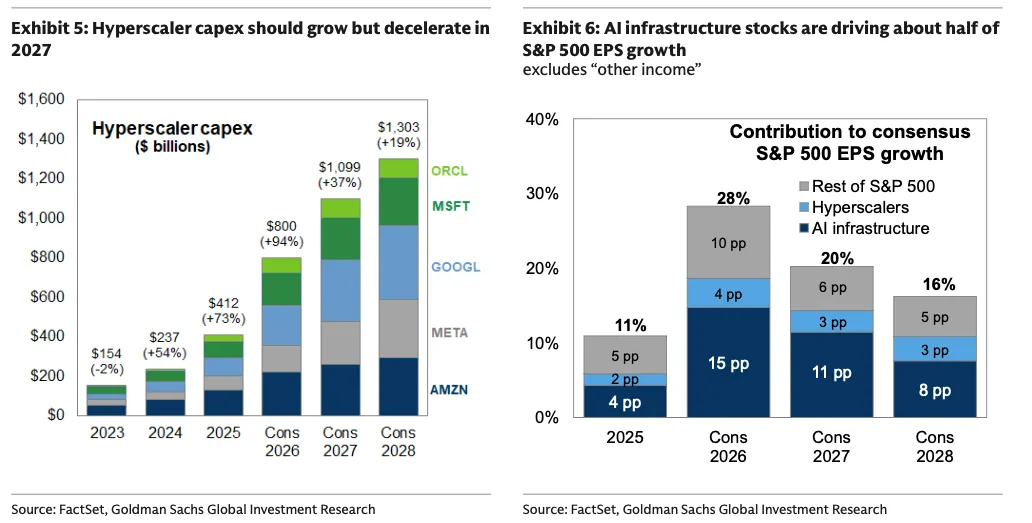
For the hyperscalers themselves, however, much of the recent attention has focused on the size of the investment and how these companies are financing it. And while mountains of cash have been flying out of these companies’ windows, most of this investment has yet to show up as expenses on income statements.
그러나 하이퍼스케러 기업들 자체의 경우, 최근 관심의 상당 부분은 투자 규모와 이들이 이를 어떻게 자금 조달하고 있는지에 집중되어 있습니다. 이 기업들의 곳간에서 엄청난 현금이 썰물처럼 빠져나가고 있지만, 이 투자금의 대부분은 아직 손익계산서상에 비용으로 반영되지 않았습니다.
Remember: Big investments don’t hit income statements all at once during a single reporting period. Instead, companies depreciate them over the investment’s estimated useful life, which usually lasts years. For more on this, read this.
기억하세요: 대규모 투자는 단 한 번의 보고 기간 동안 손익계산서에 한꺼번에 반영되지 않습니다. 대신 기업들은 그 투자를 보통 수년 동안 지속되는 예상 내용수명에 걸쳐 감가상각 처리합니다. 이에 대한 자세한 내용은 이 링크를 참고하세요.
In other words, the hundreds of billions of dollars spent on AI infrastructure will effectively be chopped up and spread out over years. And that means we’ll see much more of it show up in the form of ballooning depreciation expenses in future quarterly earnings reports.
다시 말해, AI 인프라에 지출된 수천억 달러는 실질적으로 쪼개져서 여러 해에 걸쳐 분산 반영될 것입니다. 이는 향후 분기 실적 보고서에서 불어나는 감가상각비 형태로 훨씬 더 많이 목격하게 될 것임을 의미합니다.
For investors, the size of the investments doesn’t really matter. What matters is whether these companies will generate enough revenue and operate efficiently enough to stay profitable as they work off those depreciation expenses.
투자자들에게 중요한 것은 투자의 규모 자체가 아닙니다. 진정으로 중요한 것은 이 기업들이 그러한 감가상각비를 소화해 나가는 과정에서, 수익성을 유지할 수 있을 만큼 충분한 매출을 창출하고 충분히 효율적으로 운영될 수 있는가 하는 점입니다.
Don’t expect a definitive answer today about whether this bet on AI will be profitable. It’s hard enough to predict the next quarter. It’s much more difficult to predict what’ll happen over the next five to 10 years.
이번 AI 투자가 수익성이 있을지에 대해 오늘 당장 명확한 답을 기대하지는 마세요. 당장 다음 분기를 예측하는 것도 충분히 어렵습니다. 향후 5년에서 10년 동안 무슨 일이 일어날지 예측하는 것은 훨씬 더 어려운 일입니다.
But the coming depreciation expense is at least a bit more certain because it is a function of measurable capex. And Goldman’s Snider ran the numbers and cautions that the coming depreciation expense will be a major hurdle for earnings growth.
하지만 다가오는 감가상각비는 측정 가능한 자본적 지출(capex)의 함수이기 때문에 그나마 조금 더 확실합니다. 골드만삭스의 스나이더는 수치를 계산해 보았고, 다가올 감가상각비가 실적 성장의 주요 걸림돌이 될 것이라고 경고했습니다.
“Hyperscaler depreciation expenses will continue to increase as capex growth decelerates, further dampening the boost of AI investment spending to S&P 500 earnings growth,” Snider wrote. “We estimate a drag from hyperscaler depreciation expenses on S&P 500 earnings growth of 5pp in 2027, offsetting nearly half of the 11pp boost to earnings from capex spending. By 2028, the drag from depreciation should offset the S&P 500 earnings uplift from continued capex spending.” (Emphasis added.)
스나이더는 "자본적 지출 증가세가 둔화됨에 따라 하이퍼스케러의 감가상각비는 계속 증가할 것이며, 이는 S&P 500 이익 성장에 대한 AI 투자 지출의 부양 효과를 더욱 약화시킬 것"이라고 썼습니다. 이어 "우리는 2027년 S&P 500 이익 성장에 대한 하이퍼스케러 감가상각비의 하방 압력(부정적 영향)을 5%포인트로 추정하며, 이는 자본적 지출로 인한 이익 부양 효과 11%포인트의 거의 절반을 상쇄할 것"이라며, "2028년쯤에는 감가상각비로 인한 하방 압력이 지속적인 자본적 지출로 인한 S&P 500 이익 상승분을 완전히 상쇄할 것"이라고 덧붙였습니다. (강조는 필자 추가)
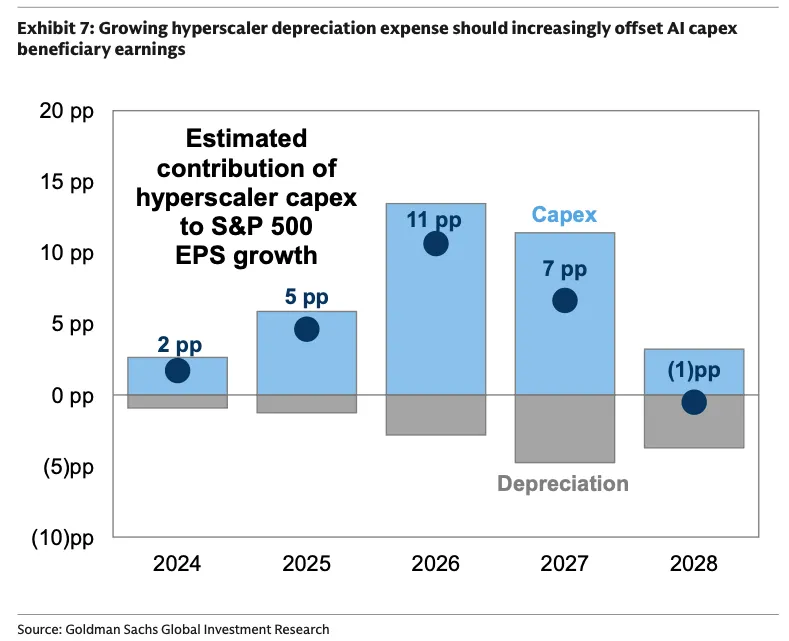
In other words, Snider expects the AI earnings tailwind to fade by 2028 as depreciation expense becomes a bigger headwind. (This is similar to what Morgan Stanley analysts cautioned in January.)
다시 말해, 스나이더는 감가상각비가 더 큰 역풍(부정적 요인)으로 작용함에 따라, 2028년경에는 AI 실적 순풍(호재)이 잦아들 것으로 예상합니다. (이는 모건스탠리 분석가들이 지난 1월에 경고했던 내용과 유사합니다.)
Whether these companies overcome this depreciation headwind will largely depend on the revenue they generate from the AI goods and services they sell. (The revenue matter is a whole other can of worms, which we’ll have to discuss later.)
이 기업들이 이러한 감가상각 역풍을 극복할 수 있을지는 주로 자사에서 판매하는 AI 제품과 서비스를 통해 창출하는 매출에 달려 있습니다. (이 매출 문제에 대해서는 아주 복잡한 또 다른 문제이므로, 나중에 따로 다루어야 할 것입니다.)
Zooming out 🔭
Depreciation and accrual accounting are pretty advanced topics, and I’m sure many investors will continue to struggle to wrap their heads around it all.
감가상각과 발생주의 회계는 꽤 고급 주제이며, 많은 투자자들이 여전히 이를 이해하는 데 어려움을 겪을 것으로 확신합니다.
For what it’s worth, this is basic stuff for top business executives and the analysts covering the companies. That is to say, it’s not some secret that this earnings headwind is looming. In fact, analysts are already forecasting earnings growth to decelerate in 2027 and 2028, which in turn may help explain why stock market valuations have been cooling over the past year.
비록 참고용일 뿐이지만, 이는 최고 경영진들과 기업을 담당하는 애널리스트들에게는 기본적인 내용입니다. 즉, 이러한 실적 역풍이 다가오고 있다는 것은 어떤 비밀도 아닙니다. 실제로 애널리스트들은 이미 2027년과 2028년의 이익 성장세가 둔화될 것으로 전망하고 있으며, 이는 결과적으로 지난 한 해 동안 주식 시장의 밸류에이션(가치 평가)이 주춤했던 이유를 설명하는 데 도움이 될 수 있습니다.
Some investors may be able to get away with not understanding how it all works. Under normal conditions, accounting ignorance can be bliss.
어떤 투자자들은 이 모든 원리를 이해하지 못해도 대충 넘어갈 수 있을지도 모릅니다. 평상시라면 회계적 무지는 곧 행복일 수 있으니까요.
But if you’re someone who watches a lot of financial news and reads a lot of financial commentary, it would suit you well to have a basic understanding of how depreciation works.
하지만 금융 뉴스를 많이 시청하고 경제 논평을 자주 읽는 분이라면, 감가상각이 어떻게 작동하는지에 대해 기본적인 이해를 갖추고 있는 것이 큰 도움이 될 것입니다.
Because eventually, headlines about the AI capex earnings tailwind will fade, and we’ll hear a lot more about the AI depreciation earnings headwind.
결국 AI 자본적 지출(capex)로 인한 실적 순풍에 대한 헤드라인은 잦아들고, AI 감가상각비로 인한 실적 역풍에 대한 이야기가 훨씬 더 많이 들려올 것이기 때문입니다.
-
Related from TKer:
- Struggling to make sense of Big Tech’s $600 billion bet on AI? Here’s a metric to watch 📋
- A brief 9-point guide to how everything affects earnings 📋
- The stock market may already be adjusting to a future with slower earnings growth 🤔
- A sneak preview of Wall Street’s outlook for stocks in 2027 🔭
TKer 관련 글:
- 빅테크의 600억 달러 AI 투자가 이해되지 않으시나요? 주목해야 할 지표 하나 📋
- 모든 것이 실적에 미치는 영향에 대한 간단한 9가지 가이드 📋
- 주식 시장은 이미 이익 성장 둔화가 찾아올 미래에 적응하고 있는지도 모릅니다 🤔
- 2027년 주식 시장에 대한 월가의 전망 미리보기 🔭
Review of the macro crosscurrents 🔀
📈The stock market climbed last week, with the S&P 500 rising 1.2% to end at 7,743.41. The index is now down 0.7% from its August 13 closing high of 7,798.99 and up 13.1% year-to-date. For market insights, check out the Stock Market tab at TKer. »
📈 지난주 주식시장은 S&P 500 지수가 1.2% 상승하며 7,743.41로 마감했습니다. 이 지수는 8월 13일의 종가 기준 고점인 7,798.99보다는 0.7% 하락한 상태이지만, 연초 대비로는 13.1% 상승했습니다. 시장 인사이트에 대해서는 TKer의 Stock Market 탭을 확인해 보세요. »
There were several notable data points and macroeconomic developments since our last review:
지난번 점검 이후 주목할 만한 몇 가지 데이터 포인트와 거시경제적 동향은 다음과 같습니다.
🏭 Business investment activity rose. Orders for nondefense capital goods excluding aircraft — a.k.a. core capex or business investment — increased 1.6% in August to a record $87.6 billion.
🏭 기업 투자 활동이 증가했습니다. 항공기를 제외한 비국방 자본재 주문(일명 코어 capex 또는 기업 투자)은 8월에 1.6% 증가하여 사상 최고치인 876억 달러를 기록했습니다.
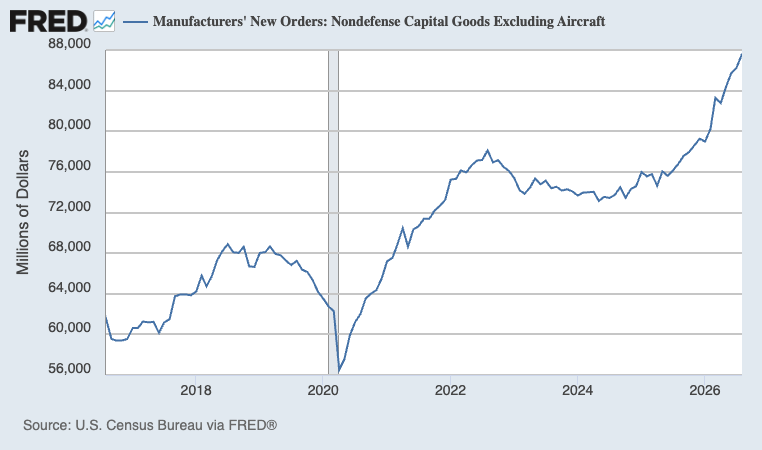
Core capex orders are a leading indicator, meaning they foretell economic activity down the road.
핵심 자본재 주문은 선행 지표로, 이는 앞으로 다가올 경제 활동을 미리 예고한다는 것을 의미합니다.
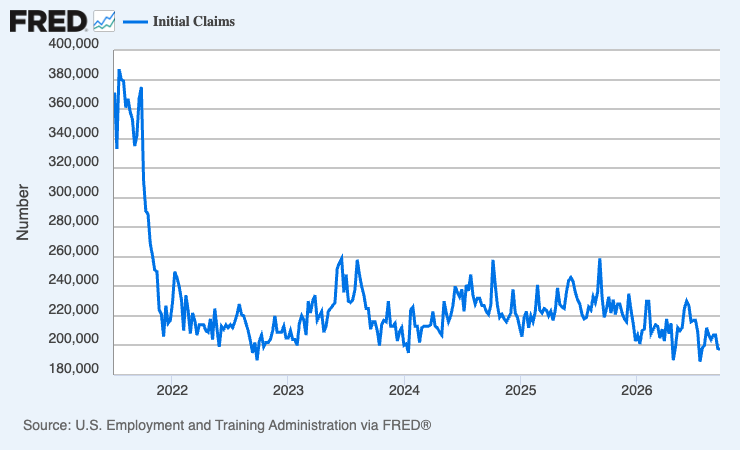
💼 New unemployment insurance claims, total ongoing claims remain low. Initial claims for unemployment benefits ticked down to 197,000 during the week ending Sept. 19, down from 198,000 the week prior. This metric remains at levels historically associated with economic growth.
💼 신규 실업보험 청구 건수와 총 지속 청구 건수가 낮은 수준을 유지했습니다. 9월 19로 끝난 주간의 실업급여 초기 청구 건수는 직전 주의 19만 8천 건에서 19만 7천 건으로 소폭 감소했습니다. 이 지표는 역사적으로 경제 성장을 시사하던 수준에 계속 머물러 있습니다.
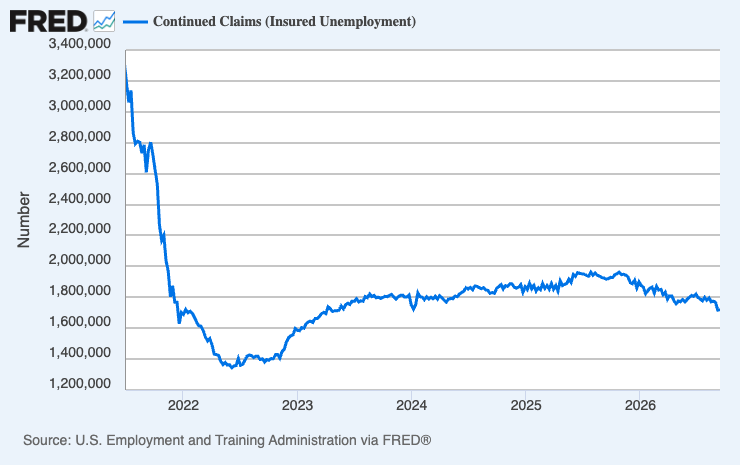
Insured unemployment, which captures those who continue to claim unemployment benefits, ticked up to 1.72 million during the week ending Sept. 12.
계속해서 실업급여를 청구하고 있는 사람들을 집계하는 피보험 실업자 수는 9월 12일로 끝난 주간에 172만 명으로 소폭 증가했습니다.
For more on the labor market, read: Why mass tech layoffs have little effect on total employment 💾
노동 시장에 대한 자세한 내용은 다음 글을 참고하세요: 대규모 기술 기업 해고가 전체 고용에 거의 영향을 미치지 않는 이유 💾
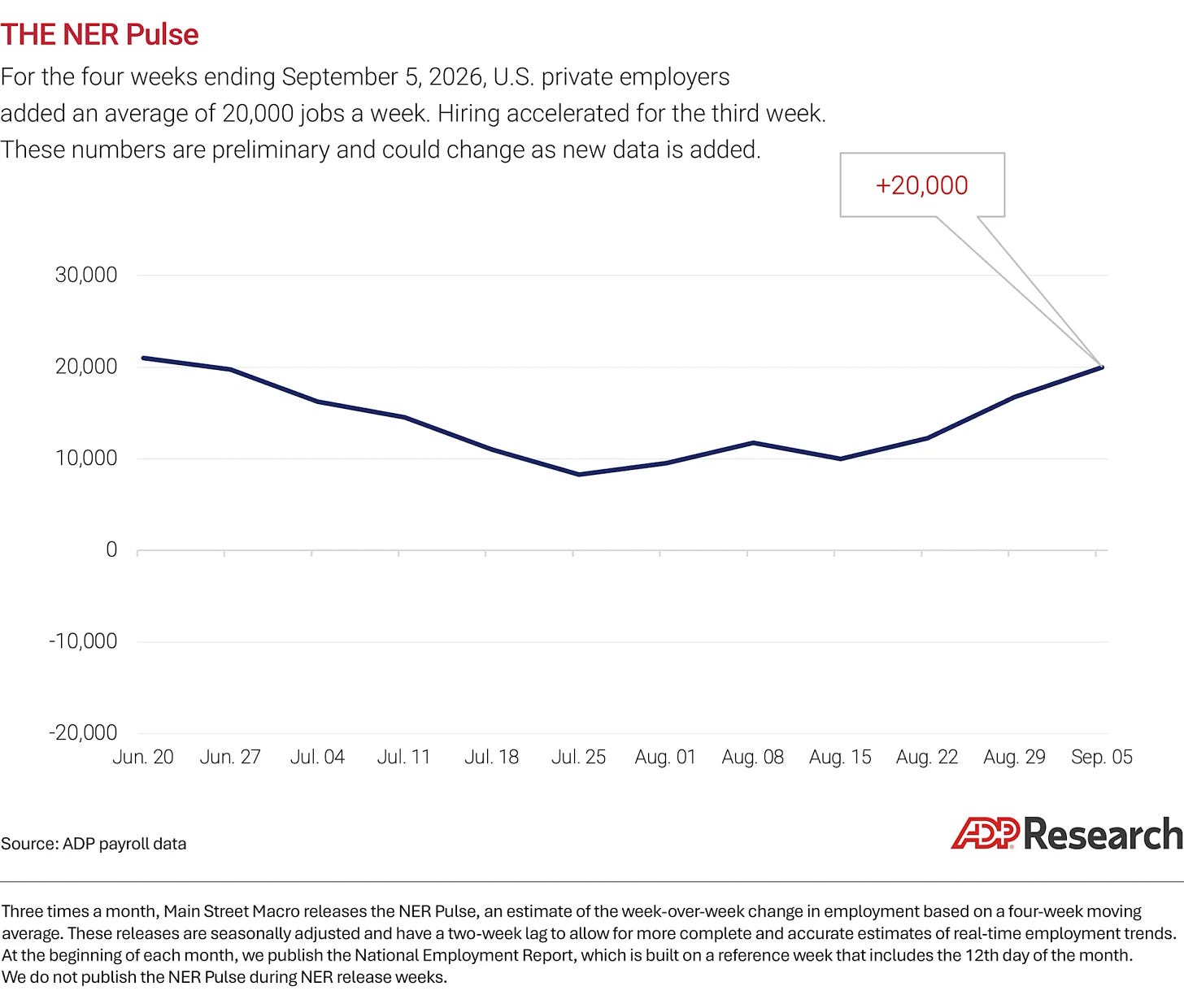
🤔 Recent private job growth is picking up. According to payroll processor ADP, private U.S. employers added 20,000 jobs in the four weeks ending Sept. 5.
🤔 최근 민간 부문 고용 증가세가 회복되고 있습니다. 급여 처리 업체 ADP에 따르면, 미국 민간 고용주들은 9월 5일로 끝난 4주 동안 2만 개의 일자리를 추가했습니다.
For more on the labor market, read: Things are looking up in the labor market 👍
노동 시장에 대한 자세한 내용은 다음 글을 참고하세요: 노동 시장 상황이 호조를 보이고 있습니다 👍
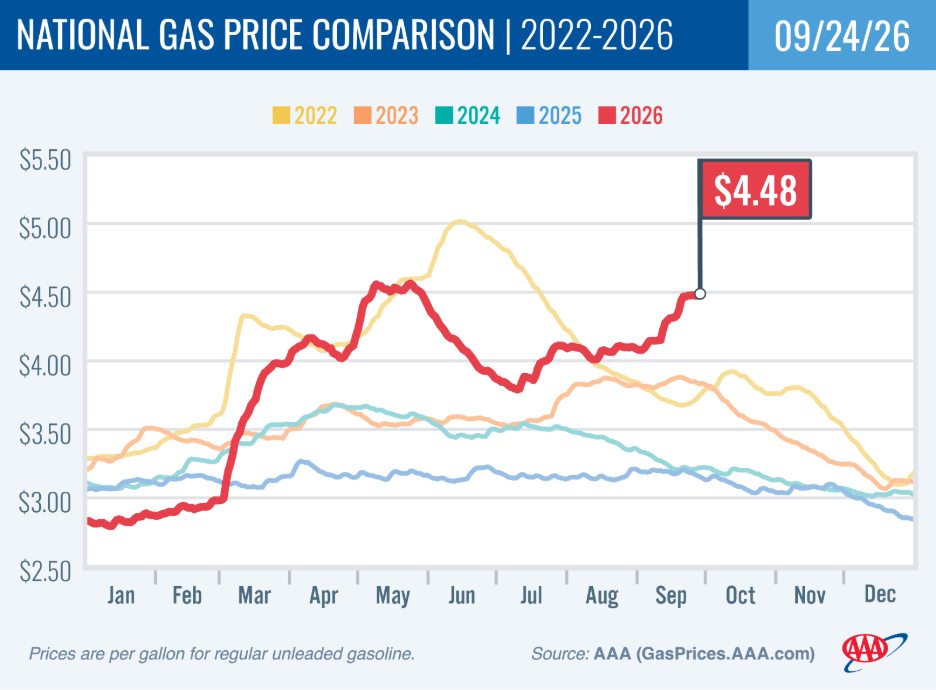
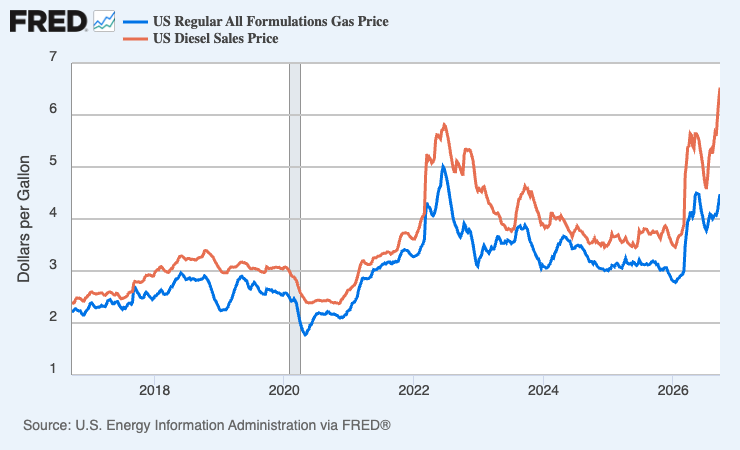
⛽️ Gas prices rise. From AAA: “The national average for a gallon of regular gasoline continues to climb, up nearly 5 cents from last week. At $4.48 per gallon, this is the highest the national average has ever been for this time of year. Typically, the start of autumn brings lower gas prices, but lingering volatility in the Strait of Hormuz and the high cost of crude oil are driving up pump prices. This month is on track to set a new September record. So far, the average for this month is $4.30, higher than the previous September record of $3.83 set in 2023.“
⛽️ 휘발유 가격이 상승했습니다. AAA의 발표에 따르면 다음과 같습니다. "일반 휘발유 1갤런당 전국 평균 가격이 계속 상승하여 지난주보다 거의 5센트 올랐습니다. 갤런당 4.48달러를 기록한 이번 전국 평균 가격은 연중 이 시기 기준으로 역대 최고치입니다. 보통 가을이 시작되면 휘발유 가격이 하락하지만, 호르무즈 해협의 지속적인 변동성과 높은 원유 가격이 주유소 판매 가격을 끌어올리고 있습니다. 이달은 새로운 9월 기록을 세울 전망입니다. 지금까지 이달의 평균 가격은 4.30달러로, 2023년에 기록된 기존 9월 최고치인 3.83달러보다 높습니다."
Here’s a longer-term look at the trajectory of gas and diesel prices, as tracked by the EIA.
미에너지청(EIA)에서 추적한 휘발유 및 디젤 가격의 추이에 대한 장기적인 전망은 다음과 같습니다.
For more on energy prices, read: Our love-hate relationship with rising oil prices in charts 💔🛢️📊
에너지 가격에 대한 자세한 내용은 다음 글을 참고하세요: 차트로 보는 유가 상승과의 애증 관계 💔🛢️📊
💳 Card spending data is holding up. From BofA: “Total card spending per HH was up 6.9% y/y in the week ending Sep 19, according to BAC aggregated credit & debit card data. Earlier retail availability than last year of new electronics releases likely contributed to the strength in y/y spending. Surging gas prices have once again opened up a gap in ex-gas spending between higher- and lower-income HHs.”
💳 카드 소비 데이터가 견조한 흐름을 유지하고 있습니다. 뱅크오브아메리카(BofA)의 발표에 따르면 다음과 같습니다. "BAC의 통합 신용·체크카드 데이터에 따르면, 9월 19로 끝난 주간의 가구당 총 카드 소비는 전년 동기 대비 6.9% 증가했습니다. 작년보다 신제품 전자기기가 더 일찍 출시된 것이 전년 동기 대비 소비 강세에 기여한 것으로 보입니다. 치솟는 휘발유 가격으로 인해 고소득 가구와 저소득 가구 간의 '휘발유 제외 소비' 격차가 다시 벌어지고 있습니다."
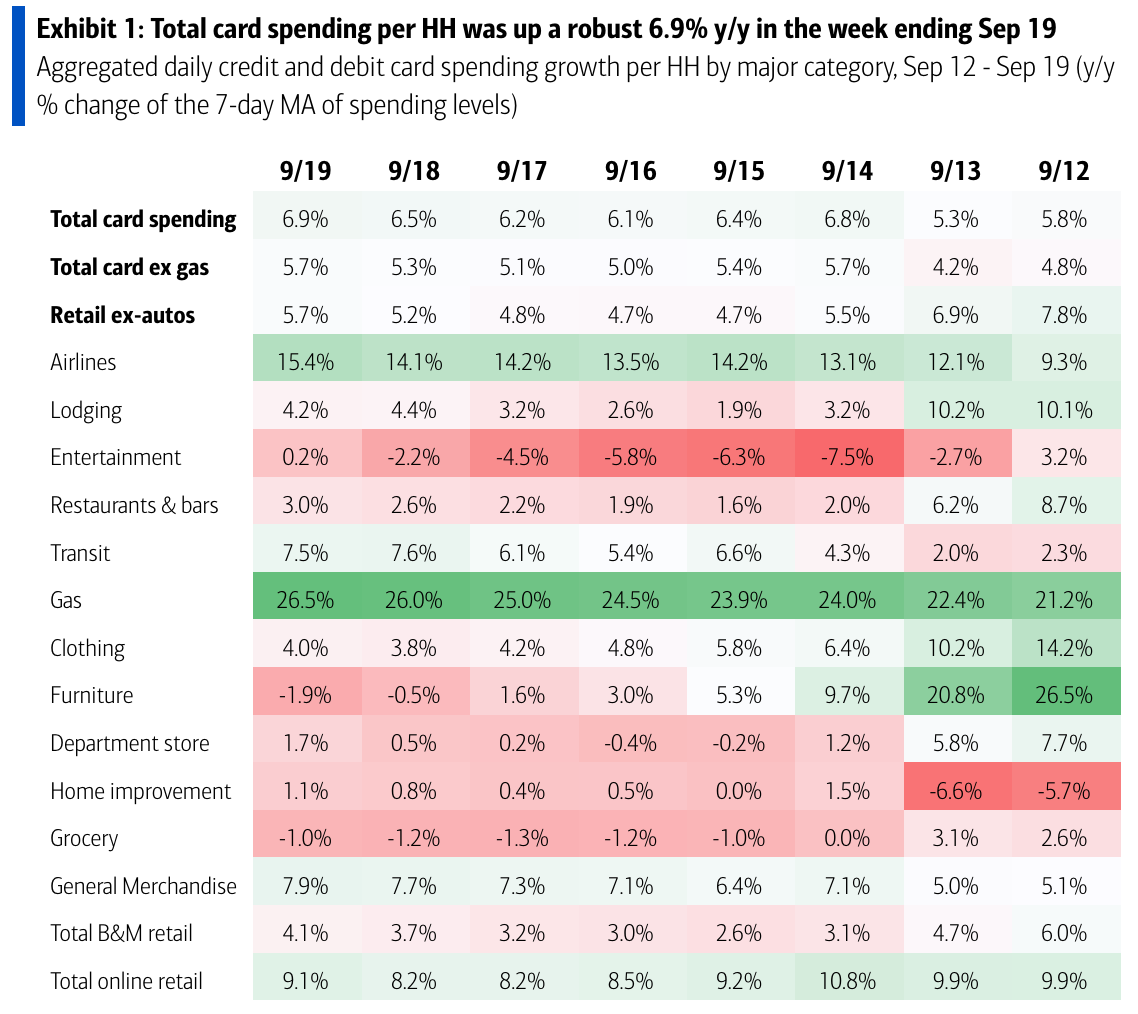
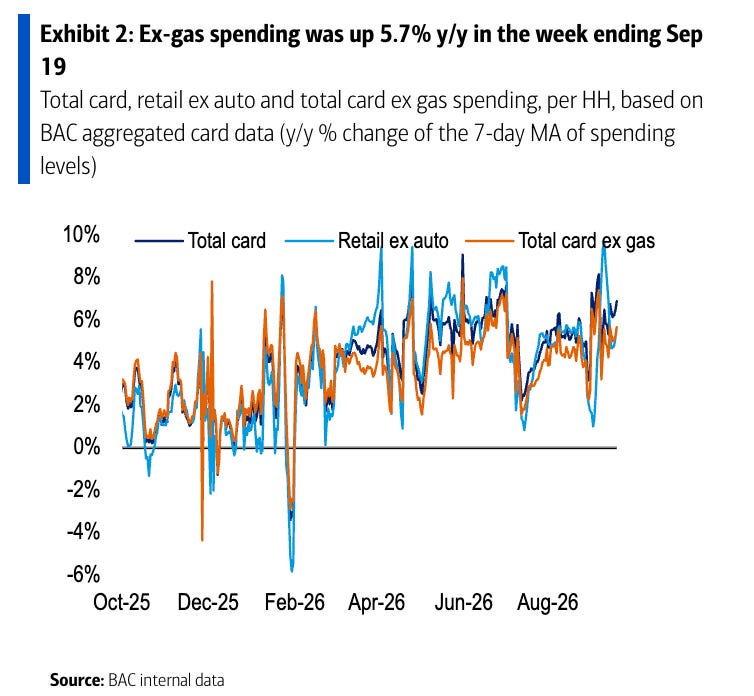
Consumer spending data has looked a lot better than consumer sentiment readings. For more on this contradiction, read: We’re taking that vacation whether we like it or not 🛫 and Household finances are both ‘worse’ and ‘good’ 🌦️
소비자 지출 데이터는 소비자 심리 지표보다 훨씬 더 양호한 모습을 보여왔습니다. 이러한 모순에 대한 자세한 내용은 다음 글을 참고하세요: 마음에 들지 않아도 휴가는 꼭 떠납니다 🛫 및 가계 재정은 '나쁘다'와 '좋다'가 공존합니다 🌦️
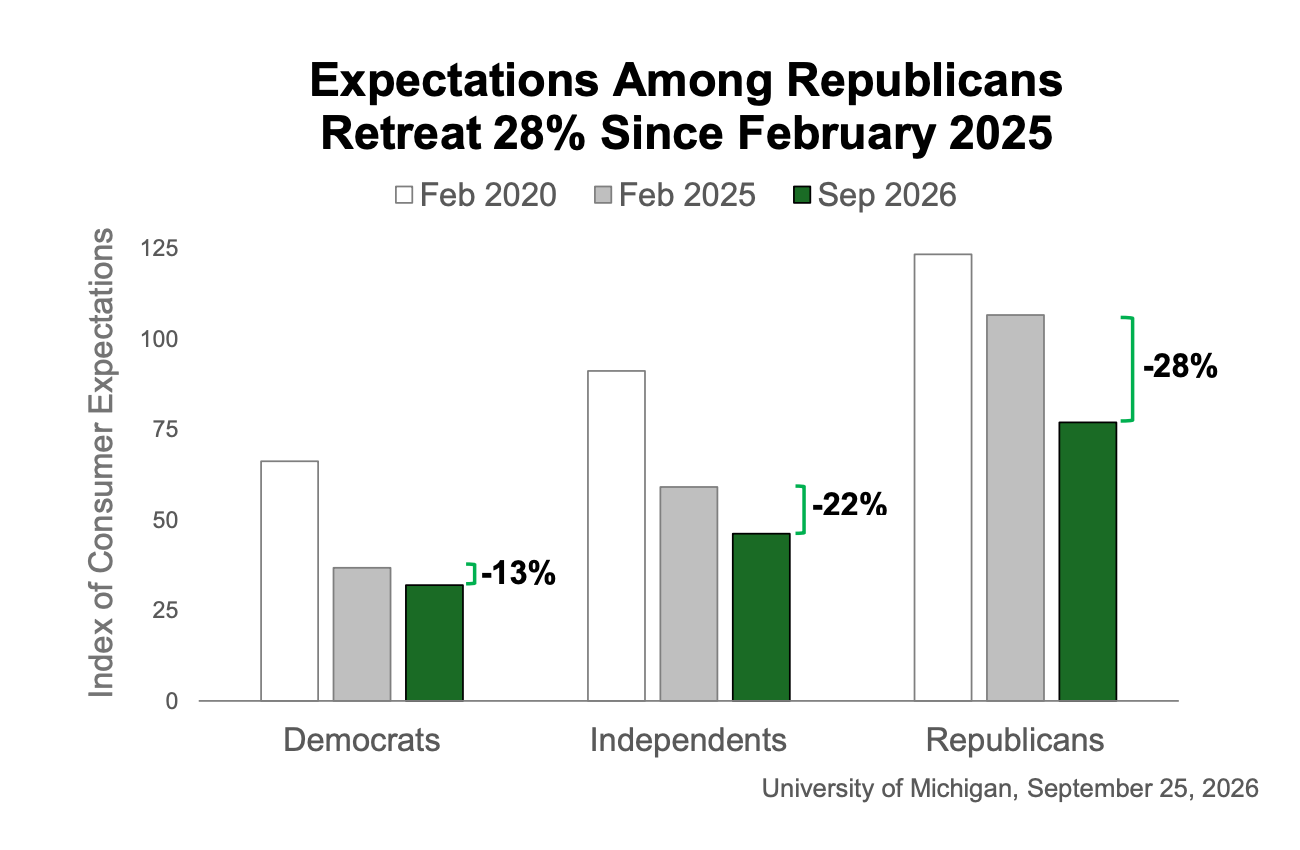
👎 Consumer vibes are in the dumps. From the University of Michigan’s September Surveys of Consumers: “Consumer sentiment ticked down less than four index points in September, reaching the lowest reading in four months and down 15% from January 2026. Views of current and year-ahead expected personal finances both weakened about 10% this month, with concerns over high prices continuing to climb. Buying conditions for durables improved a bit, in part due to a perception that completing such purchases now would help consumers avoid higher prices in the future. The short-run outlook for business conditions plunged amid renewed worries that elevated fuel prices and re-escalating trade disputes could pass through to the economy as a whole.”
👎 소비자 체감 경기가 바닥을 치고 있습니다. 미시간대학교의 9월 소비자 태도 조사에 따르면 다음과 같습니다. "9월 소비자 심리지수는 4포인트 미만으로 소폭 하락하며 4개월 만에 최저치를 기록했고, 2026년 1월 대비 15% 하락했습니다. 현재 및 향후 1년간의 개인 재정에 대한 평가는 이번 달에 모두 약 10% 하락했으며, 높은 물가에 대한 우려가 계속 커졌습니다. 내구재 구매 여건은 일부 개선되었는데, 지금 이러한 구매를 완료하면 향후 더 높은 가격을 피할 수 있을 것이라는 인식이 작용했기 때문입니다. 고유가 지속과 무역 분쟁 재격화가 경제 전반에 파급될 수 있다는 우려가 다시 고개 처들면서, 경기 조건에 대한 단기 전망은 급락했습니다."
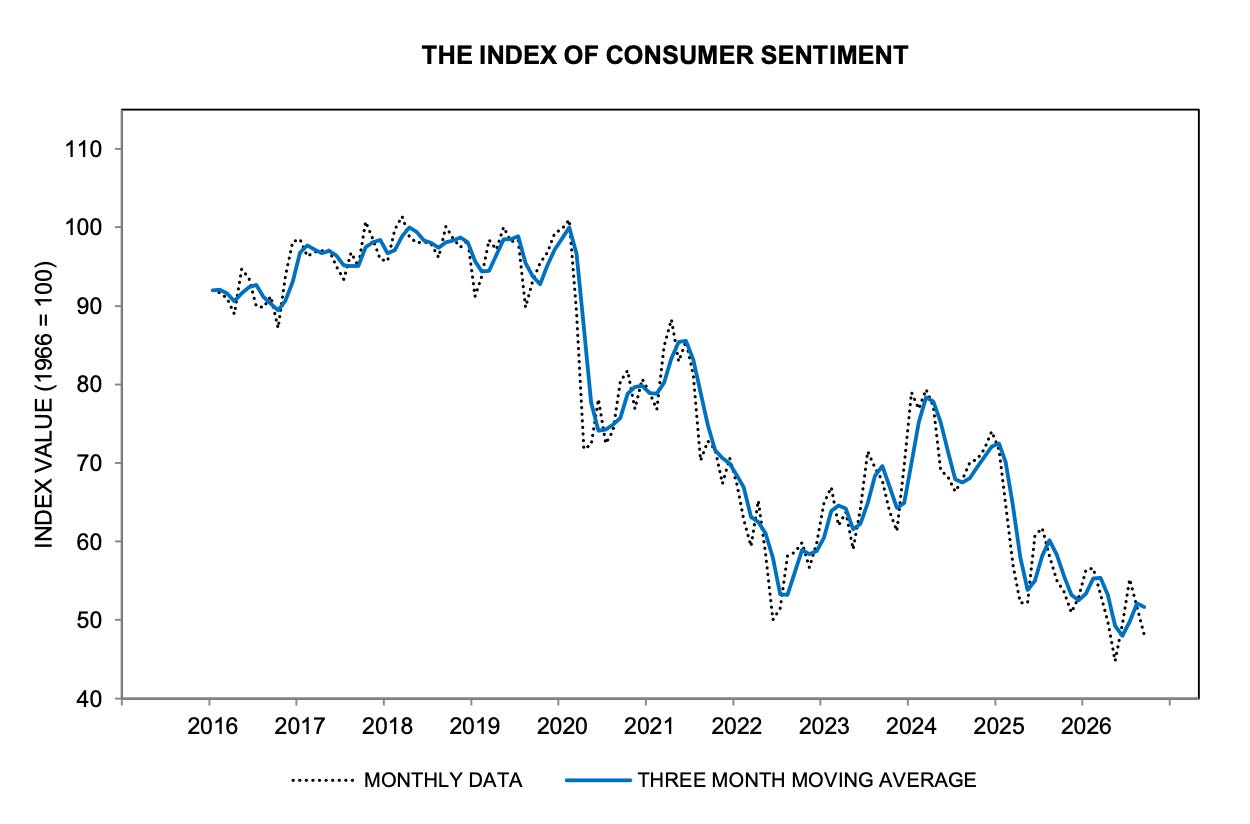
More: “Overall, interviews reveal broad agreement across the political spectrum that the outlook for the economy has weakened since the beginning of the year. After particularly large declines in sentiment this month, Republican sentiment is now 20% lower than January 2026; Democrats are down 13% over the same period.“
계속해서 내용입니다: "전반적으로 인터뷰 내용을 보면, 연초 이후 경제 전망이 악화되었다는 점에 대해 정치 성향을 막론하고 폭넓은 공감대가 형성되어 있음을 알 수 있습니다. 이번 달 심리가 특히 크게 하락한 후, 공화당 지지층의 심리는 2026년 1월 대비 20% 낮아졌으며, 민주당 지지층은 같은 기간 동안 13% 하락했습니다."
For more on consumer sentiment, read: What consumers do > what consumers say 🙊
소비자 심리에 대한 자세한 내용은 다음 글을 참고하세요: 소비자가 하는 행동 > 소비자가 하는 말 🙊
🏠 Mortgage rates rise. According to Freddie Mac, the average 30-year fixed-rate mortgage rose to 7.03%, up from 6.95% last week.
🏠 주택담보대출 금리가 상승했습니다. 프레디맥(Freddie Mac)에 따르면, 30년 고정 주택담보대출 평균 금리는 지난주 6.95%에서 7.03%로 상승했습니다.
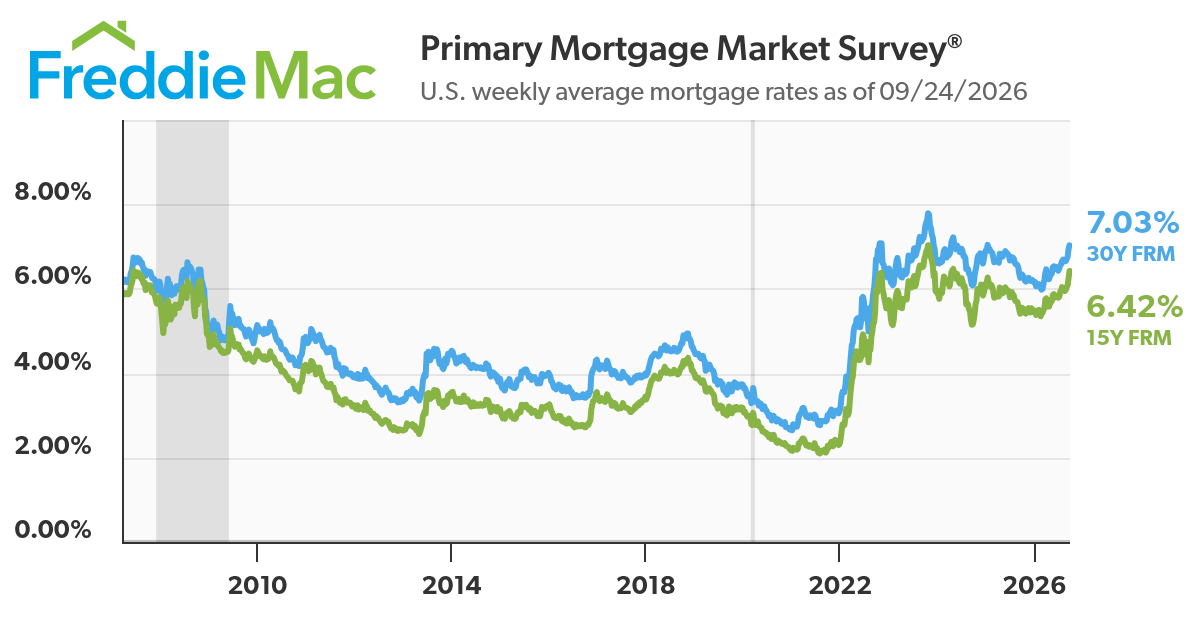
As of Q2, there were 149.5 million housing units in the U.S., of which 87.0 million were owner-occupied and about 40% were mortgage-free. Of those carrying mortgage debt, almost all have fixed-rate mortgages, and most of those mortgages have rates that were locked in before rates surged from 2021 lows. All of this is to say: Most homeowners are not particularly sensitive to the weekly movements in home prices or mortgage rates.
2분기 기준으로 미국에는 1억 4,950만 채의 주택이 있으며, 그중 8,700만 채가 자가 소유 주택이고 약 40%는 주택담보대출이 없는 상태입니다. 주택담보대출 부채가 있는 가구 중 거의 대부분이 고정금리 대출을 이용하고 있으며, 이 대출의 대부분은 금리가 2021년 최저치에서 급등하기 전에 고정(락인)된 금리를 적용받고 있습니다. 이 모든 것은 다음을 의미합니다: 대부분의 주택 소유자들은 주택 가격이나 주택담보대출 금리의 주간 변동에 그리 민감하지 않습니다.
For more on mortgages and home prices, read: Why home prices and rents are creating all sorts of confusion about inflation 😖
주택담보대출과 주택 가격에 대한 자세한 내용은 다음 글을 참고하세요: 주택 가격과 임대료가 인플레이션에 온갖 혼란을 야기하는 이유 😖
🏘️ New home sales rose. Sales of newly built homes increased 6.4% in August to an annualized rate of 684,000 units.
🏘️ 신축 주택 판매가 증가했습니다. 8월 신축 주택 판매는 6.4% 증가하여 연환산 기준 68.4만 채를 기록했습니다.
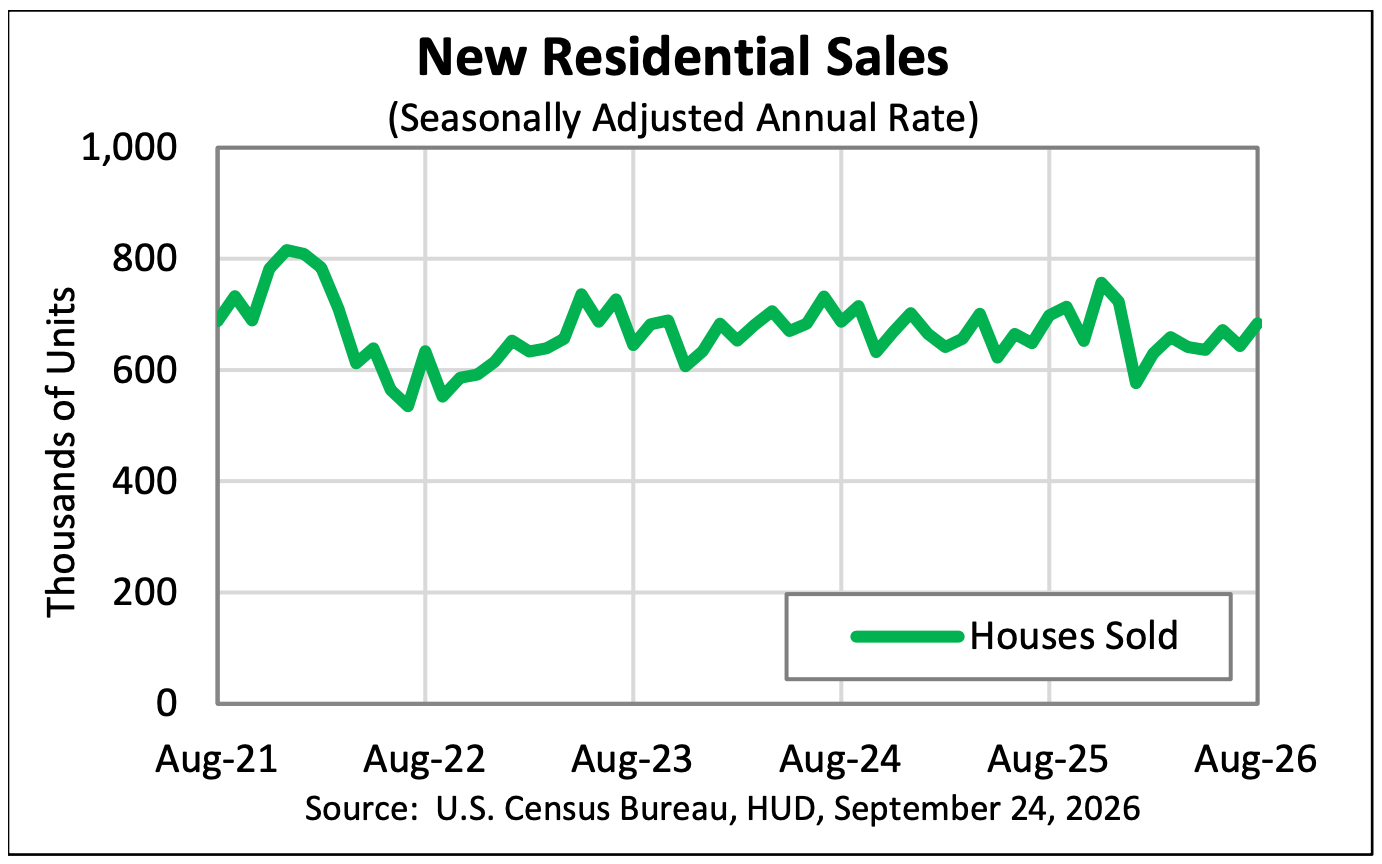
New home sales figures come with a large margin of error. For more on this, read: Mathematical context can totally change the story 🧮
신축 주택 판매 지표에는 상당한 오차 범위가 따릅니다. 이에 대한 자세한 내용은 다음 글을 참고하세요: 수학적 맥락은 완전히 이야기를 바꿀 수 있습니다 🧮
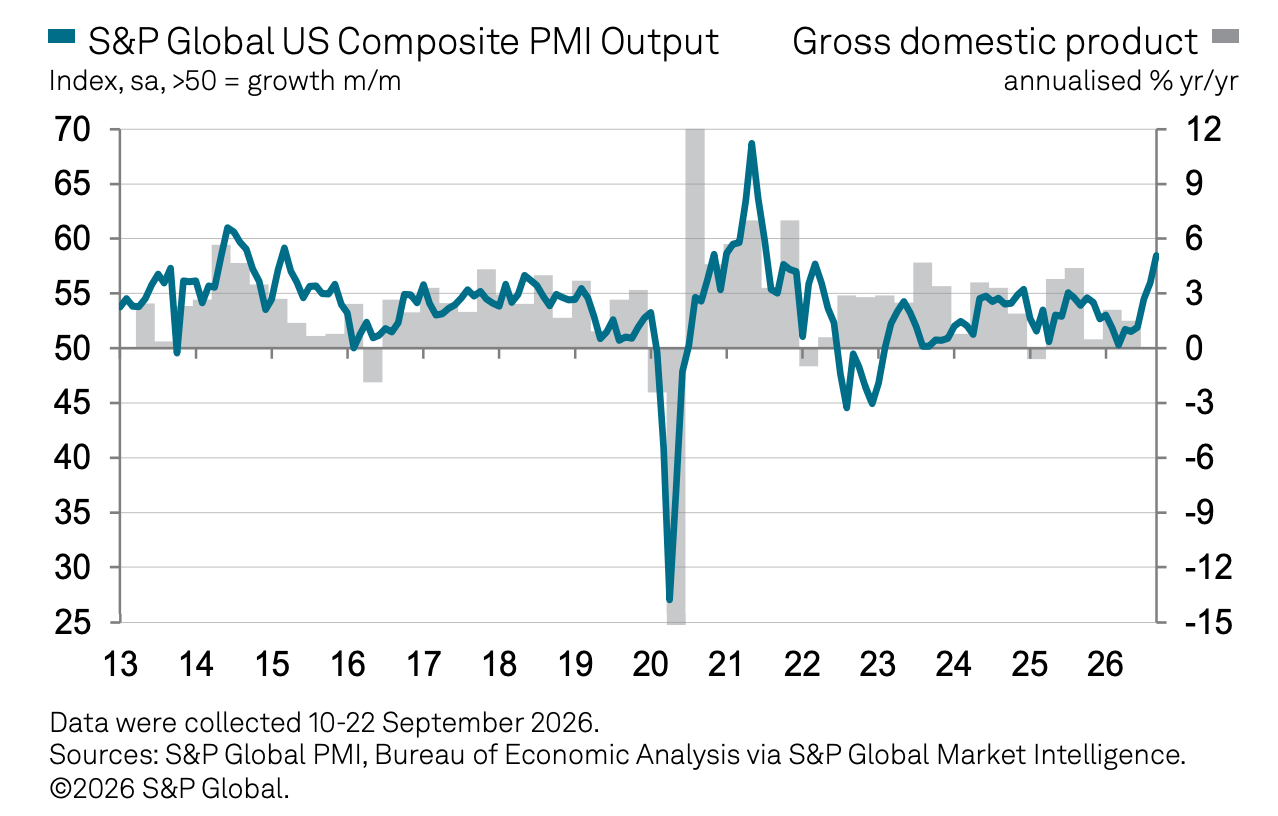
🤔 Economic activity survey signals a pickup in growth. From S&P Global’s September U.S. Flash PMI: “U.S. business continues to boom, with output growing at the fastest rate for over five years in September. Historical comparisons suggest that the latest survey data point to annualized growth of around 5% with a 4% gain now signalled for the third quarter as a whole.
🤔 경제 활동 설문조사는 성장세 회복을 시사하고 있습니다. S&P 글로벌의 9월 미국 예비 구매관리자지수(PMI)에 따르면 다음과 같습니다. "미국 기업들은 계속해서 호황을 누리고 있으며, 9월 생산 증가율은 5년 넘게 만에 가장 빠른 속도를 기록했습니다. 역사적 비교에 따르면 최신 설문조사 데이터는 연간 약 5%의 성장을 시사하고 있으며, 3분기 전체로는 현재 4%의 증가율이 예고되고 있습니다.
“To put the growth surge in context, barring the spike in demand following the opening up of the economy after the COVID-19 lockdowns, the latest improvement in business activity is the greatest recorded since early 2015. Business is clearly booming now in both manufacturing and services.
"이번 성장 급등세를 맥락 속에서 이해하자면, 코로나19 봉쇄 해제 직후 발생한 수요 급증 시기를 제외하면, 최근의 비즈니스 활동 개선은 2015년 초 이후 기록된 가장 큰 폭입니다. 현재 제조업과 서비스업 모두에서 비즈니스가 명백히 호황을 누리고 있습니다.
“However, this growth is being accompanied by some of the most severe supply chain bottlenecks seen in the near-two-decade survey history if the pandemic is excluded, with companies also reporting increasing problems finding suitable staff. Backlogs of work are consequently rising sharply. While this accumulation of uncompleted orders bodes well for the further expansion of output and capacity in the coming months, it also indicates that companies are developing more pricing power, and hence is a worry for the inflation outlook.
"그러나 이러한 성장은 팬데믹 시기를 제외하면 거의 20년에 달하는 설문조사 역사상 가장 심각한 수준의 공급망 병목 현상을 동반하고 있으며, 기업들은 적합한 인재를 찾는 데 어려움이 가중되고 있다고 보고하고 있습니다. 그 결과 미완료 작업의 적체량이 급증하고 있습니다. 이러한 미완료 주문의 누적은 향후 몇 달 동안 생산과 역량이 더욱 확대되는 데 청신호가 되지만, 동시에 기업들이 더 강한 가격 결정력을 갖추게 되고 있음을 보여주므로 인플레이션 전망에는 우려 요인이 됩니다.
“Firms’ input costs have meanwhile jumped in September at the steepest rate for four years, with fuel and transport costs spiking higher thanks to the rise in oil prices seen during the month, which will add further to the upward pressure on selling prices and inflation in the coming months.”
"한편 기업들의 투입 비용은 유가 상승에 힘입어 연료 및 운송 비용이 급등한 덕분에 9월에 4년 만에 가장 가파른 속도로 뛰어올랐으며, 이는 향후 몇 달 동안 판매 가격과 인플레이션에 대한 상방 압력을 더욱 가중할 것입니다."
Keep in mind that during times of perceived stress, soft survey data tends to be more exaggerated than actual hard data.
체감상 위기가 느껴질 때에는 주관적인 설문 데이터가 실제 객관적 데이터보다 더 과장되는 경향이 있다는 점을 명심하세요.
For more on this, read: What businesses do > what businesses say 🙊 and 4 sometimes-conflicting ways I’m thinking about the economy 😬😞😎🙃
이에 대한 자세한 내용은 다음 글을 참고하세요: 기업이 하는 행동 > 기업이 하는 말 🙊 및 경제를 바라보는 4가지 상충되는 시각 😬😞😎🙃
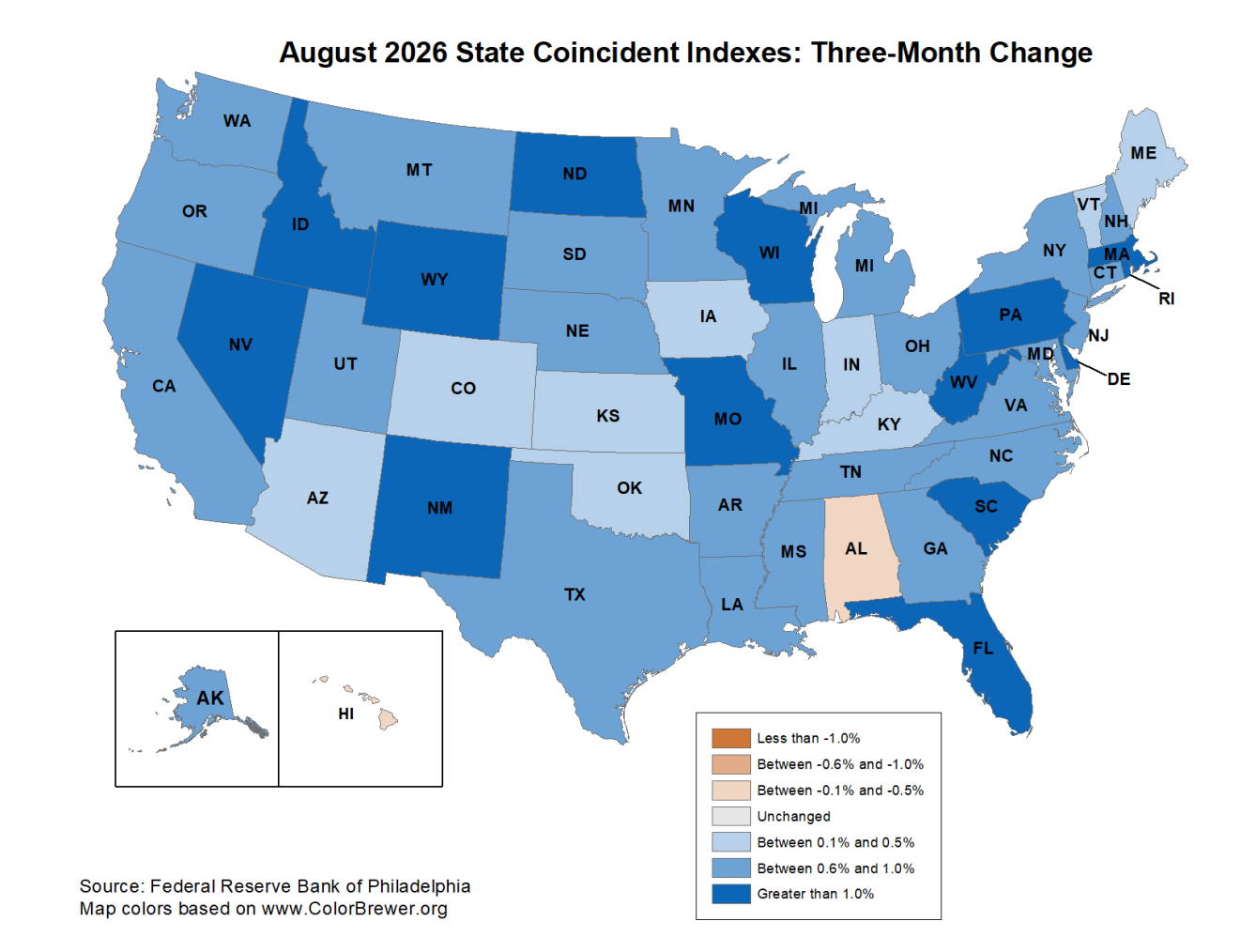
Most U.S. states are still growing. From the Philly Fed’s August State Coincident Indexes report: “Over the past three months, the indexes increased in 48 states and decreased in two states, for a three-month diffusion index of 92. Additionally, in the past month, the indexes increased in 46 states, decreased in two states, and remained stable in two, for a one-month diffusion index of 88.”
미국 대부분의 주는 여전히 성장세를 보이고 있습니다. 필라델피아 연방준비은행의 8월 주별 동행지수 보고서에 따르면 다음과 같습니다. "지난 3개월 동안 지수는 48개 주에서 상승하고 2개 주에서 하락하여, 3개월 확산 지수 92를 기록했습니다. 또한 지난 한 달 동안 지수는 46개 주에서 상승하고 2개 주에서 하락했으며 2개 주는 안정세를 유지하여, 1개월 확산 지수 88을 기록했습니다."
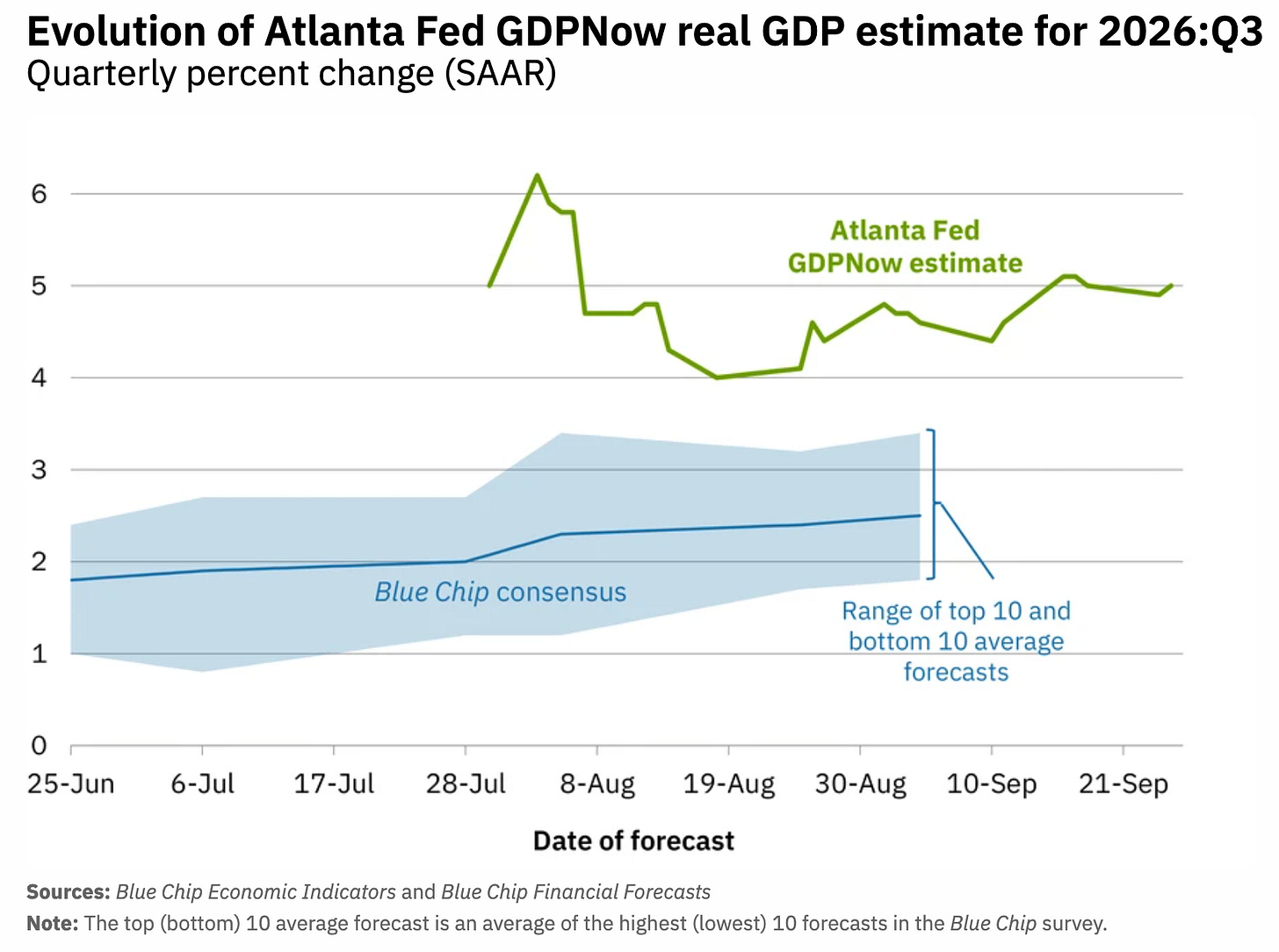
📈 Near-term GDP growth estimates are tracking positively. The Atlanta Fed’s GDPNow model sees real GDP growth rising at a 5.0% rate in Q3.
📈 단기 GDP 성장률 전망치가 긍정적인 흐름을 보이고 있습니다. 애틀랜타 연방준비은행의 GDPNow 모델은 3분기 실질 GDP 성장률이 5.0%의 속도로 상승할 것으로 전망하고 있습니다.
For more on GDP and the economy, read: It’s too ambiguous to just say ‘the economy’ 🤦🏻♂️ and Economic data can often be both ‘worse’ and ‘good’ 🌦️
GDP와 경제에 대한 자세한 내용은 다음 글을 참고하세요: 단순히 '경제'라고 말하기에는 너무 모호합니다 🤦🏻♂️ 및 경제 데이터는 종종 '나쁘다'와 '좋다'가 공존할 수 있습니다 🌦️
Putting it all together 📋
Earnings look bullish: The long-term outlook for the stock market remains favorable, bolstered by expectations for years of earnings growth. And earnings are the most important driver of stock prices.
실적은 강세 전망: 주식 시장의 장기적 전망은 수년간의 이익 성장 기대감에 힘입어 여전히 유리합니다. 그리고 실적은 주가를 움직이는 가장 중요한 동력입니다.
Demand is positive: Demand for goods and services remains positive, supported by healthy consumer and business balance sheets. Personal spending activity remains at record levels. Core capex orders, which are a leading indicator of business spending, have been trending higher.
수요는 긍정적: 건실한 가계 및 기업 재무제표의 뒷받침을 받아 재화와 서비스에 대한 수요가 계속해서 긍정적인 흐름을 보이고 있습니다. 개인 소비 활동은 여전히 사상 최고 수준을 유지하고 있습니다. 기업 지출의 선행 지표인 핵심 자본재(코어 capex) 주문은 상향세를 그려왔습니다.
Growth rates have cooled: While the economy remains healthy, growth has normalized from much hotter levels earlier in the cycle. The economy is less “coiled” these days as major tailwinds like job openings and excess savings have faded. Job creation, while positive, is not as hot as it used to be. It has become harder to argue that growth is destiny.
성장률은 둔화: 경제는 여전히 건실하지만, 성장세는 이 사이클 초기의 매우 뜨거웠던 수준에서 정상화되었습니다. 구인 건수와 초과 저축 같은 주요 호재들이 옅어지면서 요즘 경제는 예전만큼 '팽팽하게 압축된(상승 압력을 받은)' 상태가 아닙니다. 일자리 창출은 긍정적이기는 하나 과거만큼 뜨겁지는 않습니다. 성장이 곧 운명이라고 주장하기는 어려워졌습니다.
Actions speak louder than words: We are in an odd period, given that the hard economic data decoupled from the soft sentiment-oriented data. Consumer and business sentiment has been relatively poor, even as tangible consumer and business activity continues to grow and trend at record levels. From an investor’s perspective, what matters is that the hard economic data continues to hold up.
말보다 행동이 중요합니다: 단단한(실제) 경제 데이터와 부드러운(심리 중심의) 데이터가 서로 디커플링(탈동조화)되었다는 점을 감안할 때, 지금은 다소 기이한 시기입니다. 가시적인 소비 및 기업 활동이 계속 성장하며 사상 최고 수준을 기록하고 있음에도 불구하고, 소비자 및 기업 심리는 상대적으로 부진했습니다. 투자자의 관점에서 중요한 것은 실제 경제 데이터가 계속해서 견조하게 버텨주고 있다는 점입니다.
Stocks are not the economy: There’s a case to be made that the U.S. stock market could outperform the U.S. economy in the near term, thanks largely to positive operating leverage. Since the pandemic, companies have aggressively adjusted their cost structures. This came with strategic layoffs and investment in new equipment, including hardware powered by AI. These moves are resulting in positive operating leverage, which means a modest amount of sales growth — in the cooling economy — is translating to robust earnings growth.
주식 시장은 곧 경제가 아닙니다: 주로 긍정적인 영업 레버리지 덕분에, 단기적으로 미국 주식 시장이 미국 경제보다 더 우수한 성과를 낼 수 있다는 주장이 설득력을 얻습니다. 팬데믹 이후 기업들은 비용 구조를 공격적으로 조정해 왔습니다. 이는 전략적인 구조조정(해고)과 AI 구동 하드웨어를 비롯한 신규 장비 투동을 동반했습니다. 이러한 조치들은 긍정적인 영업 레버리지를 낳고 있으며, 이는 냉각되는 경제 속에서도 완만한 매출 성장이 강력한 이익 성장으로 이어지고 있음을 의미합니다.
Mind the ever-present risks: Of course, we should not get complacent. There will always be risks to worry about, such as U.S. political uncertainty, geopolitical turmoil, energy price volatility, and cyber attacks. There are also the dreaded unknowns. Any of these risks can flare up and spark short-term volatility in the markets.
늘 존재하는 리스크를 염두에 두세요: 물론 안주해서는 안 됩니다. 미국의 정치적 불확실성, 지정학적 혼란, 에너지 가격 변동성, 사이버 공격 등 언제나 우려해야 할 리스크는 존재합니다. 또한 두려운 미지의 요인들도 있습니다. 이러한 리스크 중 어느 하나라도 불거지면 시장에 단기적인 변동성을 촉발할 수 있습니다.
Investing is never a smooth ride: There’s also the harsh reality that economic recessions and bear markets are developments that all long-term investors should expect as they build wealth in the markets. Always keep your stock market seat belts fastened.
투자는 결코 순탄치 않습니다: 장기 투자자들이 시장에서 부를 축적해 나갈 때 경기 침체와 약세장은 누구나 예상해야 하는 냉혹한 현실입니다. 주식 시장 안전벨트는 항상 매어 두세요.
Think long-term: For now, there’s no reason to believe there’ll be a challenge that the economy and the markets won’t overcome. The long game remains undefeated, and it’s a streak that long-term investors can expect to continue.
장기적으로 생각하세요: 현재로서는 경제와 시장이 극복하지 못할 난관이 있을 것이라고 믿을 만한 이유는 없습니다. 장기 게임은 여전히 패배한 적이 없으며, 이는 장기 투자자들이 앞으로도 계속 이어질 것으로 기대할 수 있는 흐름입니다.
For more on how the macro story is evolving, check out the previous review of the macro crosscurrents. »
거시경제 스토리가 어떻게 전개되고 있는지에 대한 자세한 내용은 이전 거시경제 교차 흐름 점검을 확인하세요. »






