The Industry Challenge: AI Is Forcing Semiconductor Innovation Beyond the Chip
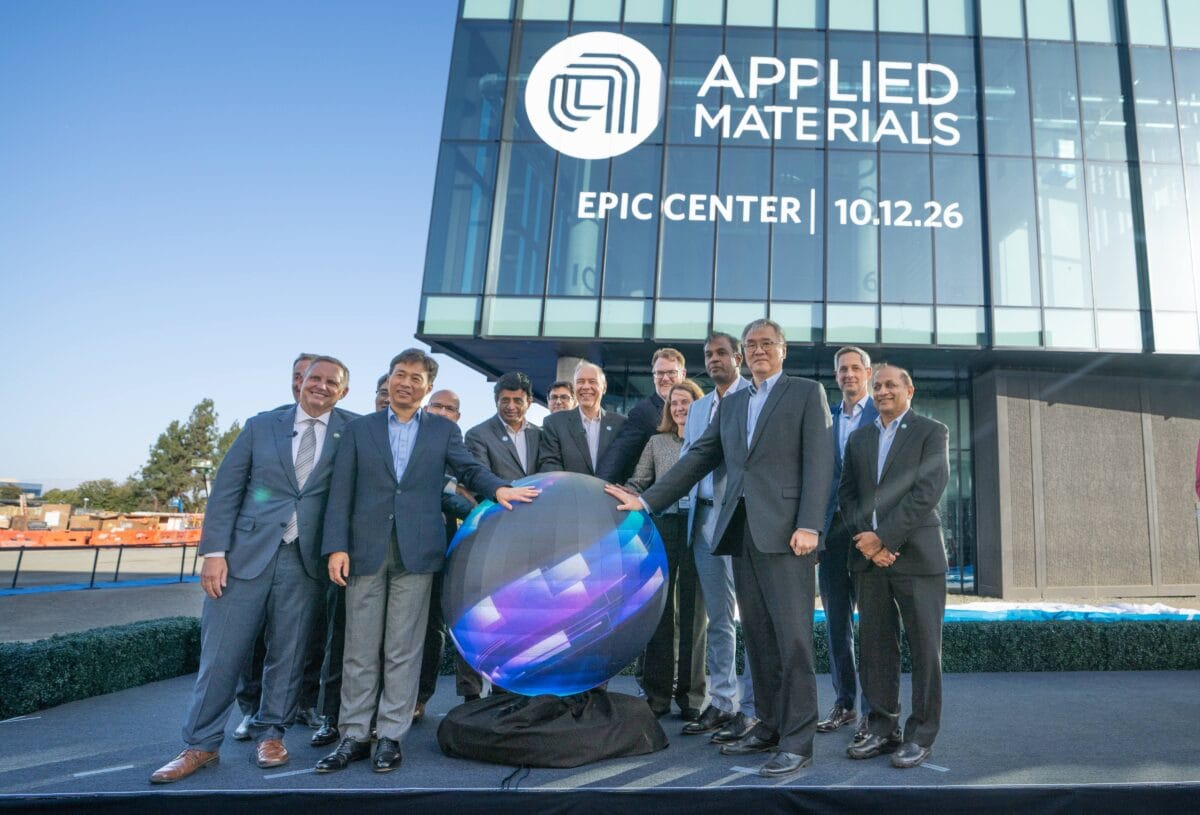
Applied Materials President and CEO Gary Dickerson with the EPIC Center founding partners on October 12, 2026, in Sunnyvale, CA. (Tomas Ovalle/AP Content Services for Applied Materials, Inc.) The bottlenecks are becoming interconnected
2026년 10월 12일 캘리포니아주 서니베일에서 EPIC 센터 창립 파트너들과 함께 자리한 어플라이드 머티어리얼즈(Applied Materials)의 사장 겸 CEO 게리 디커슨(Gary Dickerson). (어플라이드 머티어리얼즈 제공, Tomas Ovalle/AP Content Services) 병목 현상이 서로 연결되고 있습니다
Artificial intelligence is changing what the semiconductor industry must deliver. As AI models grow and applications expand, the challenge is no longer simply to make individual chips faster or more efficient. It is to build complete computing systems that can deliver greater performance, move more data and consume less energy, all while bringing new technologies to market faster.
인공지능은 반도체 산업이 충족해야 할 기준을 바꾸고 있습니다. AI 모델이 성장하고 응용 분야가 확장됨에 따라, 이제 단순히 개별 칩을 더 빠르고 효율적으로 만드는 것만이 과제가 아닙니다. 새로운 기술을 시장에 더 빠르게 선보이는 동시에, 더 뛰어난 성능을 발휘하고, 더 많은 데이터를 처리하며, 전력을 덜 소비하는 완전한 컴퓨팅 시스템을 구축하는 것이 핵심입니다.
That was a central theme of the unveiling of Applied Materials’ EPIC Center, where leaders from across the semiconductor ecosystem discussed the technical demands of the AI era and the need to rethink how innovation happens.
이는 어플라이드 머티어리얼즈의 EPIC 센터 공개 행사에서 핵심적인 주제였으며, 반도체 생태계 전반의 리더들이 모여 AI 시대의 기술적 요구 사항과 혁신 방식의 재고 필요성을 논의했습니다.
The event brought together perspectives from SK hynix, TSMC, Micron, Intel, Samsung, Broadcom, NVIDIA and Qualcomm, alongside Applied Materials. Although these companies occupy different positions in the semiconductor value chain, their contributions pointed to a common challenge: advances in one part of the system increasingly depend on progress in others.
이 행사에는 SK하이닉스, TSMC, 마이크론, 인텔, 삼성, 브로드컴, 엔비디아, 퀄컴이 어플라이드 머티어리얼즈와 함께 참여했습니다. 이 기업들은 반도체 가치 사슬 내에서 서로 다른 위치를 차지하고 있지만, 이들의 기여는 하나의 공통된 과제를 가리켰습니다. 바로 시스템 한 영역의 발전이 다른 영역의 진전에 점점 더 의존하고 있다는 점입니다.
AI computing places intense demands on processors, memory, interconnects, advanced packaging and power efficiency. Improving one component in isolation cannot necessarily overcome a bottleneck elsewhere in the system.
AI 컴퓨팅은 프로세서, 메모리, 상호 연결(interconnect), 첨단 패키징, 전력 효율성에 막대한 요구 사항을 부과합니다. 하나의 부품만 고립되어 개선한다고 해서 시스템의 다른 곳에 존재하는 병목 현상을 반드시 극복할 수는 없습니다.
Memory is a particularly important example. As AI workloads grow, moving data between memory and compute becomes a major constraint on both performance and energy consumption. High-bandwidth memory (HBM), closer integration of memory and logic, and new approaches to packaging are therefore becoming central to system design—not simply considerations to address after a processor has been developed.
메모리는 특히 중요한 사례입니다. AI 워크로드가 증가함에 따라 메모리와 연산 장치 간의 데이터 이동은 성능과 에너지 소비 모두에 있어 주요 제약 요소가 됩니다. 따라서 고대역폭 메모리(HBM), 메모리와 로직의 긴밀한 통합, 새로운 패키징 접근 방식은 프로세서 개발이 완료된 후에 다루는 부수적인 고려 사항이 아니라 시스템 설계의 핵심으로 자리 잡고 있습니다.
Interconnects create another challenge. Large AI systems distribute workloads across multiple processors, making communication speed, latency and energy use increasingly consequential. Approaches such as advanced chip integration and co-packaged optics could help address these constraints, but they require progress in materials, processes, packaging and system architecture to work together.
상호 연결은 또 다른 과제를 낳습니다. 대규모 AI 시스템은 여러 프로세서에 걸쳐 워크로드를 분산시키므로 통신 속도, 지연 시간(latency), 에너지 사용량이 점점 더 중요해지고 있습니다. 첨단 칩 통합 및 광손실을 줄이는 광공학(co-packaged optics) 같은 접근 방식이 이러한 제약을 해결하는 데 도움을 줄 수 있으나, 이를 위해서는 소재, 공정, 패키징, 시스템 아키텍처가 유기적으로 발전해야 합니다.
Thermal management adds another layer of complexity. As more compute and memory are brought together, the industry must find ways to manage heat while maintaining performance and efficiency. These are not isolated engineering problems. They are connected challenges that span the technology stack.
열 관리(thermal management)는 복잡성을 한층 더 가중시킵니다. 더 많은 연산 장치와 메모리가 밀집됨에 따라, 산업계는 성능과 효율성을 유지하면서 열을 관리할 수 있는 방법을 찾아야 합니다. 이는 고립된 엔지니어링 문제가 아니라 기술 스택 전반에 걸쳐 서로 연결된 과제들입니다.
Why no company can solve the problem alone
The perspectives shared at the EPIC Center event highlighted how closely linked these challenges have become. Memory suppliers must consider the needs of compute architectures. Chip and system designers need to account for the capabilities and limitations of manufacturing processes, packaging and materials. Equipment and materials innovators must understand how their technologies affect the performance of the final system.
EPIC 센터 행사에서 공유된 관점들은 이러한 과제들이 얼마나 긴밀하게 얽혀 있는지를 여실히 보여주었습니다. 메모리 공급업체는 연산 아키텍처의 요구 사항을 고려해야 합니다. 칩 및 시스템 설계자는 제조 공정, 패키징, 소재의 역량과 한계를 염두에 두어야 합니다. 장비 및 소재 혁신가들은 자신들의 기술이 최종 시스템의 성능에 어떤 영향을 미치는지 이해해야 합니다.
That interdependence changes the economics and timing of innovation. If companies work independently and only integrate their technologies late in development, problems may emerge after substantial time and resources have already been invested. Resolving those problems can mean additional development cycles and delayed products.
이러한 상호 의존성은 혁신의 경제학과 시기를 변화시킵니다. 기업들이 각자 독립적으로 일하다가 개발 후반부에야 기술을 통합한다면, 이미 상당한 시간과 자원이 투입된 후에야 문제가 불거질 수 있습니다. 그러한 문제를 해결한다는 것은 추가적인 개발 주기를 의미하며 제품 출시 지연으로 이어집니다.
Earlier collaboration can expose constraints sooner, enable teams to evaluate trade-offs together and help align development priorities around system-level outcomes. The objective is not to eliminate competition. It is to recognize where shared technical challenges require coordinated innovation.
더 이른 협업은 제약 사항을 조기에 노출시키고, 팀이 트레이드오프를 함께 평가할 수 있도록 하며, 시스템 차원의 결과를 중심으로 개발 우선순위를 정렬하는 데 도움을 줍니다. 목표는 경쟁을 없애는 것이 아니라, 공유된 기술적 과제가 어디에 있는지 파악하여 조율된 혁신을 도모하는 것입니다.
EPIC represents a response to a system-level challenge
Applied Materials’ EPIC Center is designed to support this kind of collaboration, bringing industry partners together to work on materials, processes and equipment relevant to future semiconductor technologies. Its significance lies not simply in the research infrastructure, but in the opportunity to connect expertise across the ecosystem and address difficult integration challenges earlier.
어플라이드 머티어리얼즈의 EPIC 센터는 이러한 협력을 지원하도록 설계되어, 미래 반도체 기술과 관련된 소재, 공정, 장비 분야에서 산업 파트너들이 함께 협력할 수 있도록 합니다. 그 중요성은 단순한 연구 인프라에 있는 것이 아니라, 생태계 전반의 전문성을 연결하고 복잡한 통합 과제를 더 일찍 해결할 수 있는 기회를 제공한다는 데 있습니다.
The wider message from the event was that AI’s growing demands will require more than continued advances in individual devices. The industry must increasingly innovate across the full technology stack, with performance, power, integration and manufacturability considered together.
행사 전반에서 전달된 더 큰 메시지는, AI가 요구하는 사항이 늘어남에 따라 개별 소자의 지속적인 발전 그 이상이 필요하다는 점이었습니다. 산업계는 성능, 전력, 통합, 그리고 제조 용이성을 함께 고려하면서 전체 기술 스택 전반에 걸쳐 혁신을 거듭해야 합니다.
That is the industry challenge: AI is making collaboration across company and technology boundaries a practical requirement for continued semiconductor progress.
이것이 바로 반도체 산업이 직면한 과제입니다. AI는 기업과 기술의 경계를 넘나드는 협력을 반도체 성장을 지속하기 위한 현실적인 필수 요건으로 만들고 있습니다.
But recognizing the need to collaborate is only the first step. How can companies establish that collaboration in practice? The companion article, “From Sequential R&D to Trusted Co-Innovation: The EPIC Model for Semiconductor Innovation”, explores the operating model behind faster, earlier and more trusted collaboration.
그러나 협력의 필요성을 인식하는 것은 첫걸음에 불과합니다. 기업들은 실제로 그러한 협력을 어떻게 구축할 수 있을까요? 관련 아티클인 “순차적 R&D에서 신뢰 기반의 코-이노베이션으로: 반도체 혁신을 위한 EPIC 모델(From Sequential R&D to Trusted Co-Innovation: The EPIC Model for Semiconductor Innovation)”은 더 빠르고, 더 이르고, 더 신뢰할 수 있는 협력을 뒷받침하는 운영 모델을 탐구합니다.
Read the press release about the October 12th unveiling of the EPIC Center.