The Midterm Predictions Were Good
Source: https://www.bloomberg.com/opinion/newsletters/2026-11-04/the-midterm-predictions-were-good
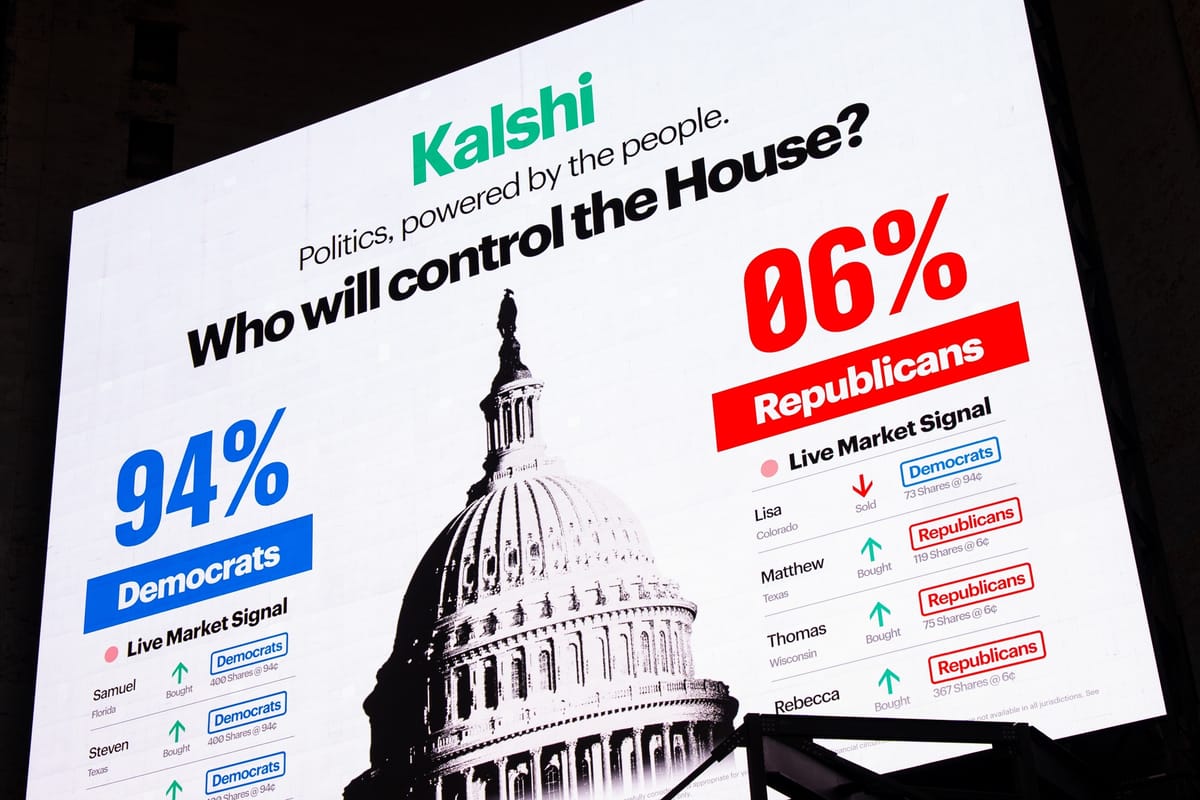
Good job Kalshi!
The thing is, every two years, prediction markets are amazing. Every normal American wants to know one thing when the polls close on Election Day, which is “who won?” You can go on social media, and people who are abnormally addicted to politics will be posting stuff like “watch the results in XY-23, that was R +13.5 in ’24, if it’s within two points then the Rs are going to have a long night,” and you can be like “ah, yes, I will be sure to watch those results,” and then someone else will post “the latest early ballot drop in PQ-7 has way more shy NC WWCs than expected, it’s going to be a long night for the Ds,” and you’re like “ah I see,” and various news sites will be calling races with 0.3% of the votes counted, and there will be a vast mosaic of information that you can, with great effort and attention, piece together to get a picture of how the evening is going.
사실 예측 시장은 2년마다 한 번씩 엄청난 위력을 발휘합니다. 평범한 미국인이라면 누구나 선거일 투표가 마감될 때 “그래서 누가 이겼어?”라는 단 하나의 질문에 대한 답을 알고 싶어 합니다. 소셜 미디어에 들어가 보면 정치에 푹 빠진 사람들이 다음과 같은 글들을 올리곤 합니다. "XY-23 지역구의 개표 결과를 보세요. 24년에는 공화당이 13.5%포인트 앞섰던 곳인데, 만약 격차가 2%포인트 이내로 좁혀진다면 공화당의 밤이 길어질 겁니다." 그러면 여러분은 "아, 그렇군요. 그 결과를 꼭 주시해야겠네요"라고 생각합니다. 그러다 다른 사람이 "PQ-7 지역구의 최신 우편투표 집계에는 예상보다 소극적인 노스캐롤라이나 출신의 백인 노동계층(WWC) 유권자가 훨씬 많아서 민주당에게는 힘든 밤이 되겠네요"라고 올리면 "아, 그렇군요" 하고 넘어갑니다. 각종 뉴스 사이트에서는 득표율이 0.3%만 집계되어도 당선 유력을 발표하고, 여러분은 엄청난 노력과 집중력을 들여 이 방대한 정보의 조각들을 맞춰가며 오늘 밤이 어떻게 흘러갈지 머릿속으로 그림을 그려야 합니다.
And if that’s fun for you, great. Clearly a lot of people consume this stuff as entertainment. But I personally am busy and nervous and like to go to bed early, and it would be nice if someone else would piece everything together, weight it appropriately by how much it matters, and generate one simple answer to the question “who won?”[1] Obviously, 20 minutes after the polls close, that answer will not be definitive. But instead of me frantically looking at all the data points as they come in and updating my expectations about who won, someone else should do that and just tell me the most likely answer and the degree of confidence. Who? “Nate Silver” is a reasonable answer, but (1) it is hard to rely entirely on any one expert and (2) he has reasons of professional reputation not to overreact instantaneously to each new data point, whereas I want immediate gratification.
그 과정이 재미있다면 다행입니다. 분명 많은 사람들이 이런 정보들을 오락거리로 소비하니까요. 하지만 제 개인적으로는 바쁘기도 하고 긴장도 되어서 일찍 잠자리에 드는 것을 좋아합니다. 차라리 누군가 이 모든 것을 짜맞추고, 각 정보의 중요도에 따라 적절히 가중치를 부여한 뒤 “누가 이겼는가?”라는 질문에 단 하나의 명확한 답을 내려준다면 정말 좋을 텐데요.[1] 물론 투표 마감 20분 만에 나오는 그 답이 최종 확정된 결과는 아닐 것입니다. 하지만 제가 개표 데이터가 들어올 때마다 일일이 확인하며 누가 이겼을지 기대를 수정하느라 전달전달 전전긍긍하는 대신, 누군가 그 역할을 대신 맡아 가장 가능성이 높은 정답과 확신의 정도를 알려주었으면 합니다. 누구 말입니까? “네이트 실버(Nate Silver)”도 합리적인 대답이 될 수 있지만, (1) 특정 전문가 한 사람에게만 온전히 의존하기는 어렵고, (2) 그는 새로운 데이터가 나올 때마다 즉각적으로 과민 반응하지 않아야 할 전문적 평판상의 이유가 있는 반면, 저는 즉각적인 만족을 원하기 때문입니다.
The best answer, these days, is “prediction markets,” Kalshi and Polymarket and so forth. There are a bunch of, I don’t know, proprietary trading firms and high-net-worth sharps and political analysts and degenerate gamblers trying to make money by betting on elections, and the evening of Election Day is their Super Bowl.[2] If the results in XY-23 come in D +2.5, and your quantitative or gut-instinct model tells you that implies an 85% chance of the Democrats winning the Senate, and “Democrats control the Senate” is trading at 75%, then you go buy a ton of that contract until the price gets closer to its 85% fair value. You get money if you’re right, and I get something much more important, which is an early bedtime.
요즘 가장 좋은 답은 바로 칼시(Kalshi), 폴리마켓(Polymarket) 등의 “예측 시장”입니다. 이름도 잘 모를 사모 트레이딩 회사, 자산가인 고수들, 정치 분석가들, 그리고 선거에 돈을 걸고 일확천금을 노리는 베팅 중독자들이 선거 결과에 돈을 걸기 위해 모여들고, 선거일 저녁은 그들에게 있어서는 슈퍼볼 결승전과 같습니다.[2] 만약 XY-23 지역구의 개표 결과가 민주당 우세 2.5%포인트로 나오고, 여러분의 정량적 또는 직관적 모델상 이것이 민주당이 상원을 장악할 확률이 85%라는 것을 의미하는데 “민주당의 상원 장악” 계약은 75%에 거래되고 있다면, 가격이 공정 가치인 85%에 가까워질 때까지 해당 계약을 산더미처럼 사들이면 됩니다. 맞히면 돈을 벌고, 저는 그보다 훨씬 더 중요한 것, 즉 일찍 잠자리에 들 수 있는 호사를 누리게 됩니다.
And so in fact I had Kalshi’s “Midterms Hub” up on my computer yesterday evening,[3] and I looked at it periodically, and as the dribbles of information and misinformation and analysis and spin came in on X and Threads and Bluesky and television, I didn’t look at them. Kalshi traders did, and synthesized them, and by 8:30 they told me that there was a 98% chance that the Democrats would control the Senate, and I went to bed. I simply did not need to sit around gathering and interpreting the tea leaves from XY-23; I could outsource that to other people. They did great. Bloomberg’s Joe Weisenthal writes:
Unambiguously, there was no better way to understand the state of the race in real time than following the prediction markets. I had TV news on, switching between the networks, while also keeping track of the races on Kalshi and Polymarket, which forecast a blowout hours before the traditional media made that call.
The blue tsunami thesis looked very strong by around 6:30 p.m., the moment we got the first batch of ballots from Indiana. The Democrat’s odds to win the night moved up everywhere very fast. Meanwhile, the TV anchors weren’t even close to making big calls.
그래서 실제로 저도 어제저녁 컴퓨터에 칼시의 “중간선거 허브(Midterms Hub)”를 띄워놓고[3], 주기적으로 확인만 했습니다. X, 스레드(Threads), 블루스카이(Bluesky), 그리고 텔레비전을 통해 온갖 정보, 가짜 뉴스, 분석, 여론전의 파편들이 쏟아져 들어왔지만 저는 그것들을 보지 않았습니다. 칼시의 트레이더들이 대신 보고 이를 종합하여, 밤 8시 30분쯤 되자 민주당이 상원을 장악할 확률이 98%라고 알려주었고, 저는 바로 잠자리에 들었습니다. XY-23 지역구의 찻잔 속 태풍 같은 미시적 정보들을 모으고 해석하느라 앉아있을 필요가 전혀 없었습니다. 그런 일은 다른 사람들에게 외주를 주면 그만이었습니다. 그들은 정말 일을 훌륭하게 해냈습니다. 블룸버그의 조 와이젠탈(Joe Weisenthal)은 이렇게 썼습니다.
분명히 말해, 실시간으로 선거 판세를 이해하는 데 예측 시장을 팔로잉하는 것보다 더 나은 방법은 없었습니다. TV 뉴스를 켜놓고 채널을 이리저리 돌리는 한편, 칼시와 폴리마켓의 판세를 함께 주시했습니다. 이 예측 시장들은 전통적인 언론사들이 판세 확정을 내리기 몇 시간 전에 이미 압승을 예고하고 있었습니다.
저녁 6시 30분 무렵, 인디애나주에서 첫 투표함이 열렸을 때 '블루 쓰나미(민주당 압승)' 가설은 매우 강력해 보였습니다. 밤을 장식할 민주당의 승률은 모든 곳에서 매우 빠르게 치솟았습니다. 반면 TV 앵커들은 확실한 판세 전망을 내놓기에는 턱없이 부족했습니다.
There are good journalistic reasons not to overextrapolate from early data and to be cautious about making bold predictions. There are good gambling reasons to do the opposite. The gamblers were informative!
초기 데이터로부터 성급하게 일반화하지 않고 대담한 예측을 삼가는 것은 저널리즘 차원에서는 훌륭한 이유가 됩니다. 하지만 정확히 그 반대로 행동하는 것은 도박의 관점에서는 아주 훌륭한 이유가 됩니다. 도박꾼들의 정보력은 매우 유용했습니다!
Here I am talking mostly about how good prediction markets were over a few hours yesterday, from say 5 p.m. to 9 p.m. New York time. They were also pretty good, you know, last month: Candidates that have been favored in prediction markets tended to win, Kalshi is generally well calibrated, etc. (Kalshi reports today that “the candidates traders were favoring won in 98% of [resolved] races,” measuring favorites as of 5 p.m. on Election Day; Kalshi tells me that the favorites as of last Tuesday won 96.9% of their called races.) Prediction markets give people financial incentives to examine polls, construct quantitative models, do door-knocking road trips, build AI image-processing tools to count candidate yard signs from satellite images, etc., to find an edge, and those incentives work.
여기서 제가 주로 이야기하는 것은 어제 오후 5시부터 9시까지 뉴욕 시간 기준으로 고작 몇 시간 동안 예측 시장이 얼마나 훌륭했는가 하는 점입니다. 물론 그들은 지난달에도 꽤 훌륭했습니다. 예측 시장에서 우세하다고 점쳐진 후보들이 당선되는 경향이 있었고, 칼시는 전반적으로 예측이 잘 맞아떨어졌습니다 등등. (칼시는 선거일 오후 5시 기준 우세 후보를 집계한 결과 “[집계가 완료된] 선거구의 98%에서 트레이더들이 지지했던 후보가 승리했다”고 발표했으며, 지난 화요일 기준 우세 후보들은 결과가 확정된 선거구의 96.9%에서 승리했다고 전했습니다.) 예측 시장은 사람들에게 여론조사를 분석하고, 계량 모델을 구축하고, 유권자 집을 직접 찾아다니는 현장 조사를 하고, 위성 사진으로 후보의 선거 유세 팻말 개수를 세는 AI 이미지 처리 도구를 개발하는 등 우위를 점하기 위한 재정적 인센티브를 부여하며, 그러한 인센티브는 실제로 효과를 발휘합니다.
But the trading dynamics on the evening of Election Day are a bit different, less “what is the probability of Candidate X winning” and more “has Candidate X already won but no one has noticed yet?” There is a premium on simply knowing what has already happened 10 minutes before everyone else does. In some abstract sense this race to know first is not that socially useful; no company is going to change its production decisions because it knows the election results 10 minutes earlier on a Tuesday night. But as a consumer product, man, it’s a good product. I really appreciated it.
하지만 선거일 저녁의 트레이딩 다이내믹스는 약간 다릅니다. 그것은 “후보 X가 당선될 확률은 얼마인가”라기보다는 “후보 X가 이미 당선되었는데 아직 아무도 눈치채지 못한 것 아닌가?”에 가깝습니다. 남들보다 10분 먼저 무슨 일이 일어났는지 아는 것에는 엄청난 프리미엄이 붙습니다. 추상적인 의미에서 이 '먼저 알기 경쟁'이 사회적으로 엄청나게 유용한 것은 아닙니다. 화요일 밤에 선거 결과를 10분 일찍 알았다고 해서 어떤 기업이 생산 결정을 바꾸지는 않을 테니까요. 하지만 소비자 제품으로서 이것은 정말, 대단히 훌륭한 상품입니다. 저는 정말 진심으로 만족했습니다.
Obviously, on the other 729 days per biennium, the prediction markets mostly offer a different product, sports gambling, which I, uh, discuss with occasional skepticism around here. But the election stuff is great! I love it! No complaints! I realize that people have complaints! People might insider trade on elections. People might manipulate elections (running fake candidates, sabotaging real candidates, doing fake polls, etc.) to make money in prediction markets. People might manipulate prediction markets (buying contracts uneconomically in large size) to influence elections: If you spend money to inflate a candidate’s market-implied probability of winning, maybe that will somehow (by driving donations, coverage, enthusiasm, etc.) actually make her win. There is something tawdry and cheapening about betting on elections. Sometimes the prediction markets are wrong. Etc.
물론 2년 주기의 나머지 729일 동안 예측 시장은 대개 스포츠 도박이라는 전혀 다른 상품을 제공하며, 저는 이와 관련해 가끔 회의적인 시각을 드러내기도 했습니다. 하지만 선거 관련 상품만큼은 정말 최고입니다! 너무 좋습니다! 불만은 전혀 없습니다! 물론 사람들에게 불만이 있을 수 있다는 점은 압니다. 누군가는 선거를 이용해 내부자 거래를 할 수도 있습니다. 예측 시장에서 돈을 벌기 위해 선거를 조작할 수도 있습니다(가짜 후보를 출마시키거나, 진짜 후보를 방해하거나, 가짜 여론조사를 돌리는 등의 방식으로요). 선거에 영향을 미치기 위해 예측 시장을 조작할 수도 있습니다(엄청난 규모로 경제적 타당성 없이 계약을 대량 매수하는 방식으로요). 만약 돈을 써서 후보의 예측 시장 내 승리 확률을 부풀린다면, 그것이 어떻게든(후원금, 언론 보도, 지지 열기 등을 유도하여) 실제로 그 후보를 당선시킬 수도 있습니다. 선거에 돈을 거는 행위에는 뭔가 싸구려 같고 가치관을 훼손하는 저속한 면이 있습니다. 때로는 예측 시장이 틀리기도 하고요. 등등.
These do not bug me that much. I get it! But it seems to me like our current equilibrium is that US midterm election prediction markets are big enough ($2.5 billion of volume on Kalshi) to provide real incentives for accurate predictions, but not big enough to, like, swamp the actual elections. US midterm elections have sufficient independent significance that no one’s really going to throw a Senate race to make a buck on Kalshi. Prediction markets trade predictions on all sorts of nonsense where the betting, in some sense, overshadows the event. Here the event is pretty important.
하지만 이런 점들은 저를 크게 신경 쓰이게 하지 않습니다. 충분히 이해할 만하니까요! 하지만 제 생각에 미국의 중간선거 예측 시장은 현재 정확한 예측을 이끌어낼 수 있는 강력한 인센티브를 제공할 만큼 규모가 충분히 크지만(칼시에서만 2.5십억 달러 규모의 거래량), 실제 선거 결과를 집어삼킬 만큼 거대하지는 않은 균형 상태에 도달해 있는 것 같습니다. 미국의 중간선거는 그 자체로 독립적인 중요성이 너무나 크기 때문에, 칼시에서 몇 푼 벌어보겠다고 정말로 상원 선거를 내던질 사람은 아무도 없습니다. 예측 시장은 도박이 일종의 이벤트 본질을 압도해버리는 온갖 터무니없는 일들에 대해서도 예측을 거래합니다. 하지만 여기서 선거라는 이벤트는 매우 중요합니다.
Everyone knows all this. Most prediction markets have their origin story in US elections. Every prediction-market entrepreneur wants to talk about (1) how good their markets are at calling elections and (2) all the fabulous use cases for hedging real business risk in election prediction markets. Prediction markets are “truth machines,” as the saying goes, and knowing the truth about elections seems pretty important and socially useful.
모든 사람이 이 사실을 잘 알고 있습니다. 대부분의 예측 시장은 미국 선거에서 그 기원을 찾을 수 있습니다. 예측 시장 창업자라면 누구나 (1) 선거 예측을 얼마나 기가 막히게 잘 맞히는지, 그리고 (2) 선거 예측 시장에서 실제 기업의 사업 리스크를 헤지(hedge)하는 데 활용할 수 있는 환상적인 사례들에 대해 이야기하고 싶어 합니다. 흔히 말하듯 예측 시장은 “진실을 찍어내는 기계”이며, 선거에 대한 진실을 아는 것은 꽤 중요하고 사회적으로도 유용해 보입니다.
The big conceptual problem for prediction markets is that they create large, infrequent, positive externalities for the world, and have to figure out how to capture some of that value for themselves. Every two years, Kalshi tells you who will win the election with modest confidence a month out, and then with incredibly useful certainty like three hours before the election is called. The people providing that service — the people trading on Kalshi to make the probabilities right — make, in the aggregate, zero dollars, or a negative amount of money net of fees. Maybe that’s not quite right: Maybe there is a large group of negative-expectation Kalshi election traders who are just in it for fun, or who are hedging business risk from the election, or who are hedging the emotional risk of their favorite candidate losing, or what have you, and all of those traders are financially subsidizing the minority of sharp traders who are trying to make the probabilities right. The sharp traders are providing insurance and getting paid a fair rate for it. This is probably true in some sense, and crucially important to any financial market: You can’t really have a robust efficient financial market in which everyone is a sharp; the sharps have to be able to make money, in expectation, for the market to work.[4]
예측 시장이 직면한 커다란 개념적 문제는, 이들이 세상에 거대하고 주기적이지 않은(간헐적인) 긍정적 외부 효과를 창출하면서도, 그 가치의 일부를 자신들의 수익으로 포착해낼 방법을 찾아내야 한다는 점입니다. 2년마다 칼시는 선거 한 달 전에는 적당한 수준의 확신을 가지고, 선거 결과가 확정되기 3시간 전에는 엄청나게 유용한 확신을 가지고 누가 선거에서 이길지 알려줍니다. 그 서비스를 제공하는 사람들—확률을 올바르게 맞추기 위해 칼시에서 거래를 하는 사람들—은 총합으로 보면 0달러, 혹은 수수료를 제외하면 마이너스의 돈을 법니다. 어쩌면 꼭 그렇지만은 않을 수도 있습니다. 재미 삼아서 참여하거나, 선거로 인한 사업 리스크를 헤지하거나, 지지하는 후보가 낙선할 때의 감정적 손실을 헤지하기 위해 참여하는 등 '기대값이 마이너스인 칼시 선거 트레이더'들의 거대한 집단이 존재하며, 이들이 확률을 바로잡으려는 소수의 고수(sharp) 트레이더들을 재정적으로 보조하고 있는지도 모릅니다. 고수 트레이더들은 보험을 제공하고 그에 합당한 공정한 대가를 받는 것입니다. 금융 시장 전반에 걸쳐 이것은 어느 정도 사실이며 매우 중요합니다. 모든 사람이 다 고수일 수는 없는 법이며, 효율적인 금융 시장이 제대로 작동하려면 고수들이 기대 수익을 낼 수 있어야 합니다.[4]
Still, the point is that Kalshi election traders as a whole can’t make money; there’s nowhere for them to make money from. And yet they provide a very valuable service! Kalshi likes to point out that “roughly three-quarters of its users have never deposited funds, using the platform to track prices rather than trade them.” But those people, including me, don’t pay for that value. All the zero-sum Kalshi traders are providing useful information as exhaust, and not capturing its value.
여전히 핵심은, 칼시의 선거 트레이더들은 전체적으로 볼 때 돈을 벌 수 없다‘는 점입니다. 돈을 벌어올 곳이 없기 때문입니다. 그럼에도 불구하고 그들은 매우 가치 있는 서비스를 제공합니다! 칼시는 “이용자의 약 4분의 3은 예치금을 한 번도 넣지 않고, 거래 대신 가격을 추적하는 용도로 플랫폼을 이용한다”는 점을 자랑스럽게 여깁니다. 하지만 저를 포함한 그 사람들은 그 가치에 대해 돈을 지불하지 않습니다. 제로섬 게임을 하는 모든 칼시 트레이더들은 부산물로서 유용한 정보를 제공하고 있을 뿐, 그 가치를 직접 포착해내지 못하고 있습니다.
What is the right way to capture this value? I would have happily paid Kalshi $20 for the night if it had paywalled its election markets, but I don’t think that would work for its business model. Bloomberg’s Hannah Miller wrote last week that “a number of news organizations, including CNN, CBS News, Dow Jones, and CNBC have struck business partnerships with prediction-market operators like Kalshi Inc. and Polymarket to augment their traditional coverage, with some featuring market trades predicting who’ll win control of the House of Representatives or the hotly contested Texas Senate race,” but she adds that “the cash-flush prediction markets represent a new source of revenue for media companies”: Apparently the prediction markets are paying news organizations for product placement, rather than getting paid for, you know, providing the information that the news organizations’ customers actually want.
이 가치를 올바르게 포착하는 방법은 무엇일까요? 만약 칼시가 선거 시장을 유료 장벽(paywall) 뒤에 숨겼다면 저는 기꺼이 그날 밤 20달러를 지불했을 테지만, 그런 방식이 그들의 비즈니스 모델에 맞을 것 같지는 않습니다. 블룸버그의 한나 밀러(Hannah Miller) 기자는 지난주 “CNN, CBS 뉴스, 다우존스, CNBC를 포함한 여러 언론사들이 전통적인 보도를 보완하기 위해 칼시, 폴리마켓 같은 예측 시장 운영사들과 사업 제휴를 맺었으며, 일부 언론사들은 하원 장악이나 치열한 접전이 벌어지고 있는 텍사스 상원 선거의 승자를 예측하는 시장 거래를 보도에 활용하고 있다”고 썼습니다. 하지만 그녀는 “막대한 자금을 보유한 예측 시장들이 언론사들에게는 새로운 수익원이 되고 있다”고 덧붙였습니다. 즉, 예측 시장이 언론사 고객들이 실제로 원하는 정보를 제공한 대가로 돈을 받는 것이 아니라, 오히려 언론사들에게 제품 배치를 대가로 돈을 지불하고 있는 모양새입니다.
The actual answer is that Kalshi and Polymarket try to leverage the goodwill and social utility of their election work to become:
- Regulatorily favored sports gambling sites for teenagers, and
- General-purpose financial-derivatives exchanges for trading stocks, commodities, crypto, compute futures and whatever else you’ve got.
실제 해결책은 칼시와 폴리마켓이 선거 예측 작업에서 얻은 호감도와 사회적 효용을 활용하여 다음과 같은 플랫폼으로 거듭나려고 한다는 데 있습니다.
- 청소년들을 위한 규제 우호적 스포츠 도박 사이트, 그리고
- 주식, 원자재, 암호화폐, 연산능력(compute) 선물 등 원하는 모든 것을 거래할 수 있는 범용 금융 파생상품 거래소.
The first answer annoys me a lot but has an obvious intuitive appeal. People like gambling on elections, and their election gambling is socially useful. (It tells you who won.) However, they only like gambling on elections every two years, which is kind of a rough business model. People also like gambling on sports, and they do it every day. Yadda yadda yadda. Is the sports gambling socially useful? I posit that (1) everyone knows who won the sports game as soon as the sports game concludes, (2) nobody needs to know who will win the sports game before the sports game concludes and (3) the whole point of sports is that you don’t know who wins until it’s over. Like, that’s why it’s fun? That’s why you watch? The point of sports is that you watch the game to see who wins? That is the point of Election Day for some politics fans, but not, I think, for most people. Most people want to know who won and go to bed. I digress.
첫 번째 답변은 저를 매우 짜증나게 하지만, 동시에 직관적으로는 엄청난 매력이 있습니다. 사람들은 선거에 도박하는 것을 좋아하며, 그들의 선거 도박은 사회적으로 유용합니다. (누가 이겼는지 알려주니까요.) 하지만 문제는 사람들이 2년마다 한 번씩만 선거 도박을 좋아한다는 점이며, 이는 사업 모델로서는 꽤 험난합니다. 사람들은 스포츠 도박도 좋아하고, 매일매일 그것을 합니다. 어쩌고저쩌고. 과연 스포츠 도박은 사회적으로 유용할까요? 저는 다음과 같이 주장합니다. (1) 스포츠 경기가 끝나자마자 누구나 누가 이겼는지 알 수 있고, (2) 경기가 끝나기 전에 누가 이길지 미리 알 필요가 있는 사람은 아무도 없으며, (3) 스포츠의 본질 자체야말로 경기가 끝날 때까지 누가 이길지 모르는 데에 있습니다. 애초에 그게 재미있는 이유 아닙니까? 그걸 보려고 보는 거 아니겠습니까? 스포츠의 핵심은 경기를 직접 보며 누가 이기는지 확인하는 것입니다! 일부 열성적인 정치 팬들에게는 그것이 선거일의 존재 이유이기도 하겠지만, 대다수의 사람들에게는 그렇지 않다고 생각합니다. 대부분의 사람들은 누가 이겼는지 그저 알고 잠자리에 들고 싶어 합니다. 이야기가 딴 곳으로 샜군요.
Also the sports gambling can be addictive and socially destructive in a way the election gambling can’t be, for various reasons of which surely the main one is that the elections are every two years and the sports are every day.
또한 스포츠 도박은 여러 이유로 선거 도박과는 비교할 수 없을 정도로 중독성이 강하고 사회적으로 파괴적일 수 있습니다. 그 주된 이유는 당연히 선거는 2년에 한 번 열리지만 스포츠는 매일 열리기 때문일 것입니다.
The second answer — “we are good at predicting elections so we should become a platform for hedging AI compute costs” — is less intuitive but considerably more charming. “We’ve found a new form of financial trading that is super cool once every two years, so let’s expand to other novel forms of financial trading, plus like leveraged stocks and crypto.” Fine.
두 번째 답변인 “우리는 선거 예측을 잘하니 AI 연산 비용을 헤지하는 플랫폼이 되어야 한다”는 주장은 덜 직관적이기는 하지만 훨씬 더 매력적입니다. “2년에 한 번 대단히 멋진 새로운 형태의 금융 거래를 찾아냈으니, 레버리지 주식이나 암호화폐 같은 다른 참신한 형태의 금융 거래로 확장하자”는 식입니다. 좋습니다.
Just, you know, the graph of my sympathy for prediction markets has sharp spikes every two years. Six months ago I was pretty annoyed that the US financial system is building sports gambling exchange-traded funds, and in six months I’ll probably be pretty annoyed about it again. Today, I get it.
다만, 예측 시장을 향한 제 호감도의 그래프는 2년마다 가파르게 솟구칩니다. 불과 6개월 전만 해도 저는 미국 금융시장이 스포츠 도박 상장지수펀드(ETF)를 만들고 있는 것에 꽤 짜증이 났었고, 6개월 뒤가 되면 아마 또 짜증을 내고 있을 것입니다. 하지만 오늘만큼은, 그 마음이 충분히 이해가 갑니다.
Quant code theft
We talked in 2024 about a lawsuit that Jane Street Group brought against Millennium Management and two former Jane Street options traders. The traders, Jane Street alleged, had taken valuable trade secrets with them when they left for Millennium. The traders, and Millennium, disagreed: In their view, all they took with them was the general knowledge and skills of being good options traders. Millennium’s lawyer “compared the two traders to gold miners who ‘really know how to use a pickax,’” saying that “they can guess and take the risk based on the experience in their head of seeing a discrepancy between a stock and an option, for example, and they are willing to make a bet.”
2024년에 우리는 제인 스트리트 그룹(Jane Street Group)이 밀레니엄 매니지먼트(Millennium Management)와 전직 제인 스트리트 옵션 트레이더 두 명을 상대로 제기한 소송에 대해 이야기한 적이 있습니다. 제인 스트리트의 주장에 따르면, 이 트레이더들은 밀레니엄으로 이직할 때 가치 있는 영업비밀을 들고 나갔습니다. 반면 트레이더들과 밀레니엄은 이에 동의하지 않았습니다. 그들의 관점에 따르면 그들이 가져간 것은 훌륭한 옵션 트레이더로서의 일반적인 지식과 기술뿐이었습니다. 밀레니엄의 변호사는 “두 트레이더를 ‘곡괭이질을 정말 잘 아는’ 금광 광부들에 비유할 수 있다”면서, “예를 들어 주식과 옵션 간의 가격 괴리를 파악하고 머릿속 경험에 기반해 추측하고 위험을 감수한 뒤 베팅할 의지가 있는 것”이라고 말했습니다.
I wrote that, when you leave a trading firm, there is a continuum of stuff you might take with you. On one end, if your job at your old firm was, like, buying and holding Microsoft stock, and you go and do that at your new firm, your old firm can’t really complain. “Microsoft stock” is not a trade secret. On the other hand, “if your big idea at your old job was a complex software system ingesting millions of data points, and before you leave your old job you email the code to your Gmail account” and use it at your new job, that’s bad. The source code from your old quant job seems like a pretty classic trade secret.
저는 트레이딩 회사를 떠날 때 가지고 갈 수 있는 것들에는 일종의 연속선이 존재한다고 썼습니다. 스펙트럼의 한쪽 끝에서, 만약 이전 회사에서의 업무가 마이크로소프트 주식을 매수하고 보유하는 것 같은 일이었고 새 회사에서도 똑같이 그 일을 한다면, 이전 회사는 딱히 불만을 제기할 수 없습니다. “마이크로소프트 주식”은 영업비밀이 아니기 때문입니다. 반면에 “이전 직장에서의 야심 찬 아이디어가 수백만 개의 데이터 포인트를 수집하는 복잡한 소프트웨어 시스템이었는데, 회사를 떠나기 전에 그 코드를 지메일(Gmail) 계정으로 이메일 전송”하여 새 직장에서 사용했다면 그것은 잘못된 일입니다. 이전 퀀트 직장에서 가져온 소스 코드는 꽤 전형적인 영업비밀에 해당해 보입니다.
Jane Street and Millennium ended up settling, but before they did they had a very funny court hearing in which Jane Street’s lawyers kept saying “these trade secrets are so secret that we cannot even say the product they traded or the name of the country where the trades happened” and the defense lawyers kept saying “when they were doing these OPTIONS TRADES in INDIA, whoops, silly me.” Some of this was, one assumes, just for comedic effect, but there was also a strategic point. Jane Street’s argument that the information was top secret was bolstered by keeping it secret even in court; the defendants’ argument that it was no big deal was bolstered by treating it cavalierly. After the case was settled, the Indian securities regulator weighed in with its own quite detailed description of the trade, which (1) kind of blew up the secret, (2) kind of supported the defense view, insofar as apparently the trade was “buy index options that are obviously super mispriced relative to their underlying index,” which doesn’t seem all that proprietary, and (3) was more broadly bad for Jane Street, in that arguably the trade was “buy options and manipulate the underlying index.”
제인 스트리트와 밀레니엄은 결국 합의에 이르렀지만, 합의에 도달하기 전 매우 재미있는 법원 심리가 있었습니다. 제인 스트리트의 변호사들은 계속해서 “이 영업비밀들은 너무나 비밀스러워서 거래했던 상품이나 거래가 이루어진 국가의 이름조차 말할 수 없습니다”라고 주장했고, 피고 측 변호사들은 “이 사람들이 인도에서 옵션 거래를 하고 있었을 때, 앗, 이런 내가 실수를 했네”라며 맞받아쳤습니다. 이 중 일부는 누구나 짐작하듯 단순히 코미디 효과를 위한 것이었겠지만, 전략적인 의도도 있었습니다. 법원 안에서도 비밀을 유지함으로써 정보가 일급비밀이라는 제인 스트리트의 주장이 힘을 얻었고, 대수롭지 않게 취급함으로써 별것 아니라는 피고 측의 주장이 뒷받침되었습니다. 사건이 합의로 끝난 후, 인도 증권 규제 당국이 해당 거래에 대한 꽤 상세한 설명을 내놓았는데, 이는 (1) 일종의 비밀을 폭로해 버린 셈이었고, (2) 거래 내용이 “기초지산 대비 명백하게 가격이 터무니없이 잘못 매겨진 지수 옵션을 매수하는 것”이었던 것으로 보여 그다지 독점적이지 않다는 점에서 피고 측 주장을 뒷받침했으며, (3) 광범위하게는 거래 내용이 “옵션을 매수하고 기초지수를 조작하는 것”이었다는 주장이 제기될 수 있다는 점에서 제인 스트리트에 더 불리하게 작용했습니다.
Anyway here’s another quant trade secrets case, this one in criminal court:
Richard Ho went on trial Monday on charges that he stole the code from his former employer, Headlands Technologies LLC, to set up his own trading firm. Prosecutors allege Ho then used the code to defraud Tower Research Capital into investing with him.
Ho, a 38-year-old Cambridge University computer science graduate, has pleaded not guilty. He faces as much as 20 years behind bars if convicted of the most serious fraud charge against him. Opening statements in the trial are expected to begin Wednesday.
The case is a rare criminal prosecution over the alleged theft of Wall Street trade secrets and one of the first to focus on the code behind trading algorithms.
어쨌든 여기 또 다른 퀀트 영업비밀 관련 사건이 있습니다. 이번에는 형사 법원입니다.
리처드 호(Richard Ho)는 전 직장인 헤들랜즈 테크놀로지스 LLC(Headlands Technologies LLC)의 코드를 도용해 자신만의 트레이딩 회사를 차린 혐의로 월요일 재판을 받기 시작했습니다. 검찰은 호가 이 코드를 이용해 타워 리서치 캐피털(Tower Research Capital)을 속여 자신에게 투자하도록 유도했다고 주장했습니다.
38세의 케임브리지 대학 컴퓨터 과학 전공자인 호는 무죄를 주장하고 있습니다. 그는 가장 중대한 사기 혐의가 유죄로 인정될 경우 최대 20년형에 처해질 수 있습니다. 이번 재판의 배심원 모두 발언(Opening statements)은 수요일에 시작될 것으로 예상됩니다.
이 사건은 월스트리트 영업비밀 절도 혐의와 관련해 드문 형사 기소 사례 중 하나이자, 트레이딩 알고리즘의 이면에 있는 코드를 정조준한 최초의 사건 중 하나입니다.
It’s not quite clear that he emailed the code to himself, but there are allegations that, for instance, his new code contained the same comments as the Headlands code, which does suggest something other than vaguely remembering his old employer’s approach. “Literally cutting and pasting your employer’s code” is kind of the extreme end of quant trade-secrets theft, which I guess is why it is being prosecuted criminally. But, as in the Jane Street case, the dispute is over how secret the secrets actually were, and some of that plays out in theater about how secret they have to be kept in court:
For Chicago’s Headlands, a firm founded by Citadel alumni, the trial could bring new and unwanted scrutiny of a source code the firm says it spent $1 billion to develop. Prosecutors have taken great pains to continue keeping the code secret despite the public nature of a trial. Many hearings in the case have already taken place in closed courtrooms, and that’s expected to be true for the trial itself.
“In reality, all that is necessary is for a single member of the public (or media) to learn about the trade secrets and then share that knowledge with others, including current or future competitors that would be heavily incentivized to obtain it,” Headlands wrote in an August letter to the judge.
But Ho’s defense has signaled that it will argue that quant code isn’t a trade secret at all because the strategies it drives degrade and have to be continually updated to remain competitive. They plan to call as an expert witness Mark Hendricks, a University of Chicago math professor who has worked with dozens of quant firms.
According to court filings, Hendricks is expected to testify that Headlands’ code has no economic significance because it involves common trading concepts that exist at other firms and are “all known or readily ascertainable by others in the industry.”
그가 코드를 자기 자신에게 이메일로 보냈는지는 명확하지 않지만, 예를 들어 그의 새 코드가 헤들랜즈의 코드와 동일한 주석(comments)을 포함하고 있었다는 주장 등이 제기되었으며, 이는 이전 고용주의 접근 방식을 어렴풋이 기억해 낸 것 이상의 무언가가 있음을 시사합니다. “고용주의 코드를 말 그대로 복사해서 붙여넣는 것”은 퀀트 영업비밀 절도의 극단적인 형태에 가깝고, 이것이 바로 형사 기소까지 이르게 된 이유인 것으로 보입니다. 하지만 제인 스트리트 사건 때와 마찬가지로 이번 분쟁의 핵심도 그 비밀들이 실제로 얼마나 비밀스러웠는가에 있으며, 이 역시 법원에서 코드를 얼마나 철저히 감춰야 하는지에 대한 일종의 연극처럼 전개되고 있습니다.
시티델(Citadel) 출신 인사들이 설립한 시카고의 헤들랜즈에게 이번 재판은 회사가 개발하는 데 10억 달러를 썼다고 주장하는 소스 코드에 대해 원치 않는 새로운 스포트라이트를 비추게 될 수 있습니다. 검찰은 재판이 공개적으로 진행됨에도 불구하고 코드를 계속 비밀로 유지하기 위해 각별한 노력을 기울였습니다. 이 사건의 많은 심리가 이미 비공개 법정에서 진행되었으며, 재판 자체도 그럴 것으로 예상됩니다.
헤들랜즈는 8월 판사에게 보낸 서한에서 “현실적으로 필요한 것은 단 한 명의 대중(또는 언론인)이 영업비밀에 대해 알게 된 후, 이를 확보하려는 유혹이 엄청난 현직 또는 미래의 경쟁자들을 포함한 다른 사람들과 그 지식을 공유하는 것뿐”이라고 썼습니다.
그러나 호의 변호인 측은 퀀트 코드가 구동하는 전략들이 점차 퇴색하고 경쟁력을 유지하기 위해 지속적으로 업데이트되어야 하기 때문에 퀀트 코드는 애초에 영업비밀이 아니라는 점을 주장할 것임을 시사했습니다. 그들은 수십 개의 퀀트 회사와 일한 적이 있는 시카고 대학교의 수학 교수 마크 헨드릭스(Mark Hendricks)를 전문가 증인으로 출석시킬 계획입니다.
법원 서류에 따르면, 헨드릭스는 헤들랜즈의 코드가 다른 회사에도 존재하는 공통된 트레이딩 개념들을 포함하고 있으며 “업계의 다른 사람들이 모두 알고 있거나 쉽게 알아낼 수 있는 것”이기 때문에 경제적 중요성이 없다고 증언할 것으로 예상됩니다.
Print out the code, scatter it around the courtroom, blow your nose with it. “Oh this code? Man everyone knows this code.”
코드를 프린트해서 법원 바닥에 뿌리고, 그걸로 코를 풀기라도 하겠네요. “아, 이 코드요? 세상에, 이 코드는 누구나 다 아는데요.”
Buying stock in college athletes
I dunno man:
LevelUp Sports, founded by college football analyst Bud Elliott, announced plans for potential offerings on Republic that would give individual investors access to securities tied to specified future college-athlete income. Each planned offering is expected to include a security linked to an athlete’s income-sharing agreement with a collectible digital card.
LevelUp provides athletes with capital upfront in exchange for an agreed share of future college income. Covered income may include name, image and likeness (NIL) payments and college revenue-share pay. Professional earnings, cost-of-living payments and W-2 employment income are excluded.
“College athletes are creating significant economic value through NIL, yet the investment opportunity around that value is still in its early stages,” said Andrew Durgee, co-CEO of Republic. “LevelUp is bringing a new model to market that connects investors with the future earning potential of athletes, enabled by the securities infrastructure and tokenization technology of Republic. We’re excited to help bring this new category of sports investing to the market.”
잘 모르겠네요:
대학 축구 분석가인 버드 엘리엇(Bud Elliott)이 설립한 레벨업 스포츠(LevelUp Sports)는 일반 투자자들이 특정 미래 대학생 선수의 소득에 연동된 유가증권에 접근할 수 있도록 해주는 공모 계획을 공화국(Republic) 플랫폼에서 발표했습니다. 계획된 각 공모에는 선수의 수집용 디지털 카드와 결합된 소득 공유 계약에 연동된 유가증권이 포함될 것으로 예상됩니다.
레벨업은 미래 대학 소득의 약정된 지분을 대가로 선수들에게 선급 자금을 제공합니다. 보장되는 소득에는 이름, 이미지, 초상권(NIL) 대금 및 대학 수익 공유 지급액이 포함될 수 있습니다. 전문 선수로서의 수입, 생활비 지원금 및 W-2 근로 소득은 제외됩니다.
공화국의 공동 CEO인 앤드루 더기(Andrew Durgee)는 “대학 선수들은 NIL을 통해 상당한 경제적 가치를 창출하고 있지만, 그 가치를 둘러싼 투자 기회는 여전히 초기 단계에 머물러 있다”며, “레벨업은 공화국의 증권 인프라와 토큰화 기술을 활용하여 투자자들을 선수의 미래 수입 창출 잠재력과 연결해 주는 새로운 모델을 시장에 선보이고 있다. 우리는 스포츠 투자라는 이 새로운 카테고리를 시장에 선보이는 데 도움을 줄 수 있게 되어 기쁘다”고 말했습니다.
We have talked many times around here about what I sometimes call “the great late-night dorm-room question of financial capitalism,” which is “what if people could sell stock in themselves?” Often, in practice, this is a question about early-career athletes. Many sports have traditionally had a career path in which (1) a lot of very talented people work very hard for essentially no money in the lower levels of the game, (2) some of them then hit it big and make tens or hundreds of millions of dollars as top-level professionals and (3) most don’t. There is an obvious case for a sort of risk-sharing approach:
- Investors pick like 100 promising athletes and give them $1 million each in exchange for 10% of their future professional earnings.
- The athletes have money to, like, afford food as they toil in the minor leagues for peanuts.
- Eventually 10 of them become high-level professionals and make $150 million each, of which $15 million each goes to the investors.
- The other 90 don’t, and keep their $1 million.
- Net the investors make $50 million.
- The 90 athletes who don’t make it are sad about not making it, but at least they got the $1 million. The 10 athletes who do make it are rich, and for the most part don’t begrudge giving the investors a high return on their specific contract. (For the most part.)
우리는 그동안 금융 자본주의의 소위 ‘심야 기숙사 방의 위대한 질문’이라고 부를 만한 주제에 대해 여러 번 이야기한 적이 있습니다. 그것은 바로 “사람들이 자기 자신 주식을 발행해 팔 수 있다면 어떻게 될까?”라는 질문입니다. 현실에서 이 질문은 대개 경력 초기 단계의 선수들에 대한 이야기로 이어집니다. 전통적으로 많은 스포츠 종목의 경력 경로는 다음과 같은 구조를 가졌습니다. (1) 재능 있는 많은 사람들이 게임의 하위 리그에서 사실상 무보수로 엄청나게 열심히 일하고, (2) 그중 일부는 대박을 터뜨려 최고 수준의 프로 선수로서 수천만 또는 수억 달러를 벌어들이며, (3) 나머지는 그렇지 못합니다. 일종의 위험 분산(risk-sharing) 접근법에 대한 명백한 타당성이 존재합니다.
- 투자자들이 유망한 선수 100명을 골라 미래 프로 수입의 10%를 받는 대가로 각각 100만 달러를 줍니다.
- 선수들은 푼돈을 벌며 마이너리그에서 고생하는 동안 식비 등을 충당할 돈을 갖게 됩니다.
- 결국 그중 10명은 최고 수준의 프로가 되어 각각 1억 5천만 달러를 벌고, 그중 1,500만 달러씩이 투자자들에게 돌아갑니다.
- 나머지 90명은 그렇지 못하지만, 자신들이 받은 100만 달러를 그대로 가집니다.
- 결과적으로 투자자들은 순이익으로 5천만 달러를 벌어들입니다.
- 성공하지 못한 90명의 선수들은 뜻을 이루지 못해 아쉽겠지만 적어도 100만 달러를 손에 쥐었습니다. 성공한 10명은 부자가 되었고, 대개는 투자자들에게 자신들의 특정 계약에 대해 높은 수익을 안겨주는 것을 아까워하지 않습니다. (대개는요.)
This stuff has been rattling around for decades, and in some ways it makes sense that it would be having a moment now. Like, 10 years ago, you would not have had offerings that “give individual investors access to securities tied to specified future college-athlete income,” for at least three reasons:
- Securities regulation, back then, was kind of strict, and “we will sell shares in individual athletes to retail investors” would have been a real regulatory headache.
- Kinda seems like weird niche sports gambling, doesn’t it? That was illegal, back then.
- US college athletes were held to strict amateurism rules that probably would not allow them to strike professional deals on their future income.
이러한 아이디어는 수십 년 동안 맴돌았고, 여러 면에서 지금 시점에서 주목받는 것은 일리가 있습니다. 예를 들어 10년 전이었다면, 적어도 세 가지 이유 때문에 “일반 개인 투자자들에게 개별 선수의 소득에 연동된 증권을 접근할 수 있게 해주는” 상품은 존재할 수 없었을 것입니다.
- 당시의 증권 규제는 꽤 엄격해서 “일반 소매 투자자들에게 개별 선수들의 지분을 판매하겠다”고 나서는 것은 엄청난 규제적 두통거리가 되었을 것입니다.
- 왠지 이상하고 틈새시장의 스포츠 도박처럼 보이지 않습니까? 당시에는 불법이었습니다.
- 미국 대학 선수들은 미래 수입으로 프로 계약을 맺는 것을 허용하지 않았을 엄격한 아마추어리즘 규정에 묶여 있었습니다.
But since then the US Supreme Court has struck down limitations on sports gambling and on college-athlete pay, so these deals are more allowable. And US securities regulation is kind of down for whatever these days; selling stock in college athletes to retail investors is nowhere close to the weirdest securities offering I’ve written about in recent weeks.
하지만 그 이후 미국 연방대법원이 스포츠 도박과 대학생 선수 보수에 대한 규제들을 무효화했기 때문에 이러한 거래들이 더욱 허용 가능한 영역이 되었습니다. 게다가 요즘 미국의 증권 규제는 무엇이든 대충 넘어가는 분위기입니다. 일반 소매 투자자들에게 대학생 선수의 주식을 파는 것은 제가 최근 몇 주 동안 글로 쓴 가장 기괴한 증권 공모들에 비하면 근처에도 가지 못할 정도입니다.
In another sense, though, it’s a little weird for this particular product to launch now, because … the college athletes … are already getting paid? Like the way it works is that top college athletes can get paid millions of dollars, right now, in NIL payments. They no longer play for peanuts, or for free, in the hopes of one day making it big in professional leagues. They get paid now, sometimes more than they’d make in the professional leagues. If you’re getting $2 million a year in NIL payments for your four-year college career, I suppose you could sell 10% of those payments for an $800,000 up-front payment. But it doesn’t seem especially urgent.
하지만 다른 한편으로, 이 특정 상품이 지금 출시되는 것은 약간 이상하기도 합니다. 왜냐하면... 대학생 선수들이... 이미 돈을 받고 있기 때문입니다. 지금 이 순간에도 최고의 대학생 선수들은 NIL 지급액을 통해 수백만 달러를 벌어들이고 있지 않습니까? 그들은 언젠가 프로 리그에서 대박을 터뜨리기를 바라며 푼돈이나 무보수로 뛰지 않습니다. 그들은 지금 당장, 때로는 프로 리그에서 벌어들일 것보다 더 많은 돈을 지금 받고 있습니다. 4년의 대학 생활 동안 매년 200만 달러의 NIL 지급액을 받고 있다면, 선급금 80만 달러를 받기 위해 그 수입의 10%를 판다는 것도 가능하겠지만 그렇게 특별히 시급해 보이진 않습니다.
Things happen
AI Data Center Boom Set for Upheaval After US Election Rout. Shares of Elon Musk’s Tesla and SpaceX Tumble After Republicans Are Routed. How audacious London debt trader Hamza Lemssouguer came unstuck. CVS Plans to Break Up $117 Billion Healthcare Conglomerate. “To say AI is going to cure cancer is maybe a little bit of a jump.” Crisis widens at top platinum refiner as probe exposes metal test manipulation. PE Firms Defend Continuation Funds Against Investor Ire. Mark Walter in Talks to Sell Cadillac F1 Stake to Red Sox, Liverpool Owners. Wall Street Banks Are Finally Seeing Their China Bets Pay Off. Beijing Reins In IPO Rush After AI Concerns Hit Stock Market. Sequoia shuts London office as VC firm refocuses on Silicon Valley. Bank Accounts Vanish Just Before Dawn in Shock Paraguay Shutdown. WeRateDogs does not rate AI dogs. AI memecoins. The word of the year is “mogging.”
미국 선거 참패 이후 대혼란을 맞이하게 된 AI 데이터 센터 붐. 공화당의 선거 참패 여파로 일론 머스크의 테슬라와 스페이스X 주가 하락. 대담한 런던의 채권 트레이더 함자 렘수게르(Hamza Lemssouguer)가 몰락하게 된 과정. CVS, 1,170억 달러 규모의 헬스케어 복합기업 분할 계획. “AI가 암을 치료할 것이라고 말하는 것은 어쩌면 약간 비약일 수 있습니다.” 금속 성분 검사 조작이 적발되면서 위기가 확산되는 최고급 백금 제련소. 사모펀드(PE)들, 투자자들의 분노에 맞서 컨티뉴에이션 펀드(Continuation Fund) 방어에 나서다. 마크 월터(Mark Walter), 레드삭스와 리버풀 구단주 측에 캐딜락 F1 지분 매각 협상 중. 월스트리트 은행들의 중국 베팅이 마침내 결실을 맺고 있다. 베이징, AI 우려가 증시를 강타한 후 기업공개(IPO) 러시 고삐 죄기에 나서. 세쿼이아(Sequoia), 실리콘밸리에 다시 집중하기 위해 런던 사무소 폐쇄. 파라과이의 충격적인 셧다운 속에서 동트기 직전 사라진 은행 계좌들. 위레이트독스(WeRateDogs)는 AI 강아지는 평가하지 않습니다. AI 밈코인. 올해의 단어는 “모깅(mogging)”입니다.
[1] I realize that technically that question has hundreds of answers — there are a lot of federal and state-level positions up for election every two years — but, not really, right? In a midterm election, “who controls Congress” is the relevant question, with one or at most two answers (House, Senate).
[1] 기술적으로 따지면 그 질문에는 수백 가지의 답이 존재한다는 것을 압니다. 2년마다 치러지는 선거에서 연방 및 주 차원의 직위가 워낙 많으니까요. 하지만 정말 그럴까요? 중간선거에서 “누가 의회를 장악하는가”는 단 한두 개의 답(하원, 상원)만 존재하는 가장 핵심적인 질문입니다.
[2] I mean, for a lot of them, the Super Bowl is their Super Bowl, but still.
[2] 제 말은, 이들 중 다수에게는 슈퍼볼이야말로 진짜 슈퍼볼이겠지만, 그럼에도 불구하고 말입니다.
[3] Fine, also Nate Silver’s liveblog.
[3] 알겠습니다, 네이트 실버의 라이브블로그도 덤으로요.
[4] We have been talking about this problem in prediction markets since November 2024, when I wrote that “prediction markets can’t really attract smart money unless they also attract dumb money.” The most natural and least upsetting form of “dumb” money is hedgers, who are trying to reduce risk rather than be correct, but noise gamblers are fine too. And consider the Grossman-Stiglitz paradox.
[4] 우리는 2024년 11월부터 예측 시장에서의 이 문제에 대해 이야기해 왔습니다. 당시 저는 “예측 시장이 멍청한 돈을 끌어들이지 못한다면 똑똑한 돈을 끌어들이기 어렵다”고 썼습니다. 가장 자연스럽고 거부감이 덜한 형태의 ‘멍청한’ 자금은 정답을 맞히기보다는 리스크를 줄이려는 헤지(hedging) 세력들이지만, 노이즈를 유발하는 도박꾼들도 나쁘지 않습니다. 그리고 그로스만-스티글리츠 역설(Grossman-Stiglitz paradox)도 한번 생각해보세요.



