The State of the U.S. Semiconductor Manufacturing Workforce 2026 Benchmark Report
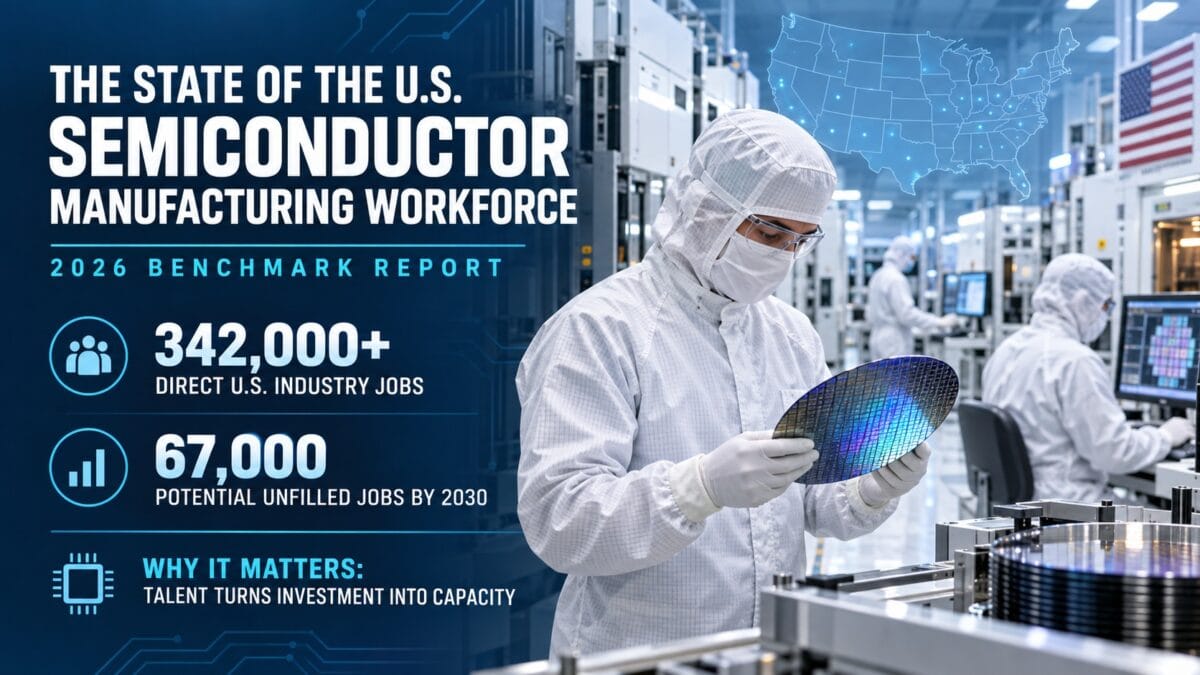
America’s semiconductor workforce is entering a decisive growth period, but employment capacity is not yet keeping pace with investment. New fabrication plants, packaging facilities, and supplier expansions are creating demand for thousands of engineers, technicians, operators, and skilled tradespeople. Whether the United States can recruit and train them will help determine whether its semiconductor expansion delivers lasting production capacity or merely a collection of expensive, understaffed facilities.
미국의 반도체 인력 시장이 결정적인 성장기에 진입하고 있으나, 고용 역량은 아직 투자를 따라가지 못하고 있습니다. 새로운 웨이퍼 제조 공장(파운드리), 패키징 시설, 그리고 협력사들의 확충으로 인해 수천 명의 엔지니어, 기술자, 오퍼레이터, 숙련된 기능공에 대한 수요가 창출되고 있습니다. 미국이 이들을 원활히 모집하고 훈련할 수 있는지가 반도체 산업 확장이 지속 가능한 생산 능력으로 이어질지, 아니면 단지 비용만 많이 들고 인력이 부족한 시설들의 집합으로 남을지를 결정하는 데 기여할 것입니다.
The 2026 baseline
Workforce totals vary according to what is counted. The Semiconductor Industry Association reports that the broader U.S. semiconductor industry—including manufacturing, design, research, and related functions—directly employs more than 342,000 people and supports over two million additional jobs. By comparison, Bureau of Labor Statistics data for May 2026 show approximately 180,000 employees in the narrower “semiconductor and related device manufacturing” category. The broader semiconductor and electronic-component manufacturing sector employed about 369,000 people.
전체 고용 인원은 무엇을 기준으로 집계하느냐에 따라 달라집니다. 반도체산업협회(Semiconductor Industry Association)에 따르면, 제조, 설계, 연구 및 관련 기능을 아우르는 미국의 광의의 반도체 산업은 34만 2,000명 이상을 직접 고용하고 있으며 200만 개 이상의 추가 일자리를 뒷받침하고 있습니다. 이에 비해 미 노동통계국(BLS)의 2026년 5월 데이터는 협의의 ‘반도체 및 관련 부품 제조업’ 분야의 종사자가 약 18만 명임을 보여줍니다. 광의의 반도체 및 전자부품 제조업 부문은 약 36만 9,000명을 고용했습니다.
These distinctions matter. The industry requires far more than workers inside wafer-fabrication plants. Its labor ecosystem includes chip designers, process and equipment engineers, software specialists, chemical and materials suppliers, construction trades, maintenance personnel, and advanced-packaging technicians.
이러한 구분은 중요합니다. 반도체 산업에는 웨이퍼 팹 내부의 인력보다 훨씬 더 많은 인재가 필요합니다. 노동 생태계에는 칩 설계자, 공정 및 장비 엔지니어, 소프트웨어 전문가, 화학 물질 및 소재 공급업체, 건설 기능공, 유지보수 인력, 그리고 첨단 패키징 기술자가 포함됩니다.
Investment is expanding the employment requirement. Federal incentives awarded through CHIPS for America were associated with projects expected to create more than 125,000 construction and permanent jobs, while semiconductor and electronics companies had announced nearly $450 billion in private investment by early 2025. Additional commitments followed, including Micron’s expanded plan to invest approximately $200 billion in U.S. manufacturing and research.
투자 확대로 인해 고용 수요 역시 늘어나고 있습니다. ‘미국을 위한 칩스법(CHIPS for America)’을 통해 집행된 연방 인센티브는 12만 5,000개 이상의 건설 및 정규직 일자리를 창출할 것으로 기대되는 프로젝트들과 연계되어 있으며, 반도체 및 전자 기업들은 2025년 초까지 약 450억 달러 규모의 민간 투자를 발표했습니다. 이후 마이크론(Micron)이 미국 내 제조 및 연구에 약 200억 달러를 투자하겠다는 확대 계획을 발표하는 등 추가적인 약속들이 이어졌습니다.
The central workforce gap
The most widely cited projection remains sobering. An SIA–Oxford Economics study estimated that the domestic semiconductor industry would add about 115,000 jobs between 2023 and 2030, increasing employment to roughly 460,000. Without corrective action, approximately 67,000—or 58 percent—of those new positions could remain unfilled.
가장 널리 인용되는 전망은 여전히 뼈아픈 현실을 보여줍니다. SIA와 옥스퍼드 이코노믹스(Oxford Economics)의 연구에 따르면, 국내 반도체 산업은 2023년부터 2030년 사이 약 11만 5,000개의 일자리를 추가하여 고용 인원을 약 46만 명으로 늘릴 것으로 추정되었습니다. 시정 조치가 이루어지지 않을 경우, 이 신규 일자리의 약 67,000개(58%)가 채워지지 않은 상태로 남을 수 있습니다.
The projected shortfall includes approximately 27,300 engineers, 26,400 technicians, and 13,400 computer scientists. This is not simply a shortage of advanced-degree researchers. A large portion of the risk sits in technician and skilled-production roles that can be accessed through associate degrees, certificates, apprenticeships, military experience, or employer-based training.
예상되는 인력 부족분에는 약 2만 7,300명의 엔지니어, 2만 6,400명의 기술자, 1만 3,400명의 컴퓨터 과학자가 포함됩니다. 이는 단순히 고학력 연구원 부족의 문제가 아닙니다. 위험 요인의 큰 부분은 준학사 학위, 수료증, 도제 제도, 군 경력, 또는 고용주 기반 교육을 통해 접근할 수 있는 기술자 및 숙련 생산직 역할에 자리 잡고 있습니다.
Hiring conditions also reveal a mismatch between demand and preparation. NIST reported that advertised salaries for semiconductor positions rose by more than 35 percent after passage of the CHIPS Act. Yet employers continue to report difficulty finding candidates with experience in cleanroom procedures, vacuum systems, robotics, industrial maintenance, statistical process control, chemistry, and precision manufacturing.
채용 여건 역시 수요와 준비 상태 사이의 불일치를 보여줍니다. 미국 국립표준기술원(NIST)은 반도체 직무의 구인 광고 급여가 칩스법 통과 이후 35% 이상 상승했다고 보고했습니다. 그러나 고용주들은 클린룸 절차, 진공 시스템, 로보틱스, 산업용 유지보수, 통계적 공정 관리, 화학, 정밀 제조 분야의 경험을 갖춘 지원자를 찾는 데 계속해서 어려움을 겪고 있다고 호소합니다.
Geography intensifies the challenge. Semiconductor growth is concentrated in regional clusters—including Arizona, Texas, New York, Ohio, Idaho, Oregon, and upstate New York—where companies often compete for the same limited supply of engineers and technicians. New facilities also depend on housing, transportation, childcare, and community infrastructure. A technically qualified worker who cannot relocate or manage rotating shifts is not an accessible worker.
지리적 요인은 이러한 어려움을 가중시킵니다. 반도체 성장은 애리조나, 텍사스, 뉴욕, 오하이오, 아이다호, 오리건, 뉴욕주 북부 등의 지역 클러스터에 집중되어 있으며, 이곳에서 기업들은 한정된 소수의 엔지니어와 기술자 인력을 두고 서로 경쟁하곤 합니다. 새로운 시설들은 또한 주택, 교통, 보육, 지역사회 인프라에도 의존합니다. 이사하거나 교대 근무를 소화할 수 없는 기술 자격 보유자는 곧 활용 가능한 노동자가 아닙니다.
What is improving
The workforce response is becoming more practical and localized. Community colleges are developing short-term semiconductor certificates and technician degrees. Universities are expanding microelectronics research and engineering programs. Employers are supporting apprenticeships, internships, equipment-specific training, and tuition assistance. Federal initiatives are also treating workforce development as part of industrial capacity rather than as a separate education issue.
인력 공급 측면의 대응은 더욱 실용적이고 지역 맞춤형으로 진화하고 있습니다. 지역 전문대학(커뮤니티 칼리지)들은 단기 반도체 수료 과정과 기술자 학위 과정을 개발하고 있습니다. 대학들은 마이크로전자공학 연구 및 엔지니어링 프로그램을 확대하고 있습니다. 고용주들은 도제 제도, 인턴십, 장비 맞춤형 교육, 학비 보조를 지원하고 있습니다. 연방 차원의 이니셔티브들 역시 인력 개발을 별개의 교육 문제가 아닌 산업 역량의 일부로 다루고 있습니다.
The strongest programs connect training directly to actual jobs. They involve employers in curriculum design, provide hands-on access to relevant equipment, recognize transferable military and manufacturing skills, and offer paid work-based learning. They also widen recruitment to women, veterans, rural communities, and groups historically underrepresented in technical occupations.
가장 우수한 프로그램들은 교육을 실제 일자리와 직접 연결합니다. 이들은 고용주를 커리큘럼 설계에 참여시키고, 관련 장비를 직접 다룰 수 있는 실습 기회를 제공하며, 이전 가능한 군 경력 및 제조 기술을 인정하고, 유급 현장 학습을 제공합니다. 또한 여성, 퇴역 군인, 농어촌 지역 사회, 그리고 기술 직군에서 역사적으로 소외되었던 계층으로 채용 저변을 넓히고 있습니다.
Why it matters
Semiconductor plants cannot operate on capital alone. A fabrication facility is productive only when skilled people can install, calibrate, maintain, and continuously improve its extraordinarily complex equipment.
반도체 공장은 자본만으로 가동될 수 없습니다. 제조 시설은 숙련된 인력이 극도로 복잡한 장비를 설치, 보정, 유지보수하고 지속적으로 개선할 수 있을 때 비로소 생산성을 발휘합니다.
Failure to close the workforce gap would delay factory ramp-ups, raise operating costs, and weaken returns on public and private investment. It could also leave the United States dependent on overseas production for chips essential to artificial intelligence, communications, vehicles, energy systems, medical equipment, and defense.
인력 공백을 메우지 못한다면 공장 가동 지연, 운영 비용 상승, 공공 및 민간 투자의 수익률 저하로 이어질 것입니다. 또한 이는 미국을 인공지능, 통신, 자동차, 에너지 시스템, 의료 장비, 국방에 필수적인 칩 생산을 해외에 의존하는 상태로 남겨둘 수 있습니다.
Bottom line: Success would deliver more than additional jobs. It would create durable regional career pathways, strengthen supply-chain resilience, accelerate innovation, and convert historic investment into real manufacturing capability. In 2026, workforce development is therefore not a supporting component of semiconductor policy. It is one of the principal measures by which that policy will succeed or fail.
요약하자면, 성공은 단순히 일자리를 늘리는 것 이상의 의미를 가집니다. 그것은 지속 가능한 지역별 경력 경로를 구축하고, 공급망 회복력을 강화하며, 혁신을 가속하고, 역사적인 투자를 실제 제조 역량으로 전환할 것입니다. 따라서 2026년 현재 인력 개발은 반도체 정책의 부수적인 구성 요소가 아닙니다. 그것은 해당 정책의 성공과 실패를 가르는 가장 핵심적인 척도 중 하나입니다.



