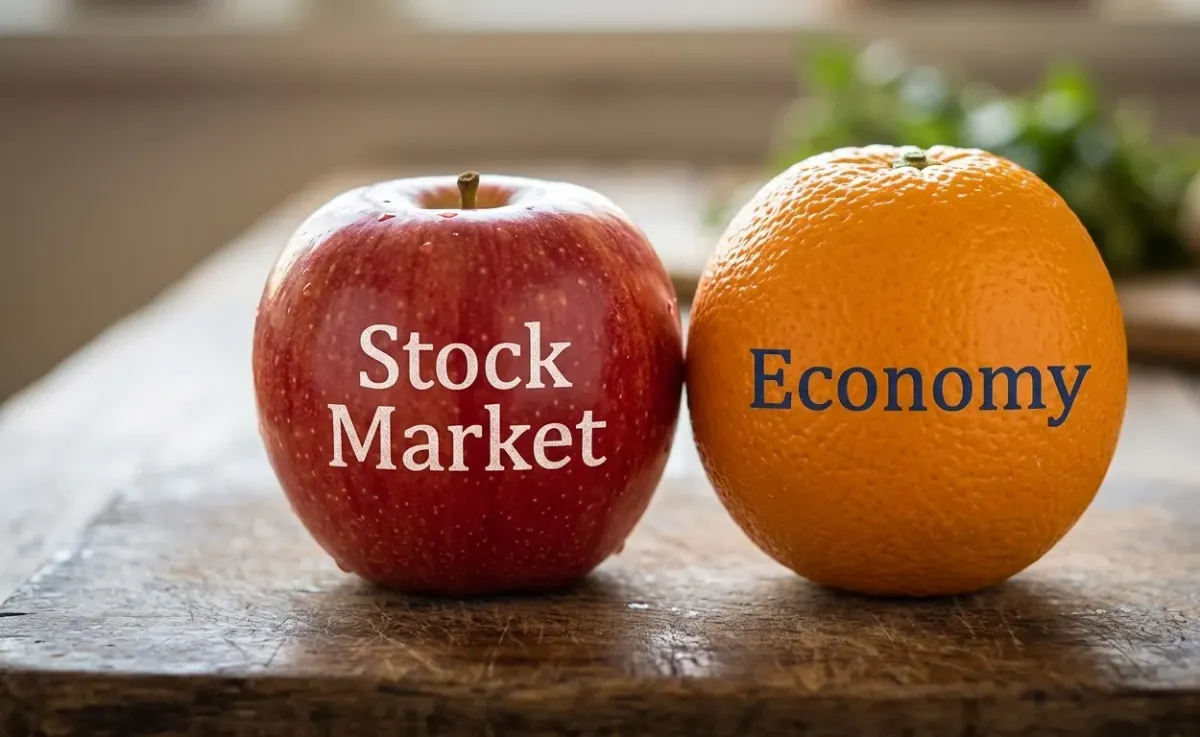
The stock market ≠ the economy ✋
Source: https://www.tker.co/p/the-stock-market-is-not-the-economy-2026
Sure, the stock market is more like the economy than it’s like… a banana.
물론 주식 시장은… 바나나보다는 경제에 가깝습니다.
But in the context of a nuanced discussion of finance and macroeconomics, the stock market is not the economy.
하지만 금융과 거시경제에 대한 세밀한 논의에 있어서, 주식 시장이 곧 경제는 아닙니다.
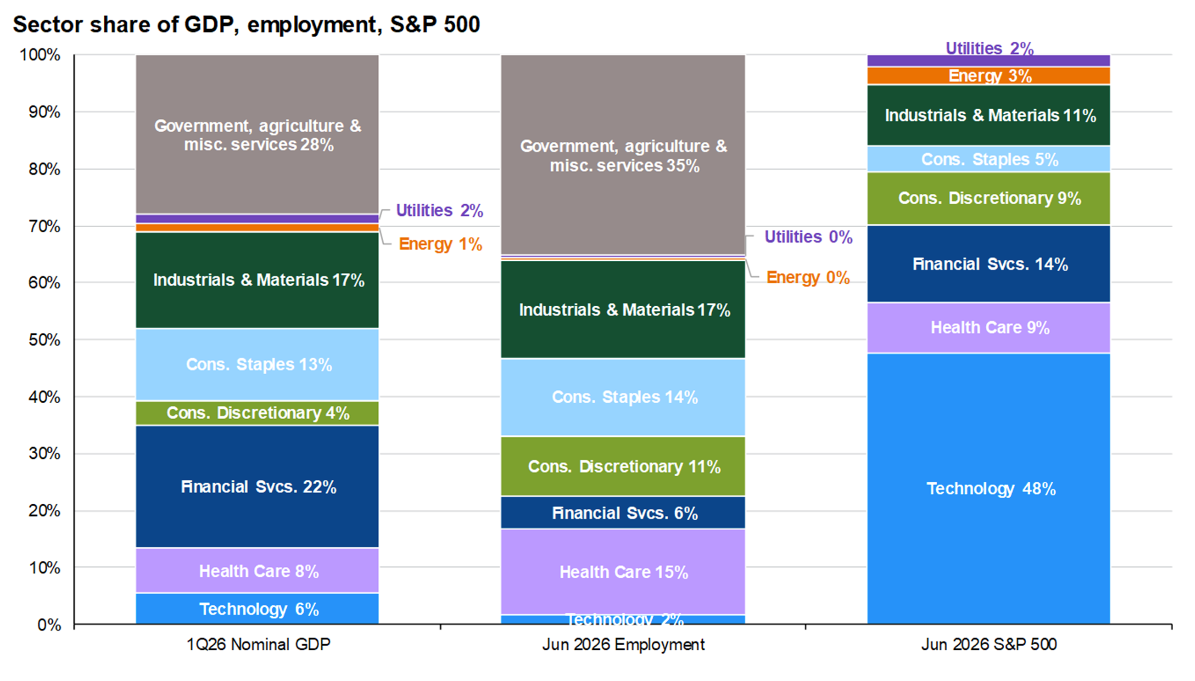
Ritholtz Wealth Management’s Ben Carlson shared this helpful visual on Tuesday’s Animal Spirits podcast. The chart, published by JPMorgan Asset Management, shows a sector breakdown of GDP, employment, and the S&P 500 (which covers 80% of the U.S. stock market).
리톨츠 웰스 매니지먼트(Ritholtz Wealth Management)의 벤 칼슨(Ben Carlson)은 화요일 '애니멀 스피릿(Animal Spirits)' 팟캐스트에서 유용한 시각 자료를 공유했습니다. JP모건 자산운용이 발표한 이 차트는 GDP, 고용, 그리고 S&P 500(미국 주식 시장의 80%를 차지)의 섹터별 비중을 보여줍니다.
I have four observations about this discrepancy:
- Government: The S&P consists exclusively of publicly traded corporations. GDP and employment, which cover the entire U.S. economy, include the extensive activities of the massive U.S. government.
- Two angles on the economy: GDP includes only financial measures of the economy, so it doesn’t tell you much about the labor market directly. This is why the NBER’s definition of economic activity, which includes changes in employment, is arguably advantageous. That said, the sector breakdowns of GDP and employment are relatively similar.
- International: This isn’t stated in the graphic, but S&P 500 companies generate about 30%-40% of their revenue outside of the U.S., which means a large share of the stock market reflects international economic activity. In the U.S. economy, you could argue this is sorta similar to the import and export activity conducted by U.S. businesses, but net trade is relatively small at about 3% of GDP.
- Tech: One of the more glaring differences between the stock market and the economy is that the tech sector accounts for about half of the S&P, but a tiny share of GDP and employment. This is why the many headlines about tech layoffs in the financial press in recent years appeared to conflict with the broad labor market, which has been resilient during the period.
이러한 차이에 대해 네 가지 관찰 결과를 정리해 보았습니다.
- 정부 부문: S&P 500은 상장 기업들로만 구성됩니다. 반면 미국 경제 전체를 다루는 GDP와 고용에는 거대한 미국 정부의 광범위한 활동이 포함됩니다.
- 경제에 대한 두 가지 관점: GDP는 경제의 재무적 측정 수치만 포함하므로 노동 시장을 직접적으로 자세히 보여주지는 못합니다. 이것이 바로 고용 변화를 포함하는 전미경제연구소(NBER)의 경제 활동 정의가 유용하다고 평가받는 이유입니다. 다만 GDP와 고용의 섹터별 비중은 비교적 유사한 편입니다.
- 국제적 요소: 이 그래픽에 명시되어 있지는 않지만, S&P 500 기업들은 매출의 약 30%~40%를 미국 외 지역에서 창출합니다. 이는 주식 시장의 큰 비중이 해외 경제 활동을 반영한다는 것을 의미합니다. 미국 경제 측면에서는 이를 미국 기업들의 수출입 활동과 비슷하다고 볼 수도 있겠지만, 순무역(무역수지)은 GDP의 약 3% 수준으로 비교적 적은 편입니다.
- 테크 부문: 주식 시장과 경제의 가장 눈에 띄는 차이점 중 하나는 테크(IT) 섹터가 S&P 500의 약 절반을 차지하는 반면, GDP와 고용에서 차지하는 비중은 극히 일부분이라는 점입니다. 이것이 최근 몇 년간 금융 언론에 쏟아진 테크 기업 해고 관련 헤드라인들이 같은 기간 견조한 흐름을 보인 광범위한 노동 시장 상황과 대비되어 보였던 이유입니다.
That said, the stock market and the economy are intertwined in countless ways. This is why the stock market often — but not always — struggles during recessions.
그럼에도 불구하고 주식 시장과 경제는 수많은 방식으로 얽혀 있습니다. 그렇기 때문에 주식 시장은 경기 침체기에 매번은 아니더라도 자주 고전을 면치 못하곤 합니다.
But you should be careful about jumping to conclusions about the stock market because of an alarming headline about the economy, and vice versa. Because the stock market is not the economy.
하지만 경제에 대한 우려스러운 헤드라인 하나만 보고 주식 시장에 대해 섣불리 결론을 내리거나, 그 반대로 행동하는 것은 경계해야 합니다. 주식 시장은 경제가 아니기 때문입니다.
Related from TKer:
- It’s too ambiguous to just say ‘the economy’ 🤦🏻♂️
- Where in the world do S&P 500 companies do business? 🗺️
- You don’t have to look outside U.S. stocks for international exposure 🌎
- Why mass tech layoffs have little effect on total employment 💾
- The stock market’s history with recessions 📉
Review of the macro crosscurrents 🔀
📈The stock market rallied to all-time highs, with the S&P 500 setting an intraday high of 7,844.52 and a closing high of 7,818.93 on Tuesday. The index ended the week at 7,811.54, up 14.1% year-to-date. For market insights, check out the Stock Market tab at TKer. »
📈 주식 시장이 사상 최고치로 반등했습니다. S&P 500 지수는 화요일 장중 최고치인 7,844.52와 종가 기준 최고치인 7,818.93을 기록했습니다. 지수는 연초 대비(YTD) 14.1% 상승한 7,811.54로 한 주를 마감했습니다. 더 자세한 시장 인사이트는 TKer의 Stock Market 탭을 확인해 보세요. »
There were several notable data points and macroeconomic developments since our last review:
지난번 검토 이후 주목할 만한 몇 가지 데이터 포인트와 거시경제 동향이 있었습니다.
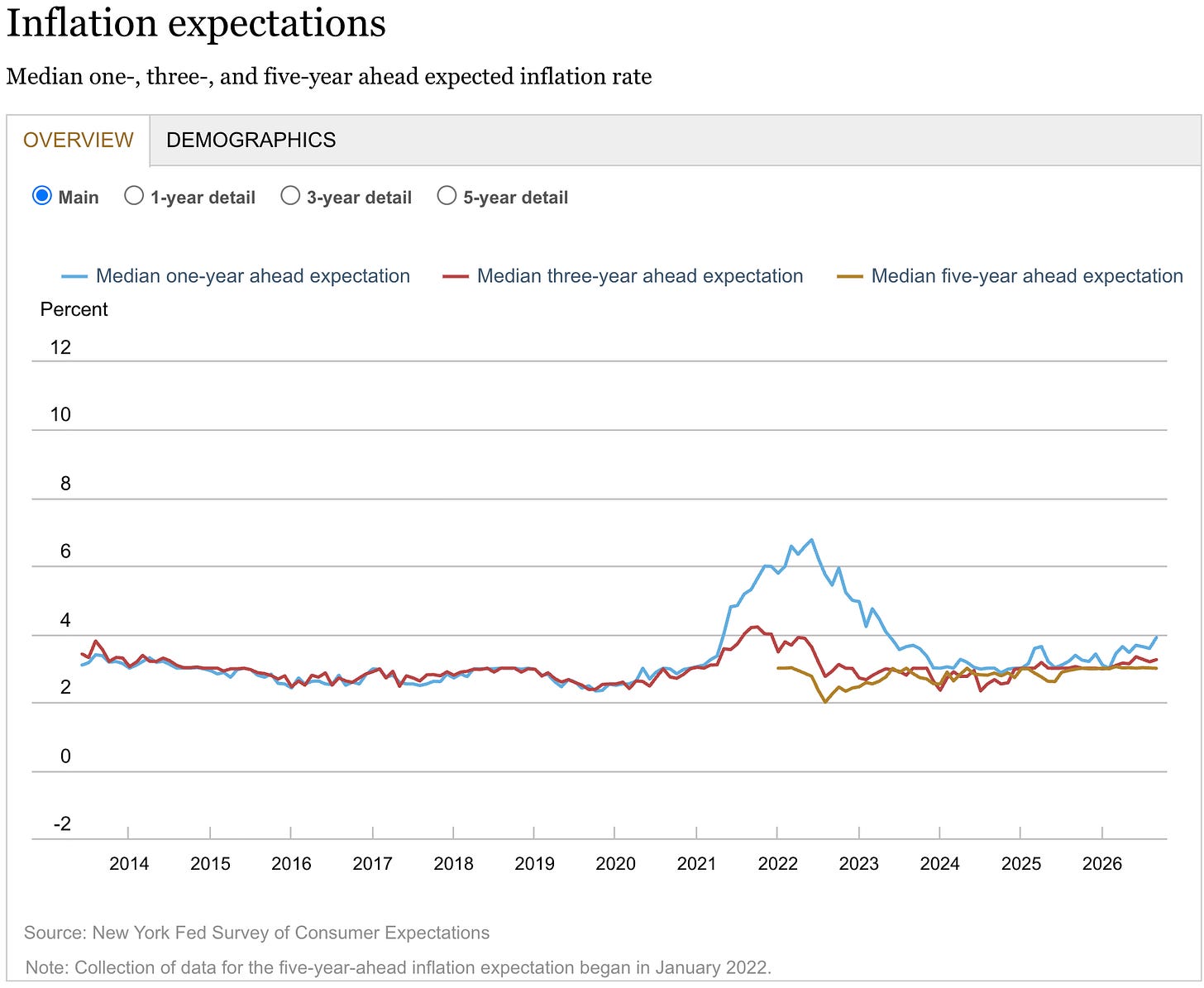
🎈 Inflation expectations heat up. From the New York Fed’s September Survey of Consumer Expectations: “Median inflation expectations increased by 0.3 percentage point to 3.9% at the one-year-ahead horizon and by 0.1 percentage point to 3.3% at the three-year-ahead horizon. Median inflation expectations were unchanged at the five-year-ahead horizon at 3.0%. This is the highest reading for the one-year-ahead inflation expectations since May 2023.”
🎈 인플레이션 기대심리 과열. 뉴욕 연방준비은행의 9월 소비자 기대 조사(Survey of Consumer Expectations)에 따르면: "중위 인플레이션 기대심리는 1년 단기 전망에서 0.3%포인트 상승한 3.9%를, 3년 중기 전망에서 0.1%포인트 상승한 3.3%를 기록했습니다. 5년 장기 전망에서의 중위 인플레이션 기대심리는 3.0%로 변동이 없었습니다. 이는 1년 단기 인플레이션 기대치 기준으로 2023년 5월 이후 가장 높은 수치입니다."
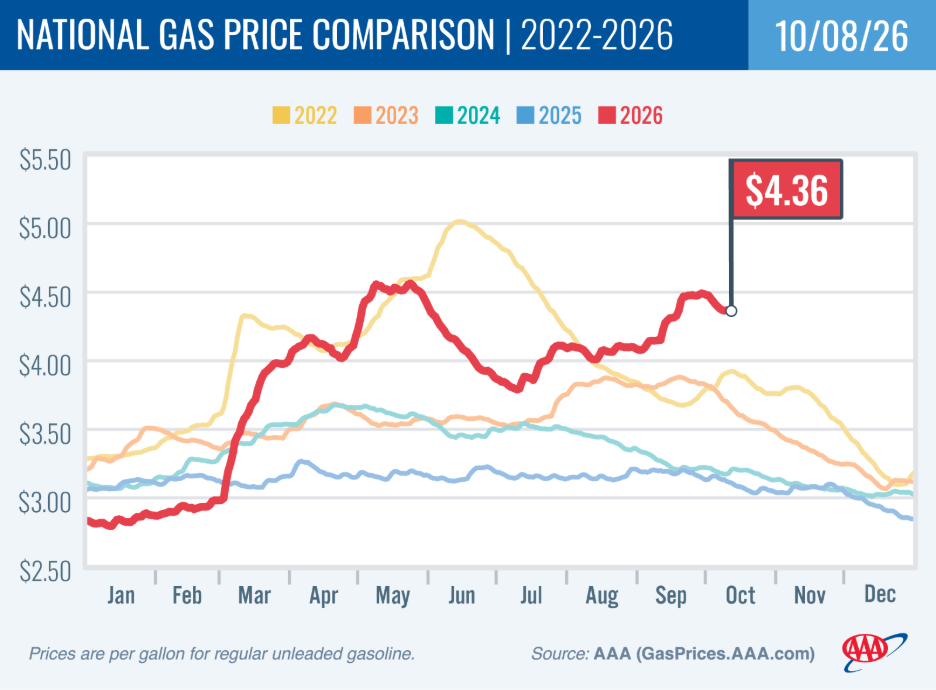
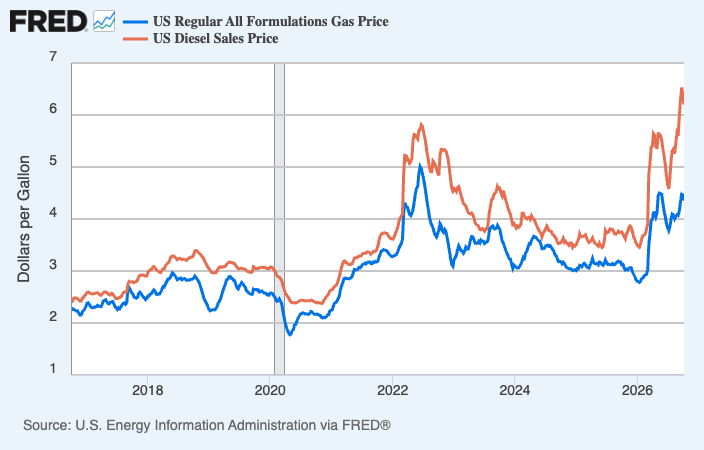
⛽️ Gas prices tick lower, but remain high. From AAA: “Gas prices remain the highest they’ve ever been for this time of year. Even though the national average dropped 5 cents this past week to $4.36, pump prices remain at record highs for autumn. This is the first year the national average has been above $4 per gallon in October. After dipping into the $80 per barrel range for several days, crude oil is back above $90 per barrel. Hurricane Isaias is another factor that could affect gas prices if oil production and refineries in the region are impacted.”
⛽️ 휘발유 가격 소폭 하락했으나 여전히 높은 수준. AAA(미국자동차협회)에 따르면: "휘발유 가격은 연중 이 시기 기준으로 역대 가장 높은 수준을 유지하고 있습니다. 지난주 전국 평균 가격이 갤런당 4.36달러로 5센트 하락했음에도 불구하고, 주유소 가격은 가을철 기준 최고 기록을 유지 중입니다. 10월에 전국 평균 가격이 갤런당 4달러를 넘어선 것은 올해가 처음입니다. 원유 가격은 며칠 동안 배럴당 80달러 선으로 내려앉은 후 다시 배럴당 90달러 위로 올라섰습니다. 허리케인 이사이아스(Isaias) 역시 해당 지역의 원유 생산과 정유 시설에 영향을 미칠 경우 휘발유 가격에 변수로 작용할 수 있습니다."
Here’s a longer-term look at the trajectory of gas and diesel prices, as tracked by the EIA.
다음은 미 에너지정보청(EIA)이 집계한 휘발유 및 디젤 가격의 장기적 추이입니다.
For more on energy prices, read: Our love-hate relationship with rising oil prices in charts 💔🛢️📊
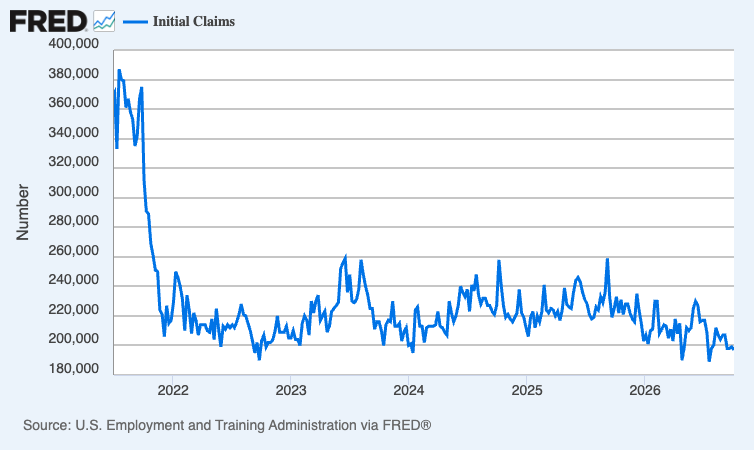
💼 New unemployment insurance claims, total ongoing claims remain low. Initial claims for unemployment benefits ticked down to 197,000 during the week ending Oct. 3, down from 199,000 the week prior. This metric remains at levels historically associated with economic growth.
💼 신규 실업보험 청구 건수와 총 지속 청구 건수는 여전히 낮은 수준. 10월 3일로 끝난 주간의 신규 실업수당 청구 건수는 전주의 199,000건에서 197,000건으로 소폭 감소했습니다. 이 지표는 여전히 역사적으로 경제 성장에 부합하는 낮은 수준을 유지하고 있습니다.
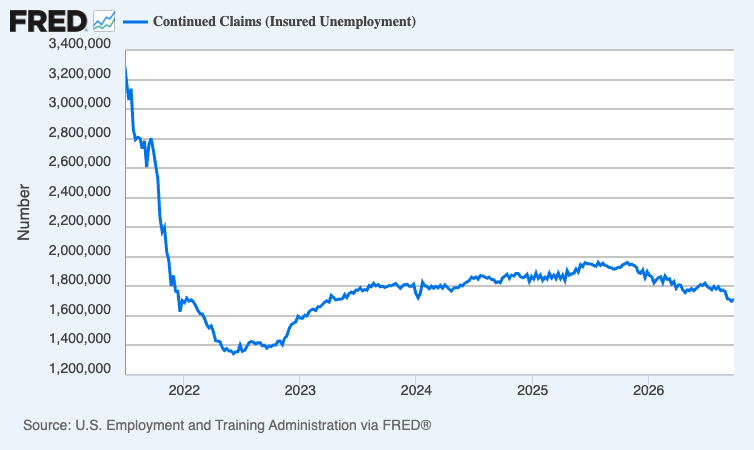
Insured unemployment, which captures those who continue to claim unemployment benefits, ticked up to 1.72 million during the week ending Sept. 26.
지속적으로 실업수당을 받는 이들을 집계하는 피보험 실업자 수(Insured unemployment)는 9월 26일로 끝난 주간에 1,720,000명으로 소폭 증가했습니다.
For more on the labor market, read: Why mass tech layoffs have little effect on total employment 💾
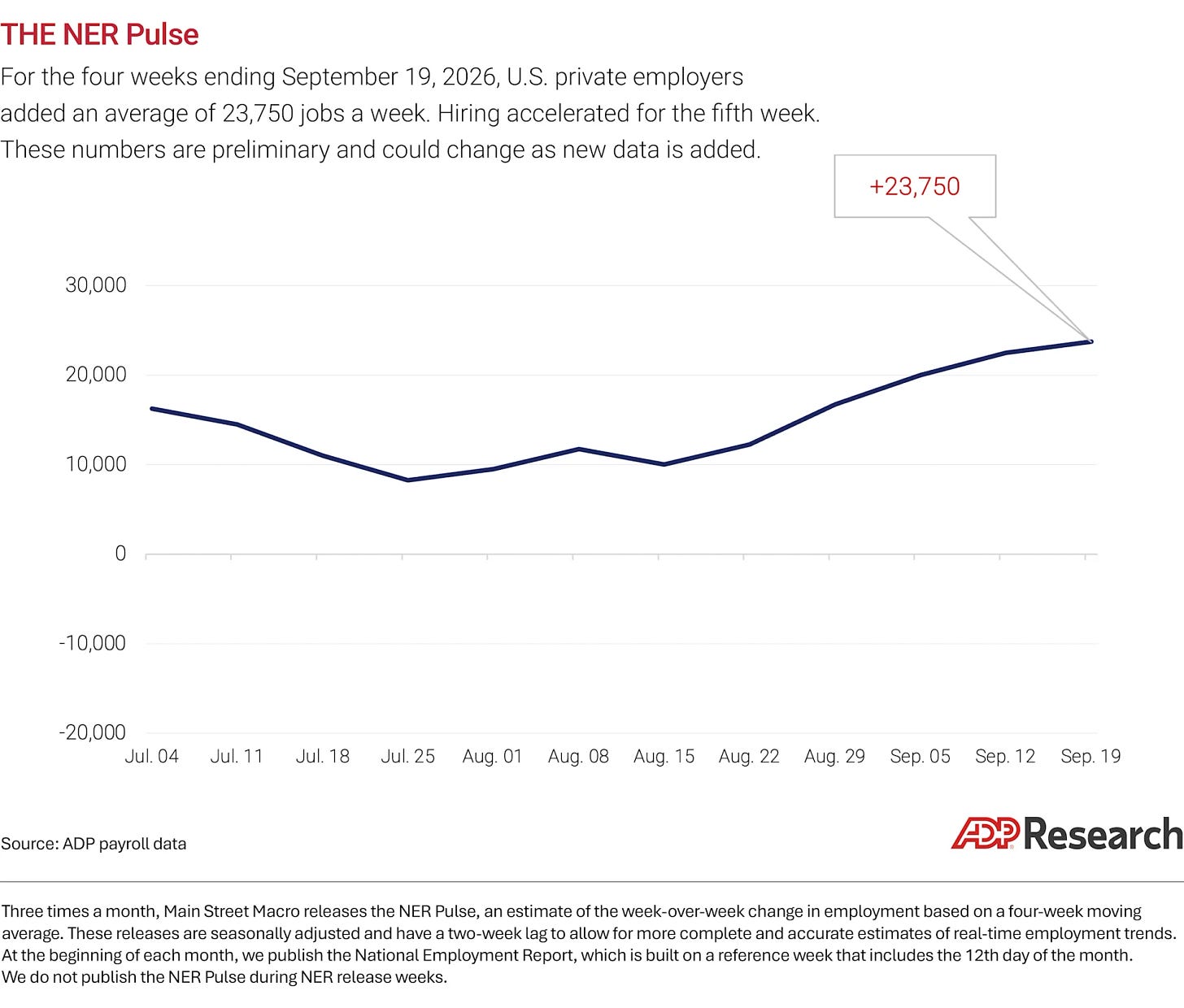
🤔 Recent private job growth is picking up. According to payroll processor ADP, private U.S. employers added 23,750 jobs in the four weeks ending Sept. 19.
🤔 최근 민간 일자리 증가세 반등. 급여 계산 처리 업체 ADP에 따르면, 9월 19일로 끝난 4주 동안 미국 민간 기업들은 23,750개의 일자리를 창출했습니다.
For more on the labor market, read: Things are looking up in the labor market 👍
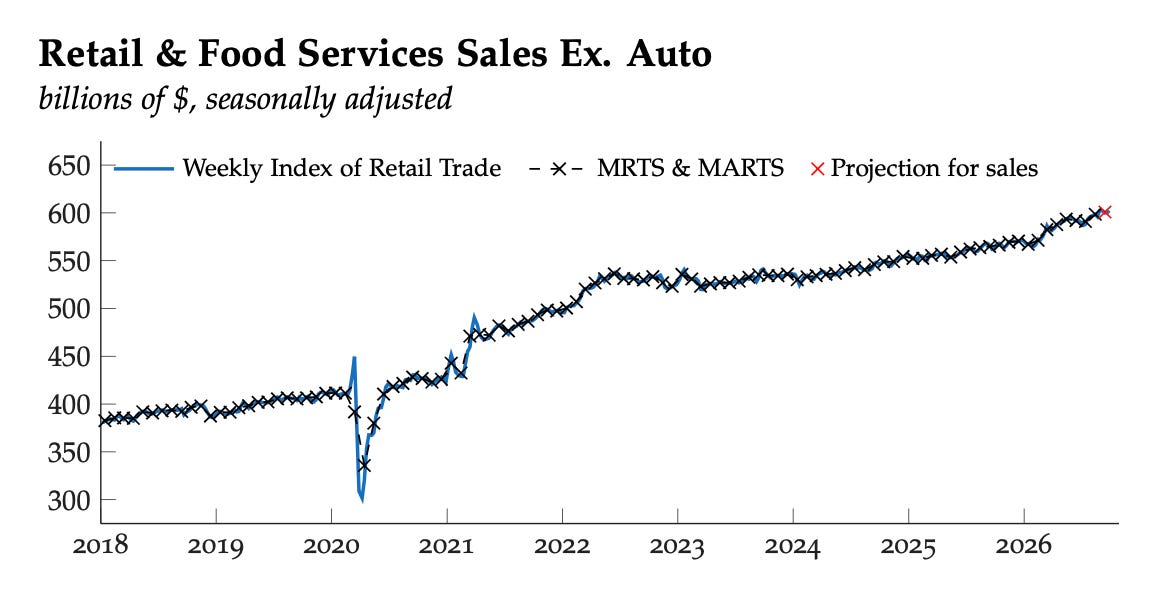
🛍️ Retail sales may have cooled last month. According to the Chicago Fed’s Advance Retail Trade Summary, sales rose 0.4% in September. Adjusted for inflation, sales were down 0.7% from the prior period.
🛍️ 지난달 소매 판매 둔화 가능성. 시카고 연방준비은행의 소매 판매 속보치(Advance Retail Trade Summary)에 따르면 9월 소매 판매는 0.4% 증가했습니다. 그러나 물가 상승을 반영한 실질 소매 판매는 이전 기간 대비 0.7% 감소했습니다.
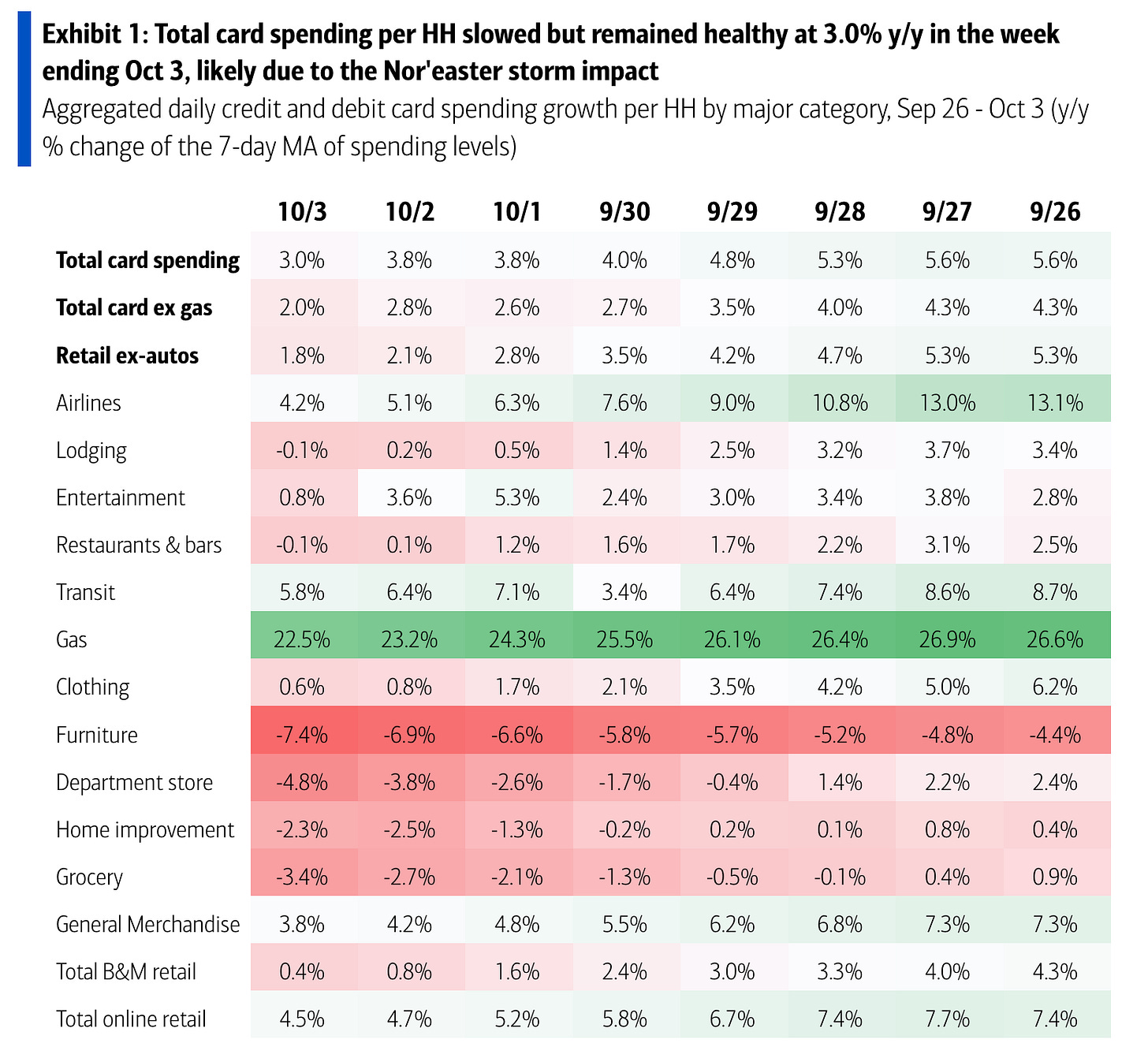
💳 Card spending data is holding up. From BofA: “Total card spending per HH was up 3.0% y/y in the week ending Oct 3, according to BAC aggregated credit & debit card data. The Nor’easter storm likely contributed to the broad-based moderation in spending growth. Lower-income spending growth continued to outpace higher-income in the week ending Oct 3.”
💳 카드 지출 데이터는 견조한 흐름 유지. 뱅크오브아메리카(BofA)에 따르면: "BofA의 신용카드 및 체크카드 집계 데이터 기준, 10월 3일로 끝난 주간의 가구당 총 카드 지출은 전년 동기 대비 3.0% 증가했습니다. 노리스터(Nor'easter) 폭풍 영향으로 지출 증가세가 전반적으로 완화되었을 가능성이 있습니다. 10월 3일로 끝난 주간에도 저소득층의 지출 증가율은 고소득층을 계속해서 앞질렀습니다."
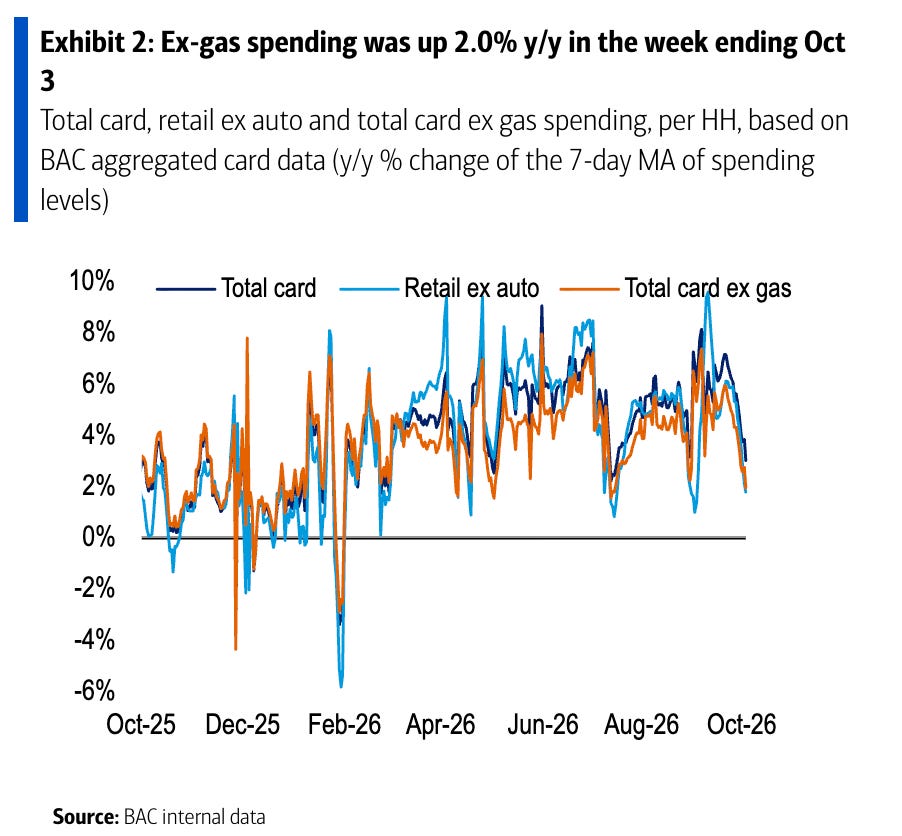
Consumer spending data has looked a lot better than consumer sentiment readings. For more on this contradiction, read: We’re taking that vacation whether we like it or not 🛫 and Household finances are both ‘worse’ and ‘good’ 🌦️
소비자 지출 데이터는 소비자 심리지수 수치보다 훨씬 긍정적인 모습을 보이고 있습니다. 이러한 모순에 대한 자세한 내용은 다음 글을 참고하세요: 좋든 싫든 우리는 휴가를 떠난다 🛫 및 가계 재정 상태는 '악화'되었으면서도 '양호'하다 🌦️
👎 Consumer vibes are in the dumps. From the University of Michigan’s October Surveys of Consumers: “While year-ahead expectations for personal finances and business conditions crept up slightly, buying conditions for durables plummeted amid high prices and borrowing costs.”
👎 소비자 심리가 곤두박질치고 있습니다. 미시간 대학교의 10월 소비자 조사에 따르면: "개인 재정 상태와 경기 상황에 대한 향후 1년 전망은 소폭 상승했지만, 내구재 구매 여건은 높은 물가와 대출 금리로 인해 급락했습니다."
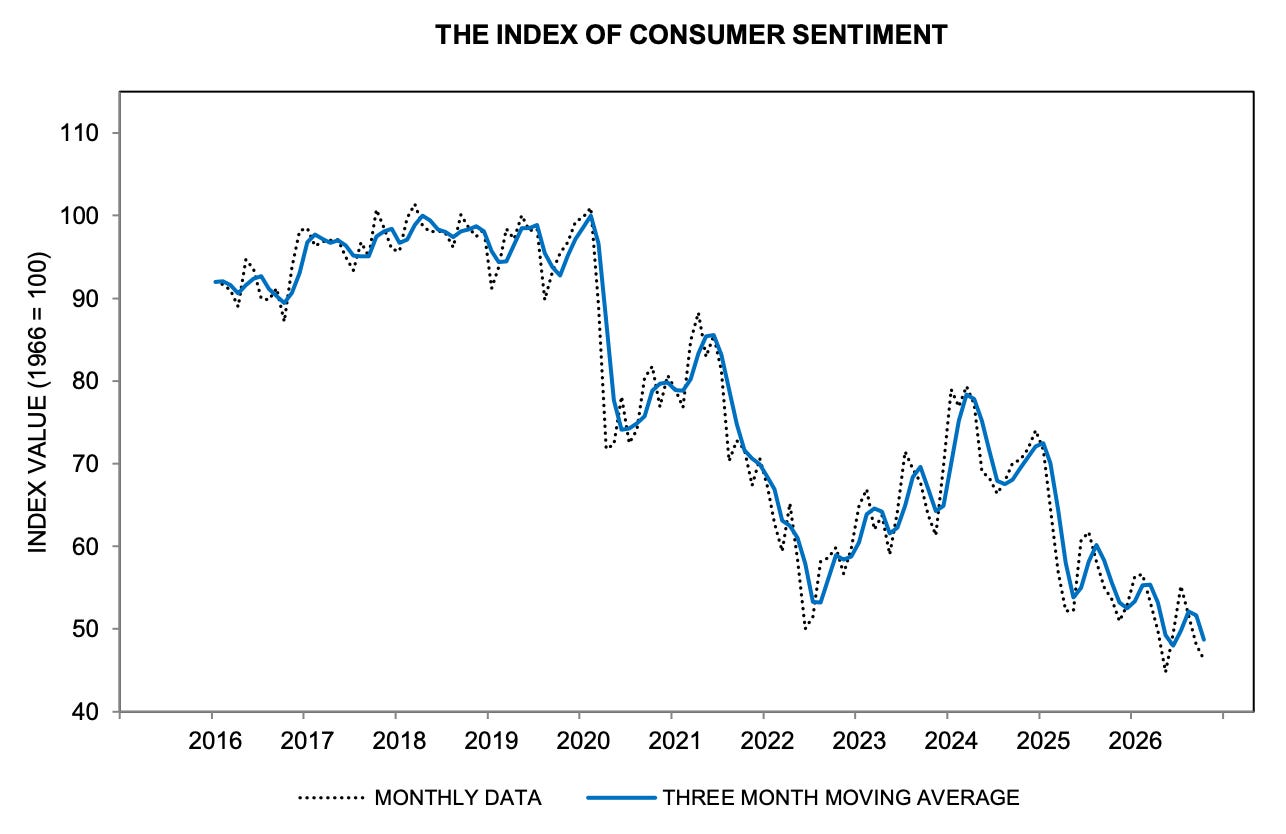
More from the report: “Increases in sentiment among Democrats and Republicans were offset by a decline among independents this month. Overall, sentiment for lower-income consumers and those with smaller stock porfolios dropped steeply this month, groups that have fewer resources to weather increases in prices. Frustration over cost-of-living continues to mount, as consumers across the political spectrum believe that the trajectory of the economy has weakened since the beginning of the year.“
보고서의 추가 내용: "이번 달 민주당원과 공화당원의 심리 개선은 무소속층의 하락세로 상쇄되었습니다. 전반적으로 이번 달에는 물가 상승을 버틸 여력이 적은 저소득층과 주식 포트폴리오 규모가 작은 그룹에서 심리지수가 급격히 떨어졌습니다. 모든 정치 성향에 걸쳐 소비자들이 올해 초 이후 경제 상황이 악화되었다고 믿으면서, 생활비 부담에 대한 불만이 계속해서 커지고 있습니다."
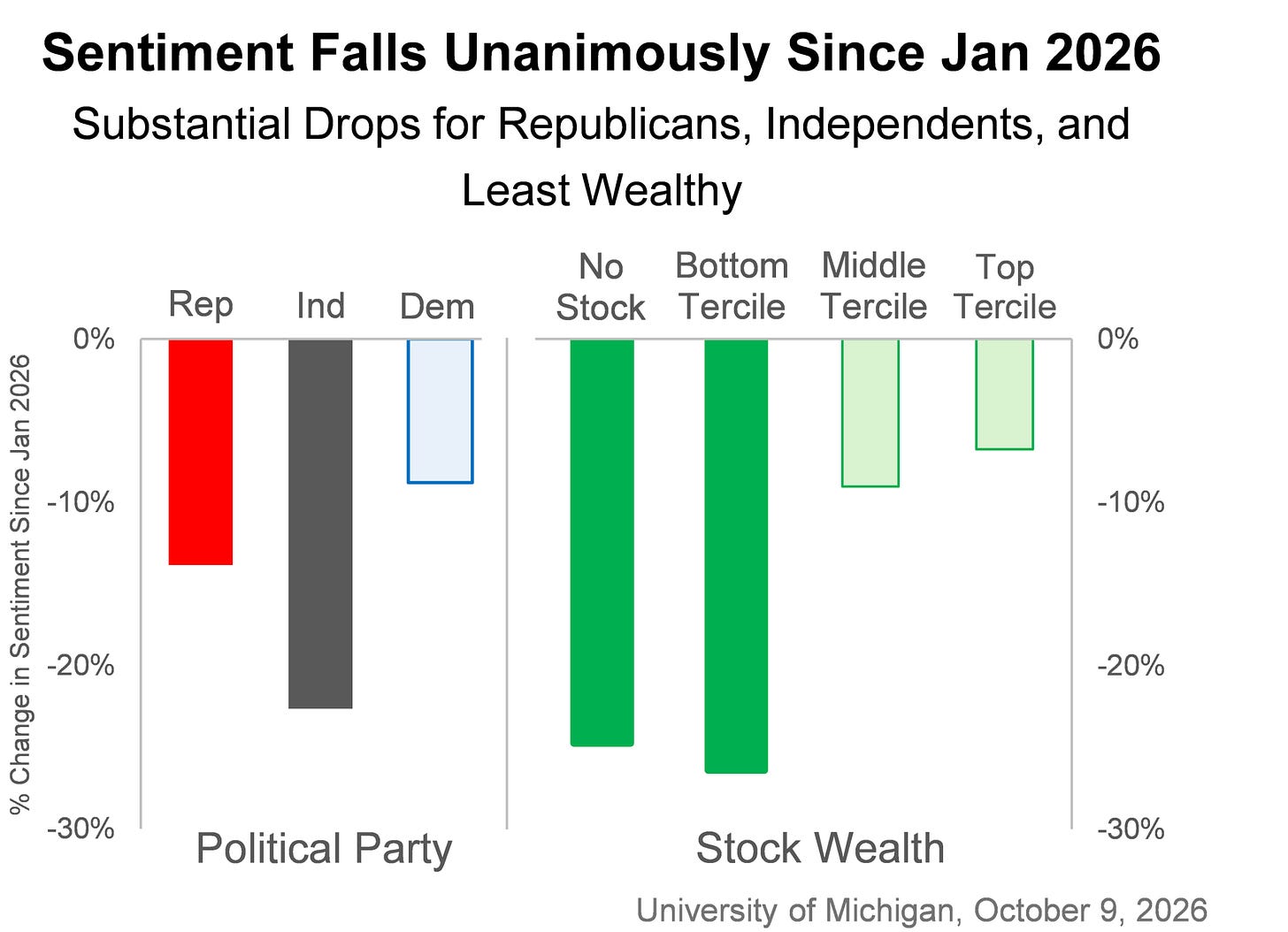
For more on consumer sentiment, read: What consumers do > what consumers say 🙊
🏠 Mortgage rates rise. According to Freddie Mac, the average 30-year fixed-rate mortgage rose to 7.4%, up from 7.28% last week. This is the highest average rate since Nov. 2023.
🏠 모기지 금리 상승. 프레디 맥(Freddie Mac)에 따르면, 평균 30년 고정금리 모기지(주택담보대출) 금리는 지난주 7.28%에서 7.4%로 올랐습니다. 이는 2023년 11월 이후 가장 높은 평균 금리입니다.
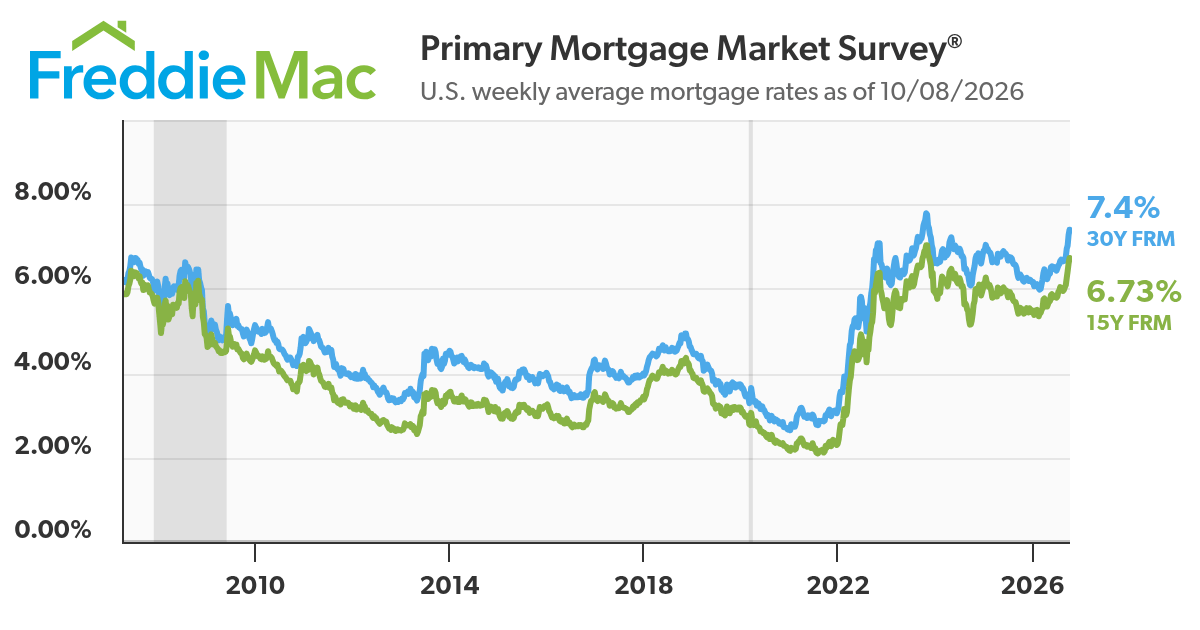
As of Q2, there were 149.5 million housing units in the U.S., of which 87.0 million were owner-occupied and about 40% were mortgage-free. Of those carrying mortgage debt, almost all have fixed-rate mortgages, and most of those mortgages have rates that were locked in before rates surged from 2021 lows. All of this is to say: Most homeowners are not particularly sensitive to the weekly movements in home prices or mortgage rates.
2분기 기준 미국의 주택 수는 1억 4,950만 채로, 이 중 8,700만 채는 자가 가구가 점유하고 있으며 약 40%는 대출(모기지)이 없는 상태입니다. 모기지 부채를 안고 있는 가구 중 대부분은 고정금리 모기지를 이용 중이며, 그중 다수는 2021년 저점 이후 금리가 급등하기 전에 확정된 금리를 유지하고 있습니다. 결론적으로, 대부분의 주택 소유자는 주택 가격이나 모기지 금리의 주간 변동에 그리 민감하게 반응하지 않는다는 의미입니다.
For more on mortgages and home prices, read: Why home prices and rents are creating all sorts of confusion about inflation 😖
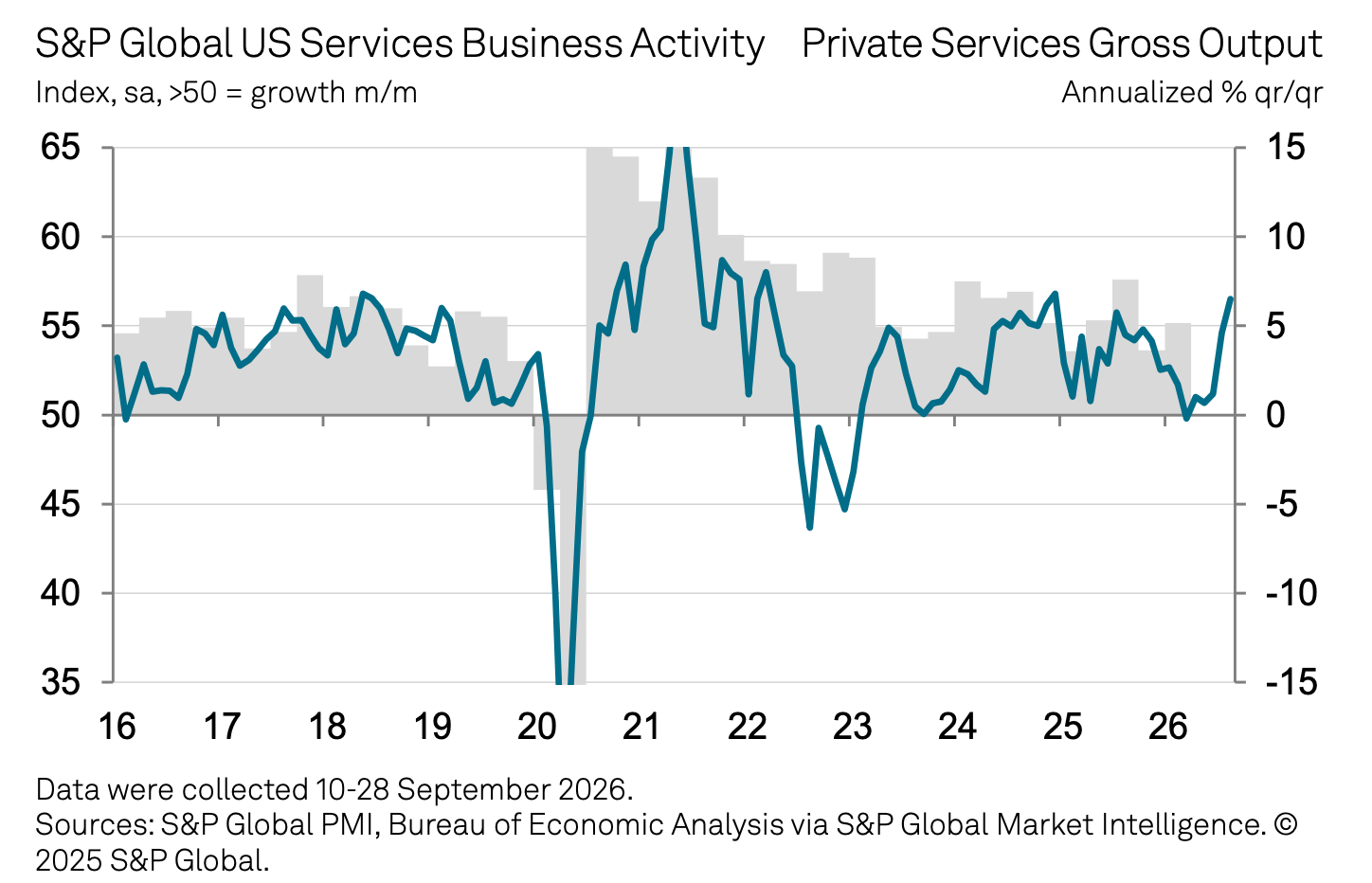
⌨️ Services activity surveys signal growth. From S&P Global’s September U.S. Services PMI: “September has seen US business growth surge to its highest for over five years, with rising demand and improved optimism encouraging firms to take on workers at a pace not seen for over four years. Combined with the encouragingly solid manufacturing PMI, the strong service sector expansion points to economic growth of around 4% in the third quarter and 5% in September alone, the latter hinting at accelerating momentum into the fourth quarter. New orders and backlogs of work are rising at increased rates and growth expectations have recovered to a one-year high, adding to the sense of an economy picking up further pace in the near term. Tech companies are reporting by far the strongest growth but the rising tide is now lifting all boats as far as the major sectors are concerned, with accelerating growth also reported for consumer-facing businesses as well as industrials and healthcare, alongside sustained solid growth in financial services.”
⌨️ 서비스업 활동 설문조사, 성장 신호 지속. S&P 글로벌의 9월 미국 서비스업 PMI에 따르면: "9월 미국 기업들의 성장세는 5년여 만에 최고치로 치솟았습니다. 수요 증가와 심리 개선에 힘입어 기업들은 4년여 만에 가장 빠른 속도로 인력을 채용하고 있습니다. 견조한 제조업 PMI와 결합하여, 강한 서비스업 확장세는 3분기 약 4%, 9월 한 달 동안은 5%의 경제 성장을 가리키고 있으며, 후자는 4분기까지 모멘텀이 가속화될 것임을 시사합니다. 신규 주문과 작업 잔량(수주 잔고)이 가속화된 속도로 증가하고 있으며 성장 전망 수치는 1년 만에 최고치로 회복되어, 단기적으로 경제가 더욱 속도를 낼 것이라는 느낌을 더해줍니다. 테크 기업들이 단연 가장 강력한 성장을 보고하고 있지만, 주요 섹터 전반에 걸쳐 성장세가 확산되고 있습니다. 금융 서비스의 지속적인 견조한 성장과 함께 소비자 대상 비즈니스, 산업재, 헬스케어에서도 성장 가속화가 보고되었습니다."
The September ISM Services PMI signaled growth, but at a cooler pace.
9월 ISM 서비스업 PMI 역시 성장을 가리켰으나, 성장 속도는 소폭 완화되었습니다.
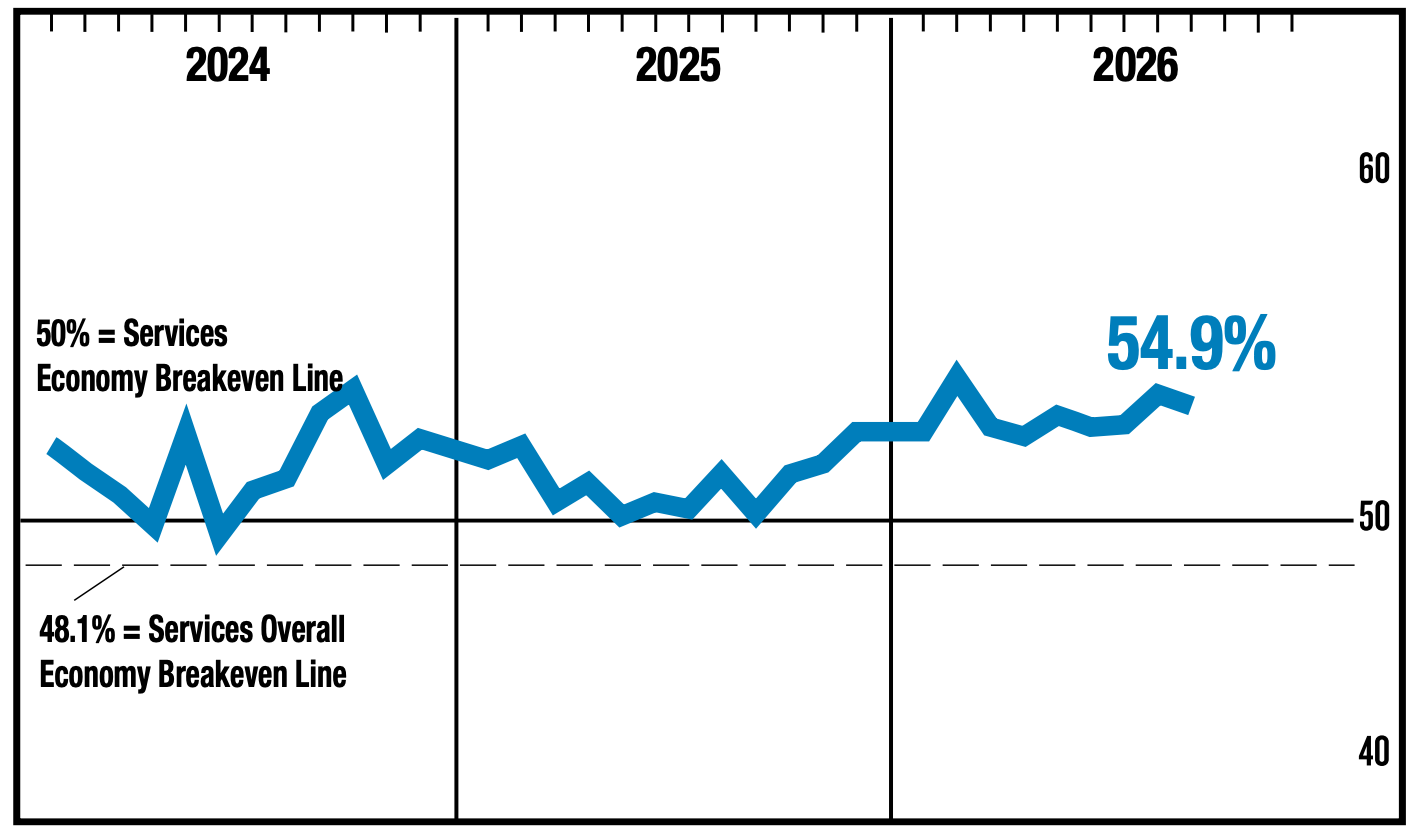
Keep in mind that during times of perceived stress, soft survey data tends to be more exaggerated than actual hard data.
위기감이 존재하는 시기에는 설문조사 기반의 소프트 데이터(심리 지표)가 실제 하드 데이터(실제 통계 수치)보다 과장되는 경향이 있다는 점을 염두에 두어야 합니다.
For more on this, read: What businesses do > what businesses say 🙊 and 4 sometimes-conflicting ways I’m thinking about the economy 😬😞😎🙃
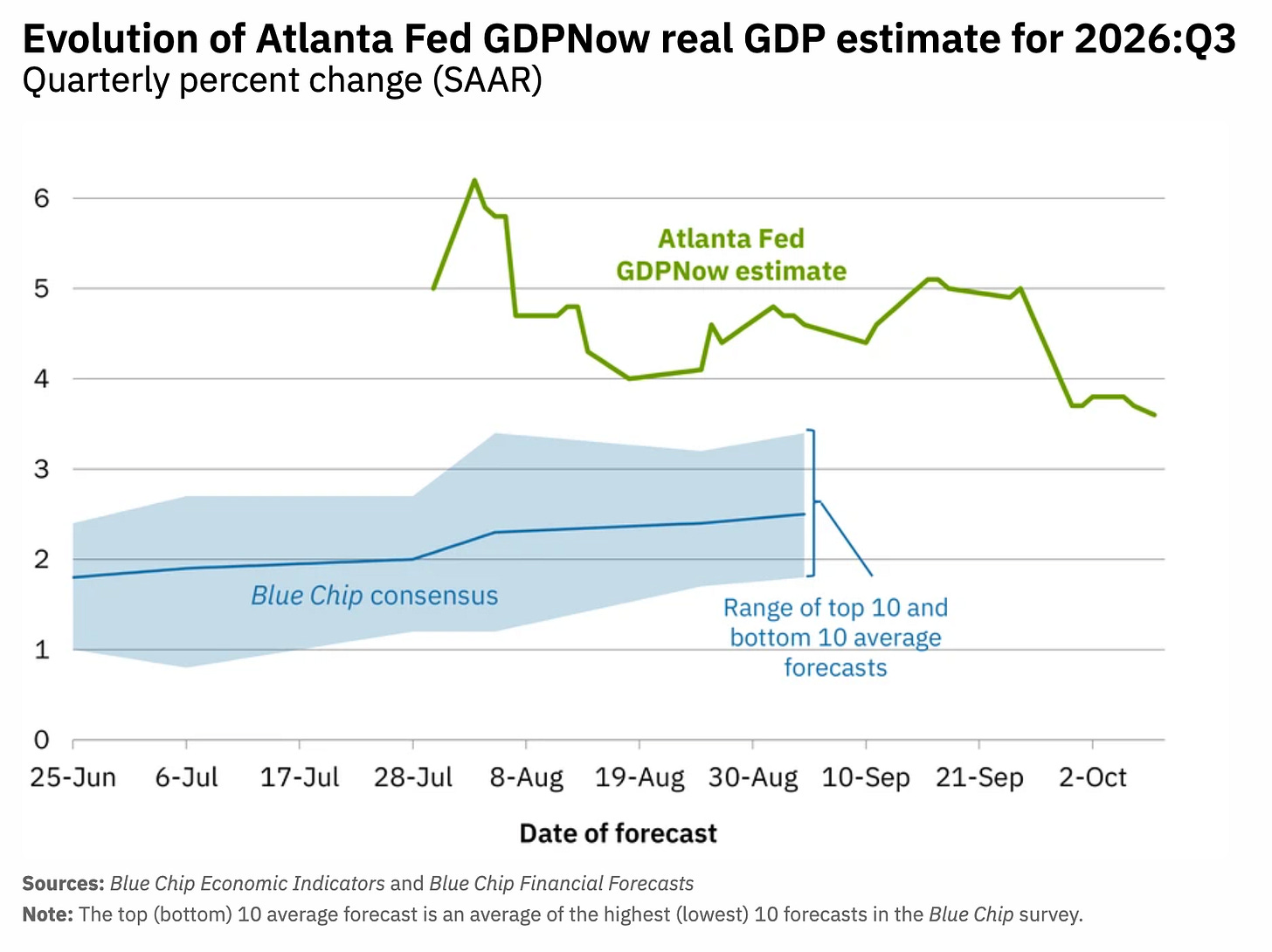
📈 Near-term GDP growth estimates are tracking positively. The Atlanta Fed’s GDPNow model sees real GDP growth rising at a 3.6% rate in Q3.
📈 단기 GDP 성장률 추정치가 긍정적인 흐름을 보이고 있습니다. 애틀랜타 연방준비은행의 GDPNow 모델은 3분기 실질 GDP 성장률이 연율 3.6%를 기록할 것으로 예상합니다.
For more on GDP and the economy, read: It’s too ambiguous to just say ‘the economy’ 🤦🏻♂️ and Economic data can often be both ‘worse’ and ‘good’ 🌦️
Putting it all together 📋
Earnings look bullish: The long-term outlook for the stock market remains favorable, bolstered by expectations for years of earnings growth. And earnings are the most important driver of stock prices.
기업 실적 전망은 강세입니다: 수년간의 실적 성장에 대한 기댓값에 힘입어 주식 시장의 장기 전망은 여전히 긍정적입니다. 그리고 기업 실적은 주가를 움직이는 가장 중요한 동인입니다.
Demand is positive: Demand for goods and services remains positive, supported by healthy consumer and business balance sheets. Personal spending activity remains at record levels. Core capex orders, which are a leading indicator of business spending, have been trending higher.
수요가 긍정적입니다: 건전한 가계 및 기업 재무상태표에 힘입어 재화와 서비스에 대한 수요는 긍정적인 흐름을 유지하고 있습니다. 개인 지출 활동은 역대 최고 수준을 기록 중입니다. 기업 지출의 선행지표인 핵심 자본재(Core capex) 주문도 상승세를 나타내고 있습니다.
Growth rates have cooled: While the economy remains healthy, growth has normalized from much hotter levels earlier in the cycle. The economy is less “coiled” these days as major tailwinds like job openings and excess savings have faded. Job creation, while positive, is not as hot as it used to be. It has become harder to argue that growth is destiny.
성장률은 완화되었습니다: 경제가 여전히 건전한 상태를 유지하고 있지만, 경기 주기 초반의 과열되었던 수준에 비하면 성장이 정상화되었습니다. 채용 공고나 초과 저축과 같은 주요 호재(순풍)들이 희소해지면서 최근 경제의 '반발력(압축된 성장 에너지가 튀어 오르는 힘)'은 약해졌습니다. 일자리 창출은 양수(+)를 기록 중이지만 과거만큼 뜨겁지는 않습니다. 이제 성장이 '당연한 운명'이라고 주장하기는 더 어려워졌습니다.
Actions speak louder than words: We are in an odd period, as hard economic data has decoupled from soft, sentiment-driven data. Consumer and business sentiment has been relatively poor, even as tangible consumer and business activity continues to grow and trend at record levels. From an investor’s perspective, what matters is that the hard economic data holds up.
말보다 행동이 중요합니다: 실제 경제 수치인 하드 데이터가 심리 중심의 소프트 데이터와 괴리(디커플링)되면서 우리는 다소 이례적인 시기를 지나고 있습니다. 유형의 소비자 및 기업 활동이 계속해서 증가하고 역대 최고치를 기록하는 와중에도, 소비자 및 기업 심리는 상대적으로 침체되어 있었습니다. 투자자 입장에서 중요한 것은 실제 하드 데이터가 견조하게 유지되느냐입니다.
Stocks are not the economy: There’s a case to be made that the U.S. stock market could outperform the U.S. economy in the near term, thanks largely to positive operating leverage. Since the pandemic, companies have aggressively adjusted their cost structures. This included strategic layoffs and investment in new equipment, including AI-powered hardware. These moves are driving positive operating leverage, meaning modest sales growth — in the cooling economy — translates into robust earnings growth.
주식은 경제가 아닙니다: 주로 긍정적인 영업레버리지 효과 덕분에 단기적으로 미국 주식 시장이 미국 경제보다 뛰어난 성과를 낼 수 있다는 주장이 존재합니다. 팬데믹 이후 기업들은 비용 구조를 공격적으로 조정해 왔습니다. 여기에는 전략적 구조조정(해고)과 AI 기반 하드웨어를 포함한 신규 설비 투자가 포함되었습니다. 이러한 움직임은 긍정적인 영업레버리지 효과를 일으키고 있으며, 이는 둔화되는 경제 속에서 완만한 매출 증가가 일어나는 것만으로도 견조한 이익 증가로 이어짐을 의미합니다.
Mind the ever-present risks: We should not get complacent. There will always be risks to worry about, such as U.S. political uncertainty, geopolitical turmoil, energy price volatility, and cyberattacks. There are also the dreaded unknowns. Any of these risks can flare up and spark short-term market volatility.
항상 존재하는 위험을 경계해야 합니다: 안주해서는 안 됩니다. 미국 정치적 불확실성, 지오폴리틱스(지정학적) 혼란, 에너지 가격 변동성, 사이버 공격과 같이 우려해야 할 위험 요소는 언제나 존재합니다. 공포스러운 '알 수 없는 위험(미지의 변수)'들도 있습니다. 이러한 위험 요소는 언제든 불거져 단기적인 시장 변동성을 유발할 수 있습니다.
Investing is never a smooth ride: Economic recessions and bear markets are harsh realities that all long-term investors should expect as they build wealth in the markets. Always keep your stock market seat belts fastened.
투자는 결코 순탄한 여정이 아닙니다: 경기 침체와 강세장 속의 하락장(강세장 종료 후의 약세장)은 시장에서 부를 축적해 가는 모든 장기 투자자가 받아들여야 할 가혹한 현실입니다. 주식 시장에서는 항상 안전벨트를 매고 계시기 바랍니다.
Think long-term: For now, there’s no reason to believe the economy and the markets will face a challenge they can’t overcome. The long game remains undefeated, and long-term investors can expect that streak to continue.
장기적인 관점을 유지하세요: 현재로서는 경제와 시장이 극복할 수 없는 난관에 부딪힐 것이라고 믿을 만한 이유가 없습니다. 장기 투자의 승률은 여전히 무패 기록을 자랑하며, 장기 투자자들은 이러한 연승 행진이 계속될 것으로 기대해도 좋습니다.
For more on how the macro story is evolving, check out the previous review of the macro crosscurrents. »




