TSMC OIP Ecosystem Forum 2026: Broadcom’s View of ASICs and Ecosystems
I spent a significant part of my career in the ASIC business. This segment of semiconductors has always been challenging, difficult and invigorating. There is something special about delivering a working custom chip that enables your customer to bring a world-changing product to market. It has always been a highly competitive business. For many years, I recall Broadcom being the one to beat. The combination of a vast library of proven IP from its broad product portfolio (especially its SerDes) and the deep design skills that came from the LSI Logic acquisition made the company hard to beat.
저는 커리어의 상당 부분을 ASIC 사업에서 보냈습니다. 반도체 분야에서 이 부문은 늘 까다롭고, 어렵고, 활기 넘치는 곳이었습니다. 고객이 세상을 바꿀 제품을 시장에 선보일 수 있도록 돕는 작동하는 커스텀 칩을 제공하는 일에는 무언가 특별한 매력이 있습니다. 이곳은 언제나 경쟁이 매우 치열한 시장이었습니다. 오랜 세월 동안 브로드컴(Broadcom)이 언제나 넘어설 수 없는 1위였다고 기억합니다. 광범위한 제품 포트폴리오(특히 SerDes)에서 비롯된 방대한 검증된 IP 라이브러리와 LSI 로직(LSI Logic) 인수를 통해 얻은 깊이 있는 설계 역량이 결합되어 브로드컴을 꺾기 어려운 상대로 만들었습니다.
At this year’s TSMC OIP Ecosystem Forum, Broadcom took the stage for the second keynote address of the event. I found it fascinating to get a close look at what makes the Broadcom ASIC engine tick. There were some familiar topics around superior IP and design methodology, but there were also some new items of interest. The way Broadcom works with the larger ecosystem, especially TSMC described an important margin of victory. Let’s look closer to better understand Broadcom’s view of ASICs and ecosystems at TSMC OIP 2026.
올해 TSMC OIP 에코시스템 포럼에서 브로드컴은 이 행사 두 번째 기조연설의 무대에 올랐습니다. 브로드컴의 ASIC 엔진이 무엇으로 움직이는지 가까이서 살펴볼 수 있었던 것은 정말 흥미로웠습니다. 우수한 IP와 설계 방법론이라는 친숙한 주제들도 있었지만, 새롭게 주목할 만한 부분들도 있었습니다. 브로드컴이 더 넓은 에코시스템, 특히 TSMC와 협력하는 방식은 중요한 승리의 비결을 보여주었습니다. TSMC OIP 2026에서 드러난 ASIC과 에코시스템에 대한 브로드컴의 시각을 조금 더 자세히 살펴보겠습니다.
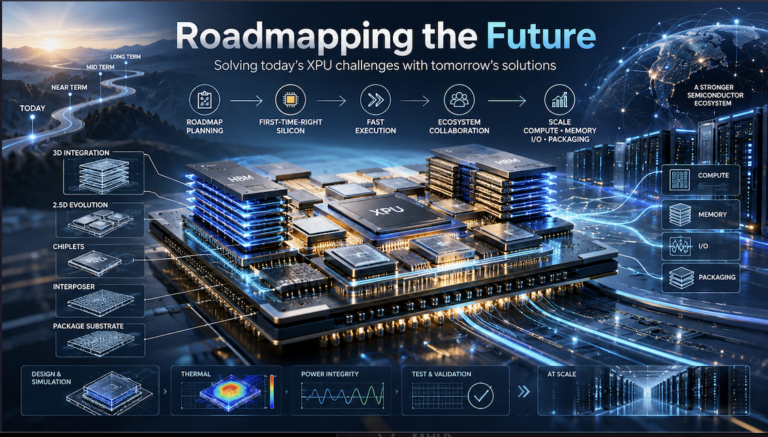
Solving Today’s XPU Challenges with Tomorrow’s Solutions

That was the general topic of this keynote, presented by Greg Dix, Vice President of Engineering, ASICs Product Division at Broadcom. Greg painted a diverse and colorful picture of the ASIC business and what it takes to win in such a demanding market.
이 기조연설의 전체 주제는 브로드컴의 ASIC 제품 사업부 엔지니어링 부사장인 그렉 딕스(Greg Dix)가 발표했습니다. 그렉은 ASIC 사업의 다양하고 다채로운 모습과, 이처럼 까다로운 시장에서 승리하기 위해 무엇이 필요한지 생생하게 그려냈습니다.
He touched on many topics, including IP, process, materials, integration and methodology. What was most interesting to me is how Broadcom views the broader ecosystem. Relationships with companies such as TSMC play an important role in its market dominance.
그는 IP, 공정, 소재, 통합, 그리고 방법론 등 다양한 주제를 다루었습니다. 그중에서도 제게 가장 흥미로웠던 부분은 브로드컴이 더 넓은 에코시스템을 바라보는 시각이었습니다. TSMC 같은 기업들과의 관계는 시장 지배력을 유지하는 데 중요한 역할을 하고 있습니다.
Here are some of the key points offered by Greg during his keynote.
그렉이 기조연설에서 제시한 주요 포인트는 다음과 같습니다.
As AI chips become larger, faster, and vastly more complex, Broadcom is betting that the winners will be those who solve tomorrow’s engineering problems before customers even encounter them.
AI 칩이 점점 더 커지고, 빨라지며, 엄청나게 복잡해짐에 따라, 브로드컴은 고객이 직면하기도 전에 내일의 엔지니어링 문제를 해결하는 이들이 승자가 될 것이라고 베팅하고 있습니다.
The race to build the next generation of AI computing is no longer simply about making a faster chip.
차세대 AI 컴퓨팅을 구축하기 위한 경쟁은 더 이상 단순히 더 빠른 칩을 만드는 것에 국한되지 않습니다.
It is about integrating enormous amounts of compute, memory, connectivity, and packaging into systems so complex that many of the technologies needed to build them must be invented years before the final product reaches the drawing board.
최종 제품이 설계판에 오르기 몇 년 전부터 개발되어야 하는 수많은 기술들을 포함하여, 방대한 양의 연산, 메모리, 연결성, 패키징을 하나의 시스템으로 통합하는 문제입니다.
That was the central message of Broadcom’s keynote –
“Roadmap the Future: Solving Today’s XPU Challenges with Tomorrow’s Solutions”
이것이 바로 브로드컴 기조연설의 핵심 메시지였습니다.
"미래의 로드맵: 오늘의 XPU 과제를 내일의 솔루션으로 해결하다"
The company’s view is straightforward: in custom silicon, winning the next major XPU program requires more than delivering today’s technology. It requires anticipating what customers will need several generations from now—and having those capabilities ready when the opportunity arrives.
브로드컴의 관점은 명확합니다. 커스텀 실리콘 분야에서 다음 주요 XPU 프로그램을 수주하려면 단순히 오늘의 기술을 제공하는 것 이상의 노력이 필요합니다. 고객이 몇 세대 뒤에 필요로 할 기술을 미리 예측하고, 기회가 왔을 때 그 역량을 곧바로 준비해 두어야 합니다.
That challenge is especially important in the ASIC market.
이러한 과제는 ASIC 시장에서 특히 중요합니다.
Unlike a general-purpose processor where customers largely accept a predetermined set of features, performance targets, and design tradeoffs, an ASIC starts with the customer’s workload and objectives. The customer determines what it wants; Broadcom’s task is to assemble the right mix of process technology, IP, memory, connectivity, packaging, and design methodology to make that vision possible.
고객이 주로 미리 정해진 기능, 성능 목표, 설계 타협점을 그대로 받아들이는 범용 프로세서와 달리, ASIC은 고객의 워크로드와 목표에서 출발합니다. 고객이 원하는 바를 결정하면, 브로드컴의 임무는 그 비전을 실현할 수 있도록 공정 기술, IP, 메모리, 연결성, 패키징, 설계 방법론의 올바른 조합을 구성하는 것입니다.
That flexibility is powerful, but it dramatically raises the stakes.
이러한 유연성은 강력하지만, 그만큼 리스크도 극적으로 높입니다.
New semiconductor technologies often require two or three years to develop and qualify. By the time a customer needs an advanced capability, it may already be too late to begin developing it. Broadcom therefore places multiple technology bets in parallel, evaluates them aggressively, and abandons approaches that fail to deliver sufficient value.
새로운 반도체 기술은 대개 개발하고 검증하는 데 2~3년이 소요됩니다. 고객이 첨단 역량을 필요로 하는 시점이 되었을 때는 이미 개발을 시작하기엔 너무 늦었을 수 있습니다. 따라서 브로드컴은 여러 기술에 병렬로 투자하고, 공격적으로 평가하며, 충분한 가치를 제공하지 못하는 접근법은 과감히 포기합니다.
The objective is not merely to win a design. It is to become what Greg described as an “enduring incumbent”—a partner customers return to because previous commitments were delivered. A supplier can win once by promising an aggressive schedule, technology, or price. Winning repeatedly requires something harder, execution.
목표는 단순히 하나의 설계를 수주하는 데 그치지 않습니다. 그렉이 표현한 대로, 이전의 약속을 완수해 낸 파트너로서 고객이 다시 찾는 "영속하는 터주대감(enduring incumbent)"이 되는 것입니다. 공급업체는 공격적인 일정이나 기술, 가격을 약속하며 한 번은 수주할 수 있습니다. 하지만 반복해서 수주하려면 훨씬 더 어려운 것, 즉 실행력이 필요합니다.
That pressure has fundamentally changed Broadcom’s approach to technology adoption. In earlier semiconductor generations, the company could wait until a process was mature, models were stable, and manufacturing risks were understood. AI accelerators no longer permit that luxury. Broadcom has moved from being a fast follower to an early adopter, working with partners such as TSMC while technologies are still evolving.
이러한 압박은 기술 도입에 대한 브로드컴의 접근 방식을 근본적으로 바꿨습니다. 과거 반도체 세대에서는 공정이 성숙하고, 모델이 안정되며, 제조 리스크가 파악될 때까지 기다릴 수 있었습니다. 하지만 AI 가속기는 더 이상 그런 여유를 허락하지 않습니다. 브로드컴은 기술이 여전히 진화하는 단계에서도 TSMC 같은 파트너들과 협력하며, 단순한 패스트 팔로워(fast follower)에서 얼리 어답터(early adopter)로 전환했습니다.
The advantage is not simply speed. Early adopters can help shape emerging technologies around the needs of future products. Nowhere is that evolution more visible than in advanced packaging.
그 장점은 단순히 속도에만 있지 않습니다. 얼리 어답터는 미래 제품의 요구에 맞추어 신기술을 구체화하는 데 기여할 수 있습니다. 이러한 진화가 가장 뚜렷하게 나타나는 곳이 바로 첨단 패키징입니다.
AI processors have expanded from large monolithic dies connected to conventional memory into sophisticated assemblies containing multiple compute dies, I/O chiplets, high-bandwidth memory, interposers, and increasingly, vertically stacked silicon. Instead of placing every function on the most advanced—and most expensive—process node, designers can disaggregate the system and place different functions on the technologies best suited to them.
AI 프로세서는 대형 단일 다이(monolithic die)에서 기존 메모리와 연결되던 형태를 넘어, 다수의 연산 다이, I/O 칩렛, 고대역폭 메모리(HBM), 인터포저, 그리고 점점 더 비중이 커지는 수직 적층 실리콘을 포함하는 정교한 어셈블리로 확장되었습니다. 모든 기능을 가장 첨단이면서 동시에 가장 비용이 많이 드는 공정 노드에 배치하는 대신, 설계자들은 시스템을 쪼개어(disaggregate) 각 기능에 가장 적합한 기술에 배치할 수 있습니다.
Broadcom sees 3D integration as the next major step.
브로드컴은 3D 통합을 다음 단계의 핵심 도약으로 보고 있습니다.
Stacking dies introduces an entirely new set of engineering problems: delivering power through multiple layers of silicon, extracting heat from stacked structures, performing timing analysis across dies manufactured on different process nodes, testing individual components before expensive assembly, and managing an enormous increase in design compute requirements.
다이를 적층하는 방식은 완전히 새로운 엔지니어링 문제들을 야기합니다. 여러 층의 실리콘을 통과해 전력을 공급하고, 적층된 구조에서 열을 추출하고, 서로 다른 공정 노드에서 제조된 다이 간의 타이밍 분석을 수행하고, 비용이 많이 드는 조립 전에 개별 부품을 테스트하며, 설계 연산 요구량의 폭발적인 증가를 관리해야 합니다.
The solution is to address these problems before the customer design begins.
해결책은 고객의 설계가 시작되기 전에 이러한 문제들을 미리 해결하는 것입니다.
Greg described an extensive program of mechanical, thermal, electrical, and risk-mitigation test vehicles intended to validate new technologies ahead of production. These platforms allow engineers to study everything from package warpage and thermal behavior to SerDes performance, HBM operation, routing, and system-level integration.
그렉은 생산에 앞서 신기술을 검증하기 위한 기계적, 열적, 전기적, 그리고 리스크 완화용 테스트 차량(test vehicles)의 광범위한 프로그램을 설명했습니다. 이러한 플랫폼을 통해 엔지니어들은 패키지 휨 현상(warpage)과 열적 거동부터 SerDes 성능, HBM 동작, 라우팅, 시스템 수준 통합에 이르기까지 모든 것을 연구할 수 있습니다.
The goal is what Greg repeatedly called “first-time-right” silicon.
목표는 그렉이 거듭 강조한 "초도품부터 완벽한(first-time-right)" 실리콘입니다.
For today’s largest AI accelerators, a silicon re-spin can mean far more than an engineering delay. It can mean missing the market entirely.
오늘날의 대형 AI 가속기들에게 실리콘 리스핀(re-spin)은 단순한 엔지니어링 지연 그 이상을 의미합니다. 그것은 시장 기회를 완전히 놓치는 것을 의미할 수 있습니다.
That reality is also reshaping design methodology. Broadcom expects development to become increasingly concurrent: process technology, packaging, IP, design tools, and customer products evolving at the same time rather than sequentially.
이러한 현실은 설계 방법론 또한 재편하고 있습니다. 브로드컴은 공정 기술, 패키징, IP, 설계 도구, 고객 제품이 순차적이 아니라 동시에 진화하는 동시 진행형(concurrent) 개발이 주를 이룰 것으로 예상합니다.
Artificial intelligence itself will accelerate that transformation. Broadcom expects AI-driven design techniques to compress implementation schedules even further, placing increasing pressure on backend design, verification, compute infrastructure, and methodology.
인공지능 그 자체도 이러한 전환을 가속화할 것입니다. 브로드컴은 AI 기반 설계 기법이 구현 일정을 훨씬 더 단축시켜, 백엔드 설계, 검증, 연산 인프라, 방법론에 가해지는 압박을 더욱 가중시킬 것으로 보고 있습니다.
Greg pointed to a recent large XPU program that moved from kickoff to tapeout in roughly nine months—an illustration of how quickly expectations are changing.
그렉은 최근 대규모 XPU 프로그램 하나가 킥오프부터 테이프아웃(tapeout)까지 약 9개월 만에 완료된 사례를 언급하며, 기대치가 얼마나 빠르게 변하고 있는지 보여주었습니다.
Yet perhaps Greg’s most important message was not about any individual technology.
하지만 그렉의 가장 중요한 메시지는 특정 개별 기술에 관한 것이 아니었을지도 모릅니다.
It was about collaboration.
그것은 바로 협업이었습니다.
Future XPUs cannot be designed in isolation. Success will depend on semiconductor companies working closely with foundries, memory suppliers, packaging houses, EDA vendors, equipment providers, and customers—often while the underlying technologies themselves are still being developed.
미래의 XPU는 고립된 상태에서 설계될 수 없습니다. 성공은 반도체 기업이 파운드리, 메모리 공급업체, 패키징 하우스, EDA 벤더, 장비 제공업체, 그리고 고객과 긴밀히 협력하는 것에 달려 있으며, 이는 종종 기초 기술 자체가 아직 개발 중인 상태에서도 이루어집니다.
Greg explained that Broadcom’s philosophy is that “hard problems are a good thing.”
그렉은 브로드컴의 철학이 "어려운 문제는 좋은 것이다"라는 점에 있다고 설명했습니다.
He pointed out there will be plenty of them ahead. AI systems will demand more compute, more memory bandwidth, larger packages, faster interconnects, improved thermal solutions, and increasingly sophisticated integration.
그는 앞으로도 수많은 어려운 문제들이 기다리고 있을 것이라고 지적했습니다. AI 시스템은 더 많은 연산, 더 높은 메모리 대역폭, 더 큰 패키지, 더 빠른 상호 연결, 향상된 쿨링 솔루션, 그리고 점점 더 정교해지는 통합을 요구할 것입니다.
For semiconductor companies, those challenges create risk—but they also create differentiation.
반도체 기업에게 이러한 과제들은 리스크를 수반하지만, 동시에 차별화의 기회이기도 합니다.
And in Broadcom’s view, the companies that solve those problems before the market needs the answers will be the ones positioned to win the next generation of AI silicon.
브로드컴의 시각에서, 시장이 정답을 필요로 하기 전에 이러한 문제들을 먼저 해결하는 기업이야말로 차세대 AI 실리콘 시장을 차지할 위치에 오르게 될 것입니다.
To Learn More
Greg’s keynote touched on many key trends and market requirements, but the complete story is much larger. You can explore a larger view of Broadcom’s capabilities here. And that’s Broadcom’s view of ASICs and ecosystems at TSMC OIP 2026.
그렉의 기조연설은 많은 주요 트렌드와 시장 요구사항을 다루었지만, 전체 이야기는 훨씬 더 방대합니다. 브로드컴의 역량에 대한 더 넓은 시각은 [여기](링크 삽입 구간)에서 살펴보실 수 있습니다. 이것이 바로 TSMC OIP 2026에서 바라본 ASIC과 에코시스템에 대한 브로드컴의 시각입니다.