VSORA’s Sandra Rivera on the Inference Era: Demand Is Real, But Not Everyone Survives
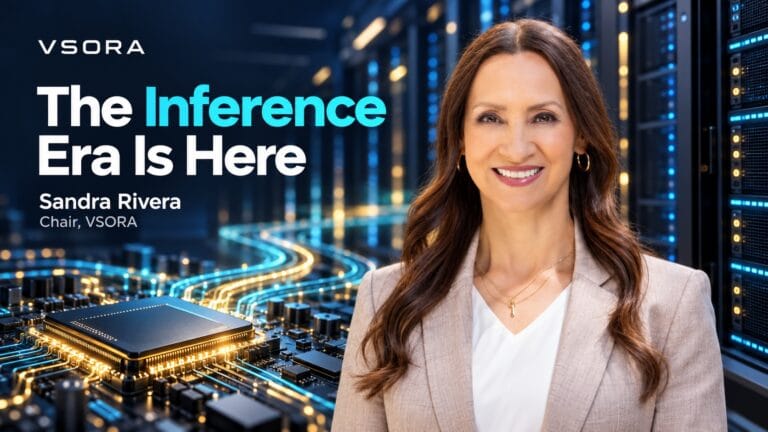
Sandra Rivera, Chair of VSORA, joined Bloomberg’s The Close in July for an interview on the current state of AI. What follows is a summary of that conversation.
VSORA의 의장인 산드라 리베라(Sandra Rivera)는 지난 7월 블룸버그의 ‘더 클로즈(The Close)’에 출연하여 현재의 AI 현황에 대한 인터뷰를 가졌습니다. 다음은 해당 대화의 요약입니다.
When a Silicon Valley veteran who once ran Intel’s Data Center and AI Group, and now chairs a French inference-chip challenger, sits down with a tech journalist from Bloomberg, the vantage point is unusual. On the program, Rivera addressed the question hanging over the entire AI trade: can demand and revenue grow fast enough to justify the enormous spending on physical infrastructure?
인텔의 데이터 센터 및 AI 그룹을 이끌었고 현재는 프랑스의 추론 칩 신생 기업을 이끌고 있는 실리콘밸리의 베테랑이 블룸버그의 테크 전문 기자와 마주 앉았을 때, 그 시각은 사뭇 남다릅니다. 방송에서 리베라는 AI 산업 전체를 짓누르고 있는 핵심 질문, 즉 수요와 매출이 엄청난 물리적 인프라 지출을 정당화할 만큼 충분히 빠르게 성장할 수 있는가에 대한 질문을 다루었습니다.
Her answer was measured but firm. On demand, she sees no slowdown: enterprises keep pulling AI into their workflows to drive efficiency and innovation. Yet she stopped short of treating that as a blank check. Two things can be true at once, she argued: the industry should keep pushing the frontier while embracing a regulatory framework that reassures the public. Citing the Federal Aviation Administration (FAA), National Transportation Safety Board (NTSB), and Food and Drug Administration (FDA), she noted that safety institutions have historically accelerated innovation by building public acceptance of new technology. Without that trust, anxiety becomes a headwind.
그녀의 답변은 신중하면서도 단호했습니다. 수요 측면에서 그녀는 둔화 조짐을 보이지 않고 있으며, 기업들이 효율성과 혁신을 도모하기 위해 계속해서 AI를 워크플로에 도입하고 있다고 보았습니다. 그렇다고 이것이 백지수표를 의미하는 것은 아니라고 선을 그었습니다. 그녀는 두 가지 사실이 동시에 성립할 수 있다고 주장했습니다. 즉, 산업계는 한계를 계속 넓혀나가는 동시에 대중을 안심시킬 수 있는 규제 프레임워크를 수용해야 한다는 것입니다. 그녀는 연방항공청(FAA), 연방교통안전위원회(NTSB), 식품의약국(FDA)을 언급하며, 안전 관련 기관들이 역사적으로 신기술에 대한 대중의 수용성을 높임으로써 혁신을 가속화해 왔다고 지적했습니다. 이러한 신뢰가 없다면 불안감이 역풍으로 작용하게 됩니다.
The crossover to inference. Rivera confirmed what SemiWiki readers have been tracking for months: the industry is nearing the point where investment and deployment shift decisively from training to inference. Frontier-model training remains the province of a handful of players — an extraordinarily expensive and complex endeavor — but the bulk of AI activity, she argued, will come from enterprises, organizations, and individuals running models against their own data and objectives. That is inference, and it is where VSORA has staked its architecture.
추론으로의 전환. 리베라는 세미위키(SemiWiki) 독자들이 수개월 동안 주목해 온 바를 확인해 주었습니다. 산업계가 투자와 배포의 중심을 훈련(Training)에서 추론(Inference)으로 결정적으로 전환하는 시점에 가까워지고 있다는 것입니다. 프론티어 모델 훈련은 극도로 비용이 많이 들고 복잡한 작업으로 소수의 플레이어들만의 영역으로 남아 있지만, AI 활동의 대부분은 기업, 조직, 개인이 자신들의 데이터와 목적에 맞춰 모델을 구동하는 데서 비롯될 것이라고 그녀는 주장했습니다. 그것이 바로 추론이며, VSORA가 자사 아키텍처를 걸고 있는 분야입니다.
Competition for capital, and the bear case. Asked how a startup competes when access to advanced silicon is a bottleneck, Rivera was candid: capital is not the constraint. AI is the top destination for investment, and getting in front of investors is not the hard part. The challenge is articulating a differentiated value proposition — power efficiency, low latency, determinism, cost per token, throughput — against every other startup making its pitch.
자본 경쟁과 비관론(Bear Case). 고급 실리콘 확보가 병목 현상이 되는 상황에서 스타트업이 어떻게 경쟁할 수 있느냐는 질문에 리베라는 솔직하게 답했습니다. 자본은 제약 요인이 아니라는 것입니다. AI는 투자의 최우선 목적지이며 투자자 앞에도 서는 것은 어려운 부분이 아닙니다. 진짜 과제는 전력 효율, 낮은 지연 시간, 결정론(Determinism), 토큰당 비용, 처리량 등에서 다른 모든 스타트업들과 차별화되는 가치 제안을 명확히 제시하는 것입니다.
Pressed on the bear case, she didn’t flinch. Not all of these companies will make it, she said; that is simply the history of venture investing. She invoked the familiar cycle of “irrational exuberance” followed by a period of moderation and made a point worth underlining: the companies that fail often won’t fail on technology but on implementation and scaling. Enterprises are the ultimate arbiters, and while some report 20x to 30x returns on AI deployments, many proofs of concept fall short. A shakeout is coming, she acknowledged, but the long-term trajectory, in her words, is still “up and to the right.”
비관적인 시나리오에 대해 추궁을 받았을 때 그녀는 주저하지 않았습니다. 이 모든 회사가 살아남지는 못할 것이며, 그것이 바로 벤처 투자의 역사라고 그녀는 말했습니다. 그녀는 '비합리적 과열(irrational exuberance)'에 이어 조정기가 찾아오는 익숙한 주기를 언급하며 강조할 가치가 있는 한 마디를 남겼습니다. 실패하는 기업들은 대개 기술 때문이 아니라 구현과 확장(scaling)에서 실패한다는 것입니다. 기업들이 최종 심판관이며, 일부 기업들은 AI 도입으로 20~30배의 수익을 보고하고 있지만 많은 개념 증명(PoC)들은 이에 미치지 못합니다. 구조조정이 다가오고 있지만, 장기적인 궤적은 여전히 '우상향'이라고 그녀는 인정했습니다.
Sovereignty, with a caveat. The conversation turned to VSORA’s identity as a French company amid the AI-sovereignty debate. Rivera framed sovereign capability as a genuine tailwind for Europe, tied directly to VSORA’s pitch: roughly 40% lower cost at the same throughput, within a much lower power envelope. In a market of heterogeneous architectures — CPUs, GPUs, inference accelerators, memory, networking — she sees room for companies that stay focused on the customer and on execution.
단서가 붙은 주권. 화두는 AI 주권 논쟁 속에서 프랑스 기업으로서 VSORA의 정체성으로 넘어갔습니다. 리베라는 주권 역량이 유럽에 있어 진정한 순풍(tailwind)이라 평가하며, 이는 VSORA의 핵심 주장과 직결된다고 설명했습니다. 즉, 훨씬 낮은 전력 예산 내에서 동일한 처리량 기준 약 40% 더 낮은 비용을 제공한다는 것입니다. CPU, GPU, 추론 가속기, 메모리, 네트워킹 등 이질적인 아키텍처가 공존하는 시장에서, 고객과 실행에 집중하는 기업들을 위한 자리는 여전히 존재한다고 그녀는 보고 있습니다.
Bloomberg’s Katie Greifeld pressed on the obvious tension: if VSORA, like nearly everyone else, relies on TSMC for manufacturing and packaging, where does sovereignty actually reside? Rivera’s answer leaned on supply-chain resiliency rather than autarky. Drawing on her years managing geopolitical supply-chain risk at Intel, she pointed to manufacturing and packaging spreading across regions, including TSMC’s own investments in the US and Europe, and cited COVID as proof that no supply chain should trace back to a single geography. The TAM, she noted, is global even when a company starts local.
블룸버그의 케이티 그라이펠드(Katie Greifeld)는 명백한 긴장 관계를 파고들었습니다. 만약 VSORA도 다른 거의 모든 기업들처럼 제조와 패키징을 TSMC에 의존하고 있다면, 주권은 과연 어디에 존재하는 것인가 하는 점입니다. 리베라의 답변은 자급자족(autarky)보다는 공급망 탄력성에 무게를 두었습니다. 인텔에서 지정학적 공급망 리스크를 관리했던 경험을 바탕으로 그녀는 미국과 유럽 내 TSMC의 자체 투자를 비롯해 여러 지역으로 분산되는 제조 및 패키징을 지적했으며, 공급망이 단일 지역에 귀속되어서는 안 된다는 것을 코로나19가 증명해 주었다고 언급했습니다. 기업이 현지에서 시작하더라도 TAM(전체 시장 규모)은 글로벌이라는 점도 덧붙였습니다.
Rivera’s message threaded a needle that suits her new role. Demand is real and durable; the inference era is arriving; capital is abundant but discerning; and sovereignty is a genuine tailwind, even if the silicon supply chain remains stubbornly global. For VSORA, a company selling efficiency and cost per token into exactly that inference wave, having a chair who can make this case fluently on Bloomberg is a competitive asset in its own right.
리베라의 메시지는 그녀의 새로운 역할에 부합하는 절묘한 균형점을 보여주었습니다. 수요는 실제적이고 지속적이며, 추론 시대가 도래하고 있고, 자본은 풍부하되 안목이 있으며, 실리콘 공급망이 완고하게 글로벌 상태로 남더라도 주권은 진정한 순풍이라는 것입니다. 정확히 그러한 추론 물결 속에서 효율성과 토큰당 비용을 판매하는 VSORA에게, 블룸버그에 출연해 이러한 주장을 유창하게 펼칠 수 있는 의장을 두는 것 자체가 그 자체로 경쟁력 있는 자산입니다.